कस्टम रोबोट वर्कस्टेशन और लेजर सिस्टम निर्माता



वेल्डिंग पोजिशनर प्रकार की तुलना: हैडस्टॉक, एल प्रकार, यू-प्रकार, 3-धुरी & अधिक
आपने खोज बार में "बिक्री के लिए वेल्डिंग पोजिशनर" टाइप किया और अब आपके सामने कैटलॉग की एक दीवार है. इससे पहले कि आप कीमतों की तुलना करें, compare the machine families—because the wrong family fails your part on day one, discount or not. This page is the evaluation table: six positioner families side by side, with the load, अक्ष गणना, and accuracy numbers that actually decide a buy. If you have not framed the decision yet, शुरू with our type-selection guide ; when you are ready to request a quote, use the buying checklist.
How to Read This Comparison
Three numbers decide most purchases, and catalogs obscure all three. Payload is not the same as overturning capacity—a 2-ton rating can still fail a 2-ton part hung off-center. Accuracy means pose accuracy (एपी) and pose repeatability (आर.पी) reported under stated load, तापमान, and speed per ISO 9283:1998, not a bare ±0.03 mm on a brochure. And “coordination-ready” only means something if the unit is a servo positioner you can declare as an external axis in a robot controller. Read the table with those three lenses.
The Six Families, Side by Side
| परिवार | Axes added | Payload tier | Best geometry | Coord. fit | Accuracy class |
| सिंगल एक्सिस रोटरी पोजिशनर | 1 घुमाएँ | प्रकाश-मध्यम | गोल / rotational parts | Good | मानक |
| हेडस्टॉक टेलस्टॉक पोजिशनर | 1–2 rotate | मध्यम-भारी | लंबे शाफ्ट, गोले, vessels | उत्कृष्ट | उच्च |
| एल-टाइप वेल्डिंग पोजिशनर | 2-3 (घुमाएँ + नत) | मध्यम | बीम, बक्से, 4-face parts | उत्कृष्ट | उच्च |
| यू-टाइप वेल्डिंग पोजिशनर | 2-3 (घुमाएँ + नत) | मध्यम-भारी | Large irregular frames | उत्कृष्ट | उच्च |
| क्षैतिज 3-अक्ष रोटरी पोजिशनर | 2–3 rotate/tilt | मध्यम | Mixed complex / बहु-सामने | उत्कृष्ट | उच्च |
| वर्टिकल टिल्टिंग पोजिशनर | 1–2 tilt | भारी | भारी थाली, दोनों पक्षों | Good | Standard–High |
सिंगल एक्सिस रोटरी पोजिशनर
The simplest member of the family: one servo or manual rotate axis that spins a part around a horizontal or vertical centerline. It is cheap, easy to guard, and perfect for round work—tanks, निकला हुआ किनारा, pipe spools—where the seam is essentially circumferential. ROBOPTIX builds it as a servo unit so it can later join a coordinated cell. Choose it when your parts are rotationally symmetric and your volumes do not justify more axes. Skip it when a seam leaves the rotation plane—then you need tilt, and a single axis simply cannot present that face flat.
इसे कब नहीं चुनना है
If the weld travels off the rotation axis (most boxes, फ़्रेम, and castings), a Single Axis Rotary Positioner leaves faces the robot cannot reach without re-fixturing. That is the moment to step up to an L-Type or 3-Axis unit, not to over-rotate a part that fights the geometry.
हेडस्टॉक टेलस्टॉक पोजिशनर
Two supports—a driven headstock and an idler tailstock—cradle a long part between centers and rotate it as one coordinated external axis. This is the workhorse for pressure-vessel shells, एक्सल, and any long rotational seam welded at constant TCP speed. Because the load is supported at both ends, it handles heavy, slender parts that would deflect on a cantilever. ROBOPTIX calibrates the headstock frame to the robot base so the combined chain stays accurate. A real case: a vessel shop replaced manual rolls with a Headstock Tailstock Positioner coordinated to the robot and held the procedure-qualification tolerance because the seam never left the flat position. Do not confuse this with idle turning rolls—those cannot be coordinated at all; here the part spins between driven and idler centers under servo control.
एल-टाइप वेल्डिंग पोजिशनर
An L-shaped frame rotates the part about one axis and tilts it about another, so a rectangular or box-shaped workpiece presents every face flat in a single mount. On a structural I-beam, blended motion then welds all four sides in one continuous pass—no crane flips, no re-fixturing. It is the default choice for beams, कोष्ठक, and enclosures where fixture-free fabrication is the whole point. One fabricator running ~200 I-beams per week cut crane cycles about 60% after moving to an L-Type unit coordinated as an external axis.
इसे कब नहीं चुनना है
Very large or oddly shaped frames can exceed the L’s envelope or unbalance its tilt; a U-Type or 3-Axis unit carries that geometry better. Match the frame to the part, not the catalog photo.
यू-टाइप वेल्डिंग पोजिशनर
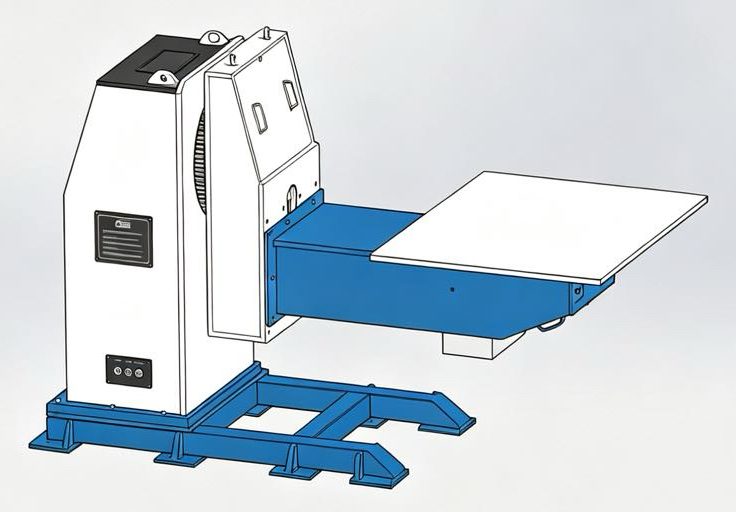
A U-shaped cradle supports bulky, irregular workpieces from below while rotating and tilting them—think large weldments, फ़्रेम, and assemblies too big or asymmetric for an L-Type. The open U gives clearance for oversized parts and easy crane loading. Like the L-Type, it is coordination-ready as a servo external axis. Choose it when footprint and load spread matter more than a compact envelope. Just verify the overturning moment for an off-center load before you trust the payload number.
क्षैतिज 3-अक्ष रोटरी पोजिशनर
The most flexible family: two or three rotate/tilt axes orient even a complex contour so each joint stays in the flat (1जी) position while the robot follows. This is what makes multi-orientation castings weldable in one setup instead of a stack of manual flips. A casting with seams no single flip reaches is oriented joint-by-joint, every seam kept flat. कोई भी साधारण परिवार यह समन्वित कार्य नहीं कर सकता; specifying a single-axis unit here leaves welds the robot cannot reach. It is the answer when geometry—not industry—drives the choice.
वर्टिकल टिल्टिंग पोजिशनर
A tilt axis (sometimes plus rotate) presents heavy plate and large panels at the optimal welding angle, often both sides without re-clamping. It favors heavy, planar work where you want the joint tilted into the torch rather than the robot contorting around it. Gravity is the constant here: keep the puddle flat and it stabilizes; fight it and the pool distorts. For thick double-sided plate, a Vertical Tilting Positioner plus a coordinated robot is the honest, repeatable setup. Choose it for weight and plate; choose a 3-Axis unit when you also need to spin complex contours.
The Load Math That Catches Buyers Out
Catalogs lead with payload—“2-ton positioner.” But a positioner holds a part by moment, not just weight. Overturning moment equals weight multiplied by the distance from the part’s center of gravity to the rotation axis: M = W × d.
ए 500 kg भाग जिसका गुरुत्व केन्द्र बैठता है 400 mm off the axis produces 200 kg·m of moment. A unit rated for 2000 kg payload at a 200 mm load radius is only good for 400 kg·m—so that “2-ton” machine cannot actually hold your 500 kg part without exceeding its moment rating. This is why payload alone is a half-truth, and why ROBOPTIX specs every quotation against your real center-of-gravity offset, not the brochure number.
What AP and RP Actually Mean
ROBOPTIX ISO 9001-प्रमाणित है और ISO का उपयोग करके स्थिति सटीकता की रिपोर्ट करता है 9283:1998-संरेखित मेट्रिक्स: मुद्रा सटीकता (एपी) and pose repeatability (आर.पी). The number is meaningless without its conditions—load, तापमान, and speed must be stated. A repeatability figure quoted at no load and room temperature tells you nothing about your shop at 40 °C under a 300 किलो भाग. We state the conditions because a number without them is a half-truth, and a half-truth is how welds drift out of tolerance. We support third-party or on-site laser-tracker verification so the spec is proof, कोई वादा नहीं.
When a Simpler Family Beats a Fancy One
The most expensive family is not the right one for every part. A small fixture-free job an operator can flip by hand needs a Single Axis Rotary Positioner, not a 3-Axis cell. Audit any supplier before you commit—a factory visit and bench test beat a spec-sheet comparison every time—and weigh the five-year total cost of ownership against the sticker. Spend on axes where the geometry forces them; save where it does not. प्रलय, अनुष्ठान नहीं, बजट की सुरक्षा करता है.
ROBOPTIX Builds All Six Families—and the Cell Around Them
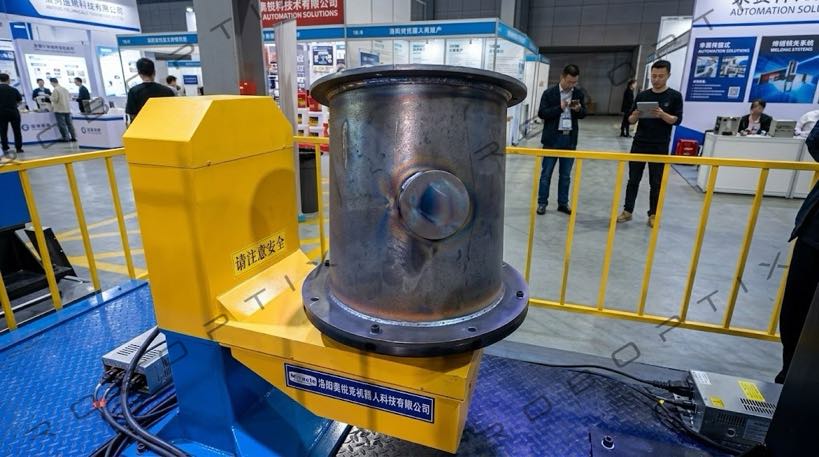
Every family above ships as a servo positioner ROBOPTIX can declare as an external axis. We pair it with a 7th Axis Robot Rail System that extends reach (→ समन्वित वेल्डिंग सेल: एक गतिज श्रृंखला के रूप में पोजिशनर और रोबोट), एक रोबोट बेस / रोबोट पेडस्टल जो स्थिर आधार फ़्रेम को परिभाषित करता है, and—for a full Welding Robot Cell—the same building blocks used in our coordinated cells(→ Coordinated Welding Cell: एक गतिज श्रृंखला के रूप में पोजिशनर और रोबोट). Shops without robot programmers get the no-programming vision-guided unit(→ No-Programming Robotic Welding Cell: दृष्टि निर्देशित, नो टीच पेंडेंट); a faster start comes as a turnkey workstation(→ Turnkey Welding Workstation: ड्राइंग से लेकर उत्पादन के लिए तैयार सेल तक); laser work runs on a laser-ready platform(→ Laser Welding Positioner: थिन-गेज वेल्ड के लिए सटीकता और गति). Need mobility? See the portable collaborative unit (→ Portable Collaborative Welding Positioner: Cobot-Ready Mobility) or remote mobile unit (→ Remote Mobile Welding Positioner: Weld Anywhere on the Floor). Handling and palletizing share one platform (→ Welding Positioner for Handling & Palletizing: One Platform, Two Jobs), and non-standard geometries are handled by the custom program(→ Custom Welding Positioner: Built to Your Part, Not a Catalog Shape).
अक्सर पूछे जाने वाले प्रश्नों
क्यू: Which welding positioner type is best?
ए: None is best overall—it follows your part geometry: round/rotational → Single Axis Rotary; long shafts and vessels → Headstock Tailstock; beams and boxes → L-Type; large irregular frames → U-Type; mixed complex seams → Horizontal 3-Axis; heavy double-sided plate → Vertical Tilting.
क्यू: What does positioner payload really mean?
ए: Payload is only half the story. A positioner holds a part by overturning moment M = weight × center-of-gravity distance from the axis. A “2-ton” unit can fail a 500 kg off-center part, so always spec against your real load moment, not the brochure number.
क्यू: How accurate are welding positioners?
ए: Accuracy is reported as pose accuracy (एपी) and pose repeatability (आर.पी) आईएसओ के लिए 9283:1998, भार के साथ, तापमान, और गति बताई गई. A bare ±0.03 mm without conditions is not a usable number; ROBOPTIX states the conditions and supports laser-tracker verification.
क्यू: Can any of these be a coordinated external axis?
ए: Yes—if it is a servo positioner. All six ROBOPTIX families can be declared as external axes in the robot controller so one kinematic solve drives robot and positioner at constant TCP speed. Idle turning rolls cannot be coordinated at all.
क्यू: How do I avoid over-buying a positioner?
ए: पहले अपने हिस्से की ज्यामिति से परिवार का मिलान करें , audit the supplier with a factory visit and bench test , and compare five-year total cost of ownership, not just the quote Buy the axes the geometry forces; skip the rest.
A welding positioner for sale is only a good buy if the family matches your part. Read the table by moment, not payload; by stated-condition accuracy, not a bare number; and by coordination-ready servo hardware, not a marketing word. रोबोप्टिक्स ISO 9001-प्रमाणित है, builds all six families from the 7th Axis Robot Rail System, रोबोट बेस / रोबोट कुरसी, और सर्वो पोजिशनर्स, और आईएसओ के अनुसार सटीकता की रिपोर्ट करता है 9283:1998. Send us your part drawing and center-of-gravity offset and we will spec the right family—and the Welding Robot Cell around it—before you buy, बाद में नहीं.
लेखक के बारे में
अनुभव & साख
रोबोटिक वेल्डिंग सिस्टम एकीकरण विशेषज्ञ के साथ 12+ रोबोट पोजिशनर चयन और एकीकरण पर केंद्रित वर्षों का प्रत्यक्ष परियोजना अनुभव. को परामर्श प्रदान किया है 300+ उत्तरी अमेरिका भर में कारखाने, यूरोप, और एशिया. इस आलेख में सभी विनिर्देशन डेटा वास्तविक एच से लिया गया है / बी / एल / यू सीरीज उत्पाद डेटाशीट.
कंपनी बैकग्राउंड: 26+ वेल्डिंग ऑटोमेशन इंजीनियरिंग के वर्ष, 40+ सक्रिय पेटेंट, 1,500+ विश्व स्तर पर पूर्ण की गई परियोजनाएँ, लगभग 70% रोबोट पोजिशनर एकीकरण शामिल है.
प्रमाणपत्र
हाई-टेक एंटरप्राइज - सर्टिफिकेट. नहीं. GR202341000595 (नवंबर में जारी. 2023)
आईएसओ 9001: 2015 (जीबी/टी 19001-2016) - गुणवत्ता प्रबंधन प्रणाली
GJB 9001C-2017 - सैन्य/हथियार उपकरण गुणवत्ता प्रबंधन प्रणाली
ईयू सीई - मशीनरी निर्देश 2006/42/ईसी (प्रमाणपत्र. नहीं. एम.2026.206.सी134866)
संदर्भ
[1] इंटरनैशनल ऑर्गनाइज़ेशन फॉर स्टैंडर्डाइज़ेशन. (1998). आईएसओ 9283:1998, औद्योगिक रोबोटों में हेरफेर - प्रदर्शन मानदंड और संबंधित परीक्षण विधियाँ.
[2] पार्क, जे.-एच., किम, श।, चंद्रमा, एच.-एस., & किम, एम.-एच. (2019). पिघले हुए पूल व्यवहार पर गुरुत्वाकर्षण का प्रभाव और स्पंदित गैस मेटल आर्क वेल्डिंग में विभिन्न वेल्डिंग स्थितियों पर माइक्रोस्ट्रक्चर का विश्लेषण. अनुप्रयुक्त विज्ञान.
[3] लियू, जे।, जियांग, एफ।, चेन, एस।, जू, बी।, झांग, जी।, चेंग, डब्ल्यू, & एमए, एक्स. (2023). विभिन्न वेल्डिंग स्थितियों में परिवर्तनीय ध्रुवता प्लाज्मा आर्क वेल्डिंग में वेल्ड पूल व्यवहार और वेल्ड बीड प्रदर्शन पर गुरुत्वाकर्षण प्रभाव के तंत्र. सामग्री.
संबंधित पोस्ट
7वेल्डिंग ऑटोमेशन में वें एक्सिस रोबोट: वास्तविक केस अध्ययन और आरओआई उदाहरण
रोबोट पोजिशनर पेलोड गणना और सुरक्षित चयन: संपूर्ण इंजीनियरिंग गाइड
नो-प्रोग्रामिंग रोबोटिक वेल्डिंग सेल:विज़न-निर्देशित प्रणालियाँ कैसे पेंडेंट सिखाती हैं
प्रतिक्रिया, कठोरता, और थर्मल ड्रिफ्ट: तीन छुपे हुए विवरण जो वेल्डिंग पोजिशनर प्रदर्शन को परिभाषित करते हैं
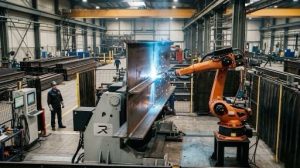
सामान्य उद्योग में वास्तविक विश्व रोबोटिक वेल्डिंग सेल अनुप्रयोग: मामले का अध्ययन 2026