Custom Robot Workstations And Laser Systems Manufacturer


Why Vision Systems Are Essential for Robotic Laser Welding
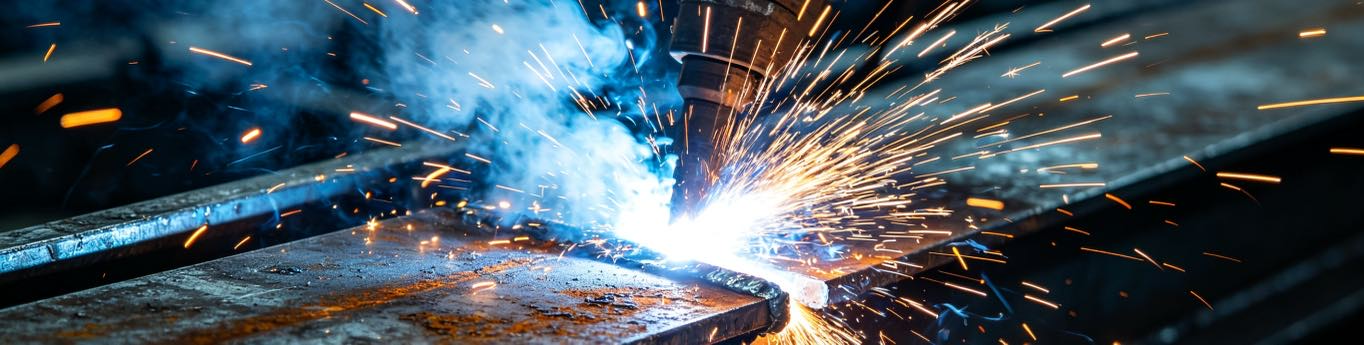
In the early days of industrial automation, robotic welding was largely considered “blind welding”: robots acted like “puppets” executing preset programs, moving mechanically along fixed paths. In traditional arc welding, the large spot size allows for some margin of error even with minor deviations. However, in laser welding—a precision process where the spot size is only 0.2mm to 0.6mm—any disturbance on the factory floor—even a minuscule 0.2mm shift in a part—can cause the laser to “miss the target,” resulting in incomplete welds or burn-through, which in turn renders the entire weld seam unusable. The introduction of vision systems has completely transformed this situation. It is akin to equipping robots with high-precision “eyes” and an agile “brain.” This article will provide an in-depth analysis of how vision systems drive the leap from “mechanical execution” to “intelligent cognition” in robotic laser welding.
1. Seam Tracking: Solving the Persistent Problem of “Misalignment”
Challenges:
Automotive white body structures are extremely complex. Even on highly automated production lines, dimensional inconsistencies in stamped parts, mechanical wear of fixtures over extended operation, and nonlinear deformation of metal caused by heat during welding can all lead to a drift between the actual position of the weld seam and the theoretical 3D model. For laser welding, such drift is fatal.
The “Magic”of Vision:
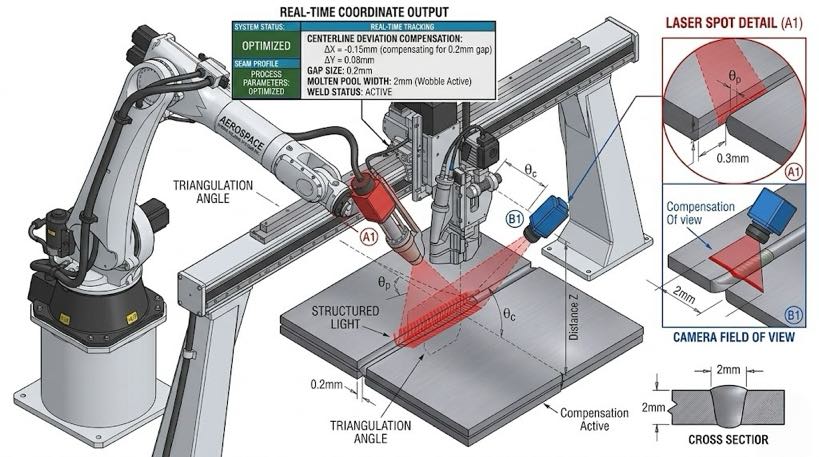
Laser vision sensors (based on the principle of laser triangulation) are typically mounted at the front end of the welding head, scanning in real time just a few centimeters ahead of the weld, much like advance scouts. They capture the geometric center of the weld, changes in width, and assembly gaps at a frequency of hundreds of times per second, feeding this deviation data back to the robot controller in real time.
Core Value:
Dynamic Compensation: Even if the workpiece is distorted in three-dimensional space, the robot can correct its motion trajectory in real time.
High-Precision Locking: Ensures the laser beam is always precisely locked onto the physical center of the weld seam, elevating alignment accuracy to the micrometer level.
2. Pre-welding Positioning: Giving the Production Line a “Flexible Brain”
Challenge:
When welding large components such as chassis and battery packs, it is difficult to achieve 100% precise workpiece placement. Traditional methods rely on expensive precision positioning fixtures, and each product model change requires manual path re-teaching, which is both time-consuming and increases production costs.
Vision’s “Magic”:
Using 2D or 3D global vision systems, the robot can “scan” the work area before starting. AI algorithms automatically identify key features on the workpiece (such as process holes, edges, and specific R-radii) and instantly calculate the deviation of the current workpiece from the standard position.
Core Value:
Cost Reduction and Efficiency Improvement: Reduces reliance on high-precision fixtures.
Ultimate Flexibility: Enables “one-piece-one-mark” alignment, allowing workpieces to be placed freely within a certain range while the robot automatically aligns itself, significantly shortening changeover cycles.
3. Melt Pool Monitoring: A “Real-Time Health Check” for the Welding Process
Challenges:
Laser deep penetration welding is a complex physical process completed in milliseconds. Under the high-energy irradiation of the laser, metal vaporizes violently and forms a keyhole. Whether spatter has formed internally, whether the plasma cloud is stable, or whether the keyhole has collapsed—these changes are impossible to observe with the naked eye or ordinary cameras due to the intense interference from laser radiation.
The “Superpower” of Vision:
By utilizing ultra-high-frame-rate cameras combined with narrow-band filtering technology, the system can filter out the blinding laser reflections and directly capture the contour, features, and flow state of the molten pool.
Core Value:
Quality Prediction: Engineers can assess welding stability in real time through the monitoring display.
Risk Prevention: In the event of anomalies (such as blowholes caused by impurities), the system can trigger an alarm and shut down the laser within milliseconds, minimizing potential damage.

4. Post-Welding Online Quality Inspection: Say Goodbye to the “Spot-Check Era”
Challenges:
Traditional post-welding quality inspection often relies on manual visual inspection (prone to fatigue and inconsistent standards) or destructive sampling (high cost and inability to perform 100% inspection). For safety-critical components, missing even a single microscopic porosity or crack can lead to irreversible consequences.
The “Magic” of Vision:
After welding is complete, a tracking 3D vision sensor reconstructs the surface topography of the weld. Deep learning-based image recognition algorithms automatically assess weld height, excess height, and continuity, while precisely identifying defects such as burn-through, spatter buildup, weld spatter, and crater defects.
Core Value:
100% Full Inspection: Every workpiece and every centimeter of weld has a digital ID.
Data Closed-Loop: Inspection data is synchronized in real-time with the factory MES system, enabling full traceability throughout the production process.
5. Performance Comparison: Blind Welding vs. Intelligent Vision
To provide a clearer understanding of the value of vision systems, we have compiled the following table:
| Monitoring Dimensions | Traditional Blind Welding Mode | Vision-Assisted Mode | Improvement |
| Positioning Accuracy | Depends on mechanical rigidity | Real-time vision correction | Accuracy improved to ±0.05 mm |
| Changeover Speed | Requires re-teaching of trajectories | Automatic positioning and focusing | Changeover time reduced by 70% |
| Scrap Rate | Highly affected by part consistency | Automatic deviation compensation | Scrap rate reduced by over 50% |
| Quality Management | Offline spot checks with significant lag | Online 100% inspection with real-time alerts | 100% digital traceability |
6. Future Trends: The Convergence of AI Vision and Closed-Loop Control
With the rapid advancement of deep learning and computing power, vision systems are evolving from mere “sensors” into “decision-makers” capable of logical reasoning.
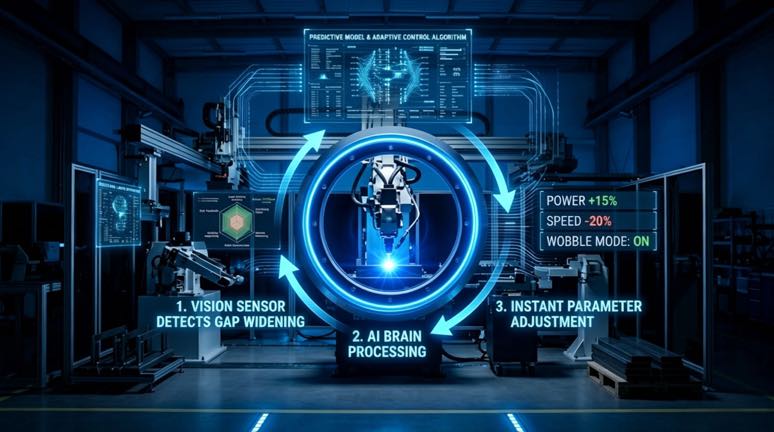
Future intelligent vision systems will achieve true closed-loop process control: they will not only detect deviations but also understand them. For example, when the vision system detects that the gap between sheet metal parts is widening due to thermal deformation, it will no longer simply report an error but will automatically issue instructions to the laser—“increase laser power in real time, reduce welding speed, and activate oscillation mode.” This adaptive control based on real-time visual feedback will usher in an era of truly unmanned, intelligent production.
If the laser is the “heart” of laser welding and the robot is its “limbs,” then the vision system is the indispensable “eyes.” For the modern automotive manufacturing industry, which pursues high quality and lightweight designs, vision systems are no longer optional—they are a prerequisite for ensuring the widespread adoption of laser welding.
Next Article Preview: “How to Choose the Right Robot Laser Welding System for Your Factory: A Complete Guide from Selection to Integration”
Author Identification
An expert in robotic welding system integration with over 12 years of industry experience. My company has over 26 years of professional experience, holds more than 40 patented technologies, and has successfully completed over 1,500 projects worldwide (approximately 70% of which involved robotic welding cells, totaling more than 1,000 units). The company holds EU CE certification (Certificate No.: M.2026.206.C134866) and complies with the EN 60204-1:2018 and EN ISO 12100:2010 standards. I have assisted numerous manufacturing companies throughout the entire process of robotic welding workstation implementation, from selection to production launch.
Updated: May 2026
RELATED POSTS
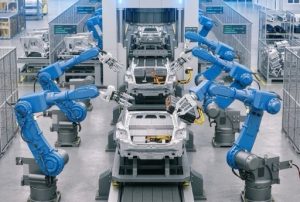
How Robotic Laser Welding Enables Automotive Lightweighting: From High-Strength Steel to Aluminum Bodies
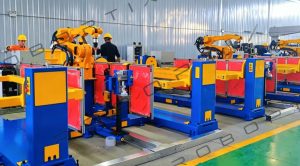
How Much Does a Robotic Welding Cell Cost in 2026? Full Pricing Breakdown
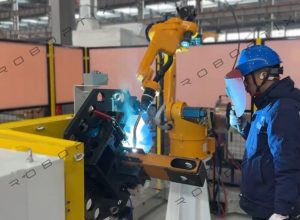
ROI of a No-Programming Robotic Welding Cell: A Practical Guide for Structural Steel Applications
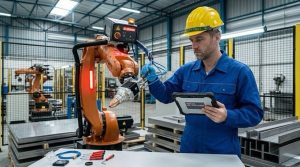
Installation & Maintenance Guide for Robotic Laser Welding Systems: A Practical Roadmap
10 Key Benefits of Implementing a Robotic Welding Cell in Your Shop