Custom Robot Workstations And Laser Systems Manufacturer


Welding Positioner Buying Checklist: 6 Inputs for an Accurate RFQ
You typed “welding positioner for sale” into a search box. The hard part is not finding machines—it is turning that search into a quote you can trust. An RFQ that omits the right inputs returns a number disconnected from your part, your floor, and your tolerance. This checklist is the six inputs ROBOPTIX needs to return a coordinated specification before you buy—no paywall hiding the math. Start with type selection; for the family comparison, see the six-family table.
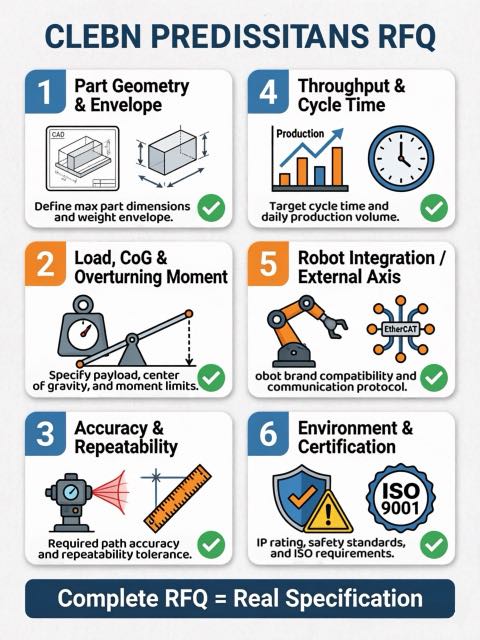
The Six Inputs at a Glance
| # | Input | What it decides |
| 1 | Part geometry & envelope | Which positioner family fits |
| 2 | Load, CoG & overturning moment | Whether the frame holds the part |
| 3 | Positioning accuracy & repeatability | Which spec class, how verified |
| 4 | Throughput & cycle target | Robot vs turnkey vs no-programming |
| 5 | Robot integration / external axis | Coordinated motion path |
| 6 | Environment, safety & certification | ISO 9001, audit before buy |
The Six Inputs, Explained
1. Part Geometry & Envelope
Geometry is the first filter. Long shafts and rotational seams suit a Headstock Tailstock Positioner; beams, boxes, and multi-face parts suit an L-Type Welding Positioner; large irregular frames suit a U-Type Welding Positioner; complex mixed seams suit a Horizontal 3-Axis Rotary Positioner; heavy plate suits a Vertical Tilting Positioner; round parts suit a Single Axis Rotary Positioner. Give us the envelope—max length, diameter, and swing—plus the weld locations, not just the part weight. A number with no geometry sends you to the wrong family.
2. Load, Center of Gravity & Overturning Moment
A 2-ton rating does not mean a 2-ton part. Eccentric loading, the overturning moment, and rotational inertia decide whether the frame holds the seam where you aimed it. State the load, its center of gravity offset from the rotation axis, and the worst-case leverage—then we size the structure and the drive, not just the catalog number. Ignore this and the cell drifts mid-weld; the accuracy you paid for never reaches the part.
3. Positioning Accuracy & Repeatability
Specify the tolerance the weld actually needs, then demand it be proven—not promised. ROBOPTIX reports pose accuracy AP and pose repeatability RP per ISO 9283:1998 at your load, temperature, and speed, because a number without conditions is a half-truth . Tell us the joint tolerance band and we verify it with a laser tracker before shipment. Backlash, stiffness, and thermal drift are the hidden specs that separate a real number from a brochure claim.
4. Throughput & Cycle-Time Target
Volume decides the build path more than the part does. Stable, high-count families reward a turnkey Welding Robot Cell or a No-Programming Robotic Welding Cell; frequent changeovers reward the vision-guided, hands-off layer. Give us parts-per-hour and the realistic shift model, and we match the positioner family and the automation level to the ramp you actually have—not the one on the brochure .
5. Robot Integration & External Axis
If a robot is in the picture, the positioner must be declared as an external axis so the controller solves the whole kinematic chain. The 7th Axis Robot Rail System extends reach; the Robot Base / Robot Pedestal defines the stable base frame; and servo positioners move as one with the robot. Tell us your controller brand and whether the cell must coordinate motion with the robot. We commission the chain before it ships, so the first good part comes in days.
6. Environment, Safety & Certification
Heat, spatter, and foot traffic decide guarding, cabling, and the base frame. For laser processes, a laser-ready platform matters; for tight regulatory environments, certification does. ROBOPTIX is ISO 9001-certified and builds to stated standards. State the ambient range, the safety envelope, and any local code—then audit the supplier with a factory visit before you commit. A spec sheet is not a guarantee; a bench test is.
Build Your RFQ: A Fill-in Template
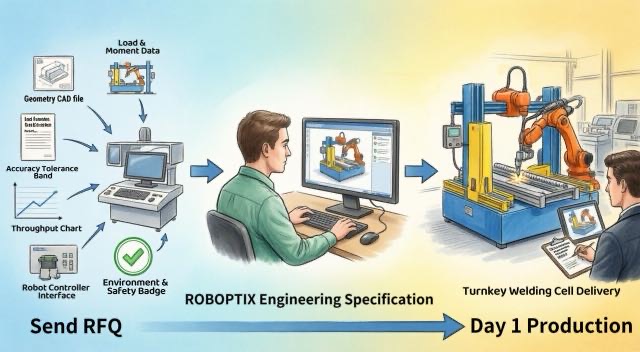
Send these six lines and we return a coordinated specification, not a guess:
1) Part: material, max envelope (L××), weld locations.
2) Load: mass, CoG offset, overturning moment.
3) Tolerance: required AP/RP band, verified per ISO 9283:1998.
4) Throughput: parts/hour, shift model, changeover frequency.
5) Robot: brand/controller, external-axis coordination yes/no.
6) Environment: ambient, safety envelope, certification needs.
A vague RFQ returns a vague number. A complete one returns a machine that welds on day one—the difference is the six inputs above.
Red Flags Before You Sign
A quote is only as good as the inputs behind it. Watch for a supplier who quotes from a photo, who cannot state the accuracy condition, or who treats a 2-ton rating as a 2-ton guarantee. Audit before you commit—factory visit and bench test beat a spec sheet—and weigh five-year total cost of ownership against the sticker. A cheap quote that ships wrong is the expensive machine.
When NOT to skip the checklist
If the part is a one-off, a custom program may be the honest path; if you already run robot cells, a coordinated build suits you. But even then, the six inputs above are what make the conversation real. Judgment, not a default, protects the budget.
Worked Example
Structural Fabricator (robot + L-Type Welding Positioner)
A fabricator first sent a one-line RFQ—“2-ton positioner, please quote.” It returned a generic number that missed the 1.2 m load offset and the ±0.15 mm seam tolerance. On the second pass with the full six inputs, ROBOPTIX specified an L-Type Welding Positioner sized for the overturning moment and verified RP per ISO 9283:1998 at the real load. The cell hit tolerance on the first article and never needed rework—the RFQ, not the machine, was the fix.
ROBOPTIX Builds to Your RFQ
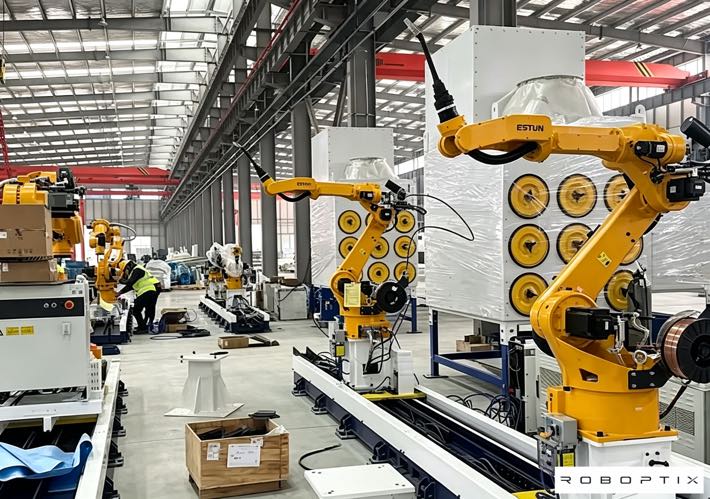
Every ROBOPTIX answer is an assembly, not a single SKU: a 7th Axis Robot Rail System that extends reach, a Robot Base / Robot Pedestal that defines the stable base frame, and servo positioners—Headstock Tailstock Positioner, L-Type Welding Positioner, U-Type Welding Positioner, Horizontal 3-Axis Rotary Positioner, Vertical Tilting Positioner, or Single Axis Rotary Positioner—declared as external axes. For a fixed part, the same hardware ships as a turnkey workstation; for hands-off operation, as a No-Programming Robotic Welding Cell; and for non-standard geometries, through the custom program. Send the six inputs and we spec the right build before you buy.
Frequently Asked Questions
Q: What are the six inputs for a positioner RFQ?
A: Geometry & envelope, load with CoG and overturning moment, required accuracy per ISO 9283:1998, throughput target, robot/external-axis integration, and environment/certification. Give all six and you get a real quote, not a guess.
Q: Why is part geometry the first filter?
A: It picks the family: long rotational seams need a Headstock Tailstock Positioner, beams/boxes need an L-Type, large frames an L-Type or U-Type, round parts a Single Axis Rotary. Geometry, not the brochure, drives the choice.
Q: Why does load rating lie?
A: A 2-ton catalog number ignores eccentric load and overturning moment; the frame still drifts mid-weld. State the CoG offset and leverage so we size the structure, not just the tag.
Q: How is accuracy proven, not promised?
A: ROBOPTIX reports AP and RP per ISO 9283:1998 at your load, temperature, and speed, then verifies with a laser tracker before shipment. A tolerance without conditions is a half-truth.
Q: Do I need robot integration input if I only want a positioner?
A: If a robot is downstream, the positioner must be declared as an external axis so the controller solves the chain; the 7th Axis Robot Rail System and Robot Base / Robot Pedestal define the frame. Even standalone, the envelope and load still decide the build.
Q: When should I NOT use this checklist?
A: For a unique one-off part, go to the custom program; for a shop with deep in-house skill, a coordinated build. But the six inputs still frame the decision—audit the supplier first.
A welding positioner RFQ is won or lost before the quote—six inputs decide everything: geometry, load, accuracy per ISO 9283:1998, throughput, robot integration, and environment. ROBOPTIX is ISO 9001-certified and returns a coordinated specification, not a guess, before you buy.
Send the six inputs and we will spec the right machine—welding positioner for sale is the start, not the answer.
About the Author
Experience & Credentials
Robotic welding system integration specialist with 12+ years of direct project experience focused on Robot Positioner selection and integration. Has provided consulting to 300+ factories across North America, Europe, and Asia. All specification data in this article is drawn from actual H / B / L / U series product datasheets.
Company background: 26+ years of welding automation engineering, 40+ active patents, 1,500+ completed projects globally, approximately 70% involving Robot Positioner integration.
Certifications
High-Tech Enterprise — Cert. No. GR202341000595 (Issued Nov. 2023)
ISO 9001: 2015 (GB/T 19001-2016) — Quality Management System
GJB 9001C-2017 — Military/Weapon Equipment Quality Management System
EU CE — Machinery Directive 2006/42/EC (Cert. No. M.2026.206.C134866)
References
[1] International Organization for Standardization. (1998). ISO 9283:1998, Manipulating Industrial Robots — Performance Criteria and Related Test Methods.
[2] Park, J.-H., Kim, S.-H., Moon, H.-S., & Kim, M.-H. (2019). Influence of Gravity on Molten Pool Behavior and Analysis of Microstructure on Various Welding Positions in Pulsed Gas Metal Arc Welding. Applied Sciences, 9(21), 4626. https://doi.org/10.3390/app9214626
[3] Liu, J., Jiang, F., Chen, S., Xu, B., Zhang, G., Cheng, W., & Ma, X. (2023). Mechanisms of Gravitational Influence on Weld Pool Behavior and Weld Bead Performance in Variable Polarity Plasma Arc Welding across Different Welding Position. Materials, 16(19), 6457. https://doi.org/10.3390/ma16196457
RELATED POSTS
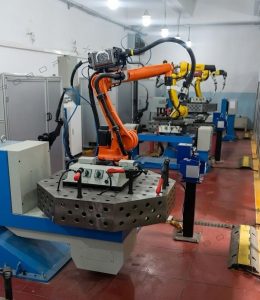
2026 Robot Positioner Buyer’s Guide: All 5 Types Compared — Head-and-Tailstock, L-Type, U-Type, and More
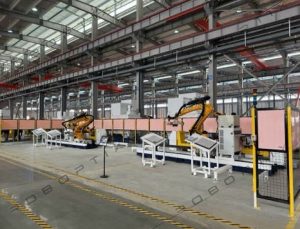
Robotic Welding Cell vs Traditional Welding Line: What Actually Changes on Your Shop Floor
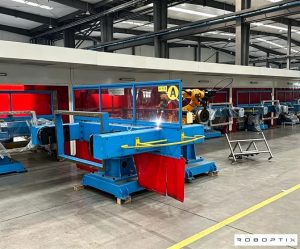
Welding Positioner for Sale: How to Choose the Right Type for Your Part (Headstock Tailstock, L-Type, U-Type, Horizontal 3-Axis, Single Axis Rotary, Vertical Tilting)
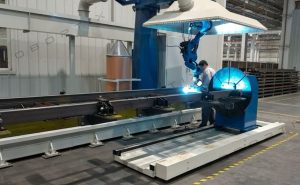
5 Reasons Large Workpiece Welding Is Inefficient — and How a Robot Positioner Solves Each One
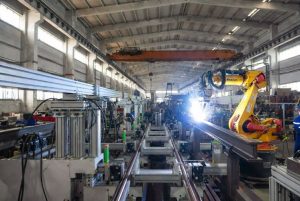
7th Axis Robot in Welding Automation: Real Case Studies and ROI Examples