Custom Robot Workstations And Laser Systems Manufacturer


How Robotic Laser Welding Enables Automotive Lightweighting: From High-Strength Steel to Aluminum Bodies
The global automotive industry is facing unprecedented pressure to reduce vehicle weight. With the advancement of the “dual carbon” goals and increasingly stringent fuel consumption and carbon emission regulations worldwide, automakers must significantly reduce vehicle weight while ensuring safety and structural integrity. In the era of electric vehicles, driving range has become a core competitive advantage, further amplifying the demand for lightweighting. According to data from the International Energy Agency (IEA), by 2030, the average curb weight of new vehicles globally must decrease by approximately 15%–20% compared to 2020. This has directly driven the large-scale application of high-strength steel (HSS), advanced high-strength steel (AHSS), hot-formed boron steel, and aluminum alloys in vehicle bodies.
However, the introduction of these lightweight materials has also brought significant challenges in welding. Traditional resistance spot welding, MIG, and TIG welding processes often fall short when faced with challenges such as the embrittlement of high-strength steel, porosity in aluminum alloys, and dissimilar metal joints between aluminum and steel. Robot laser welding, with its high energy density, low heat input, and high precision, has emerged as the key technology to overcome these challenges. Without laser welding, the large-scale application of many lightweight materials would be virtually impossible.
Welding Challenges in Automotive Lightweighting
Traditional vehicle bodies primarily use standard low-carbon steel, relying mainly on resistance spot welding for joining—a mature and cost-effective process. However, as the proportion of lightweight materials continues to rise, welding difficulty has increased significantly:
High-strength steel and hot-formed boron steel (such as 22MnB5, with strengths exceeding 1500 MPa): During welding, martensitic embrittlement is prone to occur in the heat-affected zone, leading to a decrease in local strength and toughness, which directly impacts the body’s crash safety.
Aluminum alloys (especially the 6000 and 7000 series): With high thermal conductivity and a large coefficient of linear expansion, these materials are highly prone to porosity, heat cracks, and significant welding distortion during traditional MIG/TIG welding, requiring extensive post-welding straightening and grinding processes.
Aluminum-steel dissimilar metal joints: Aluminum and steel have melting points that differ by approximately 600°C and significantly different coefficients of thermal expansion. Traditional welding processes struggle to form reliable metallurgical bonds, often requiring mechanical riveting or adhesive bonding as auxiliary methods; however, these methods increase weight and process complexity.
Design Optimization Requirements: To further reduce weight, it is necessary to narrow the flange width and adopt an integrated structure; however, the flange width requirements of traditional spot welding (typically 15–20 mm) have become a bottleneck for lightweight design.
These issues collectively lead to lower yield rates and increased post-processing costs for traditional welding processes, making it difficult to meet the comprehensive requirements of modern automobiles for “lighter, stronger, and safer” vehicles.
Core Advantages of Robotic Laser Welding
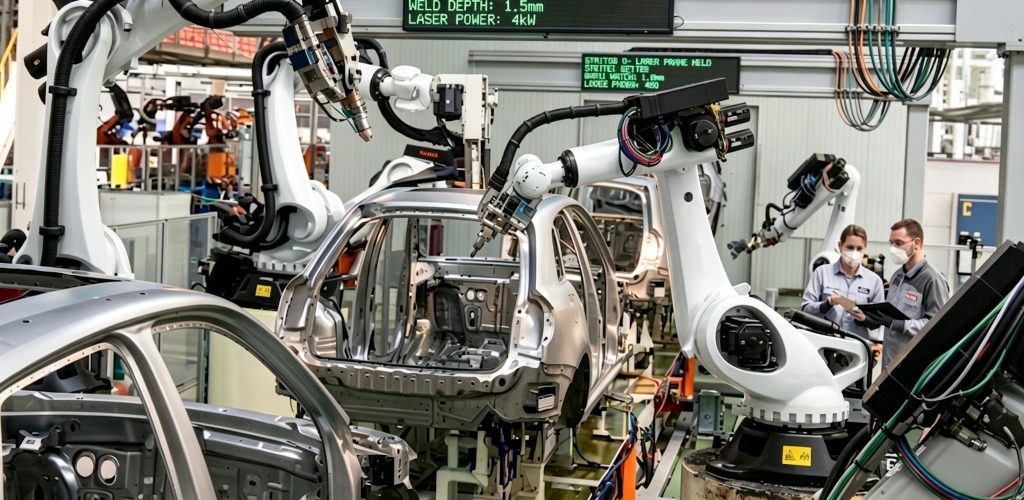
A robotic laser welding system consists of a high-power fiber laser, a 6-axis industrial robot, a precision welding head, and an intelligent control system. Its most notable feature is its extremely high energy density (reaching 10⁶–10⁷W/cm²), which allows the laser beam to be focused into a tiny spot of 0.2–0.8 mm, completing melting and solidification within milliseconds.
Compared to traditional arc welding, laser welding delivers only 1/5 to 1/10 of the heat input, with a heat-affected zone width controllable within 0.1–1 mm and heating/cooling rates as high as 10³–10⁶°C/s. These characteristics represent a revolutionary breakthrough for welding lightweight materials.
Effectively Suppressing Hardened Steel Heat-Affected Zone Embrittlement
The extremely low heat input minimizes the heat-affected zone in high-strength steel welding, preventing the extensive formation of brittle martensite. The weld strength can approach that of the base material, significantly enhancing vehicle crash safety.
Achieving High-Quality Aluminum Alloy Welding
By precisely controlling laser power, welding speed, and defocusing, combined with beam oscillation technology, the formation of porosity and cracks can be effectively suppressed. The weld surface is smooth and airtight, making it particularly suitable for exterior components such as doors and hoods.
Achieving Reliable Joining of Aluminum and Steel
By optimizing process parameters (such as power modulation and shielding gas composition), laser welding forms a thin, stable intermetallic layer at the interface, enabling metallurgical bonding between aluminum and steel. This technology is widely used in hybrid-material body structures, significantly reducing the weight increase associated with traditional riveting.
Significantly Reducing Flange Width to Achieve Bodyweight Reduction
Traditional resistance spot welding requires relatively wide overlap flanges, whereas laser welding produces continuous welds, allowing flange widths to be easily reduced to 8–10 mm or even narrower. According to industry estimates, on a typical C-segment sedan, optimizing flange design through laser welding can reduce body weight by 8–15 kg while increasing torsional stiffness by more than 5%.
In addition, the robotic system achieves a repeatability accuracy of ±0.05 mm, enabling it to reliably weld complex three-dimensional surfaces and meet the requirements of both monocoque bodies and modular production.
Comparison of Robotic Laser Welding VS Traditional Welding Processes
| Comparison Criteria | Robotic Laser Welding | Conventional Resistance Spot Welding / MIG Welding | Impact on Weight Reduction |
| Heat-Affected Zone | Minimal (0.1–1 mm) | Significant (several millimeters or more) | Significantly reduces the risk of embrittlement and preserves material properties |
| Deformation Control | Minimal deformation | Significant deformation; straightening required | Suitable for thin-walled aluminum alloy and high-strength steel structures |
| Joining of Dissimilar Metals | Excellent (aluminum-steel, copper-aluminum, etc.) | Difficult, requires auxiliary processes | Enables multi-material hybrid body designs |
| Flange width | Can be reduced to 8–10 mm | Typically requires 15–20 mm | Reduces vehicle weight by several kilograms |
| Weld quality | Continuous, aesthetically pleasing, no spatter | Spot welding or spatter present | Improves body rigidity and surface quality |
| Production flexibility | High (suitable for complex 3D trajectories) | Moderate | Suitable for monocoque bodies and complex structures |
| Overall weight reduction effect | Optimal | Average | Laser welding is key to the large-scale application of lightweight materials |
Real-world Application Cases from Leading Automakers
BMW: In the 5 Series and 7 Series models, the company switched from traditional riveting to laser welding for joining aluminum alloy outer door panels with steel inner panels. This not only reduced the number of parts and overall weight but also significantly improved body rigidity. According to official BMW data, this technology helped reduce the weight of each vehicle by approximately 12 kilograms.
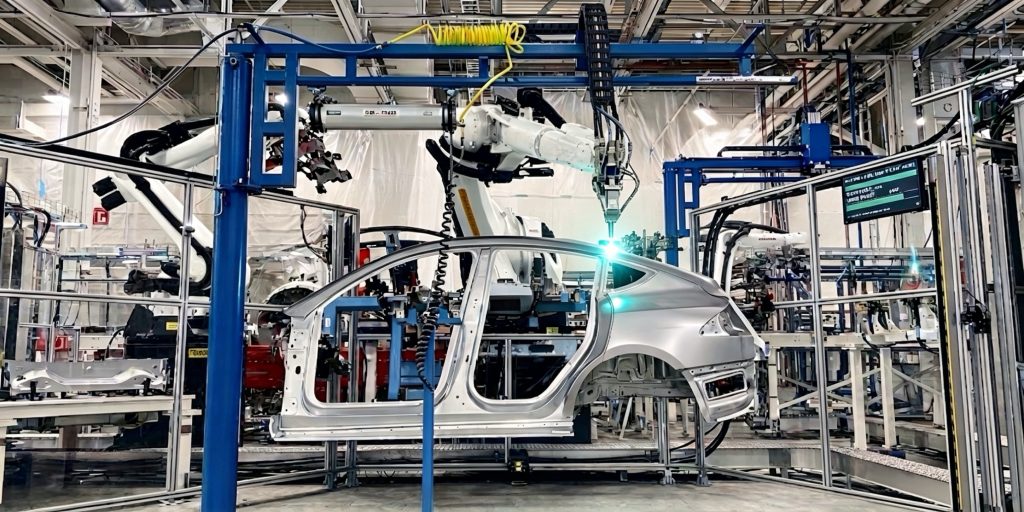
Tesla: In models such as the Model Y, laser welding is deeply integrated with large aluminum die-cast components (Gigacasting), drastically reducing the number of weld points in traditional body structures (by more than 1,600 in some cases) and achieving dual breakthroughs in production efficiency and lightweight design. Currently, Tesla’s Shanghai Gigafactory has deployed hundreds of robotic laser welding systems.
Volkswagen Group: On the MEB all-electric platform, laser welding is widely used to join aluminum battery trays with high-strength steel body frames, ensuring the structural integrity of the battery pack while effectively controlling the vehicle’s overall weight.
Mercedes-Benz: In the S-Class and EQS models, laser welding is used to create aluminum-steel hybrid bodies. The welds are aesthetically pleasing and structurally reliable, providing premium models with superior NVH performance and crash safety.
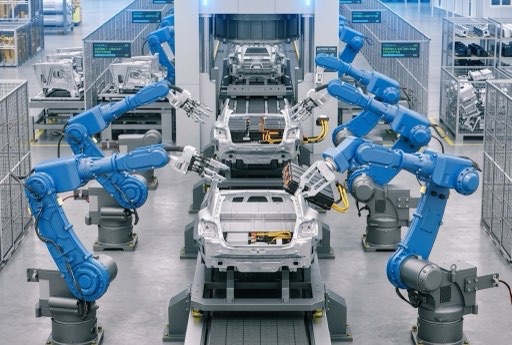
These practical applications fully demonstrate that robotic laser welding has become an indispensable core process in the lightweight manufacturing of high-end automobiles.
Next Article Preview: The Six Major Challenges of Robotic Laser Welding and How to Overcome Them
Author Identification
An expert in robotic welding system integration with over 12 years of industry experience. My company has over 26 years of professional experience, holds more than 40 patented technologies, and has successfully completed over 1,500 projects worldwide (approximately 70% of which involved robotic welding cells, totaling more than 1,000 units). The company holds EU CE certification (Certificate No.: M.2026.206.C134866) and complies with the EN 60204-1:2018 and EN ISO 12100:2010 standards. I have assisted numerous manufacturing companies throughout the entire process of robotic welding workstation implementation, from selection to production launch.
Updated: May 2026
RELATED POSTS
How to Choose the Right Robotic Welding Cell for Your Shop? Single-Station vs. Two-Station (2026 Complete Guide)
Five-Year TCO of a Welding Positioner: Counting the Hidden Costs the Quote Forgot
Why a 2-Ton Positioner Can’t Always Hold a 2-Ton Part: Eccentric Loading, Overturning Moment, and Inertia
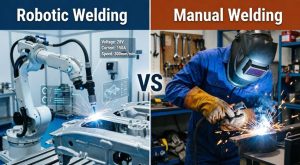
Robotic Welding Cell vs Manual Welding: Which Is Better for Modern Manufacturing?
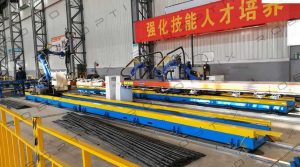
Why Add a 7th Axis Robot? 5 Powerful Ways to Boost Productivity & Cut Costs in 2026