Custom Robot Workstations And Laser Systems Manufacturer


A Comprehensive Comparison of Robotic Laser Welding vs. MIG and TIG Welding: Which One Is Right for You?
Robotic Laser Welding vs. MIG/TIG: Which Process Fits Your Production?
In our previous article, we provided a detailed overview of the principles, system components, and application scenarios of robotic laser welding. After reading it, many readers naturally ask: Is it really better than the MIG or TIG welding I currently use?
The answer is not a definitive “laser welding is best.” While robotic laser welding offers significant advantages in specific scenarios, traditional MIG (Metal Inert Gas) or TIG (Tungsten Inert Gas) welding remains the more suitable choice in others. This article provides an objective comparison across four key dimensions—speed, heat-affected zone, material compatibility, and total cost—to help you make an informed decision based on your product characteristics and production requirements.
1. Welding Speed Comparison
Robotic laser welding: Offers a clear advantage on thin sheets (≤5 mm), typically reaching 50–150 mm/s. It can easily achieve 80–120 mm/s on 1 mm stainless steel and 40–60 mm/s on 2 mm aluminum alloy. Automation enables fast cycle times and high overall production capacity.
Robotic MIG Welding: Offers moderate speeds and performs consistently on medium-to-thick sheets, but is generally slower than laser welding, particularly when multiple passes are required, or spatter needs to be cleaned up.
TIG Welding (Manual or Robotic): The slowest method, typically only 1/4–1/5 the speed of laser welding, and is commonly used for applications requiring extremely high surface finish quality.
Summary: Laser welding is the preferred choice for thin sheets and high-speed batch production; MIG welding offers a speed advantage for thick-sheet structural components.
2. Comparison of Heat-Affected Zone (HAZ) and Distortion
Robotic Laser Welding: Highly concentrated energy results in an extremely small heat-affected zone (0.1–1 mm) and minimal workpiece distortion. Particularly suitable for precision components and thin-walled structures.
MIG Welding: Higher heat input leads to a larger heat-affected zone, making distortion more likely and often requiring additional straightening.
TIG Welding: Controllable heat input results in a heat-affected zone smaller than MIG, but still significantly larger than laser welding.
Summary: Laser welding offers significant advantages for thin sheets, aluminum alloys, and precision components that are sensitive to distortion.

3. Comparison of Material Suitability
Different materials have vastly different requirements for welding processes. Laser welding excels in thin sheets, highly reflective materials (aluminum, copper), and dissimilar metal joints, while MIG is more adaptable for thick carbon steel plates and components with large gaps. TIG is suitable for applications requiring extremely high standards for weld appearance and purity.
With the rise of new energy vehicles and lightweight design, the widespread use of aluminum alloys, hot-formed steel, and dissimilar metal combinations such as copper and aluminum has placed higher demands on heat input and distortion control during welding. In these scenarios, robotic laser welding is gradually demonstrating unique advantages due to its minimal heat-affected zone and excellent dissimilar metal welding capabilities. It is particularly suitable for components that require a balance of lightweight construction and strength, such as car bodies and battery trays.
4. Comprehensive Cost Comparison
Initial Investment: Laser welding systems are the most expensive, MIG is the least expensive, and TIG falls in the middle.
Operating Costs: Laser welding requires fewer consumables and less post-processing, resulting in lower long-term costs; MIG involves continuous wire consumption; TIG has higher labor costs.
Return on Investment (ROI): In high-volume thin-sheet applications, laser welding typically achieves ROI within 18–24 months; MIG achieves ROI faster in general-purpose thick-sheet applications.
Comparison Table
| Comparison Criteria | Robotic Laser Welding | Robotic MIG Welding | TIG Welding (Manual/Robotic) | Recommended Applications |
| Welding Speed | Extremely fast (50–150 mm/s) | Moderate | Very slow | Laser welding is recommended for high-speed production of thin sheets |
| Heat-Affected Zone | Extremely small (0.1–1 mm), minimal distortion | Larger | Moderate | Precision thin parts, aluminum alloys: Choose laser |
| Material Compatibility | Excellent for thin sheets, highly reflective materials, dissimilar metals | Strong for thick carbon steel and stainless steel | Suitable for almost all materials, particularly high-performance alloys | Dissimilar metals, thin aluminum: Choose laser; thick steel: Choose MIG |
| Weld Bead Quality | Aesthetic, no spatter, self-fusion | Spatter present, requires cleaning | Highest aesthetic quality | For high visual requirements: Choose TIG or laser |
| Initial Investment | High | Low | Moderate | hoose laser for high volume; MIG for medium to low volume |
| Long-Term Operating Costs | Low (minimal consumables, minimal post-processing) | Moderate (welding wire consumption) | Relatively high (labor + time) | Laser is more cost-effective for thin-sheet batch production |
| Overall Recommendations | Thin sheets, high precision, high volume | Thick sheets, structural components, large gaps | Small batches, high aesthetic standards, complex alloys | Flexible selection based on thickness and production volume |

Comparison Criteria Robot Laser Welding Robot MIG Welding TIG Welding (Manual/Robotic) Recommended Applications Welding Speed Extremely fast (50–150 mm/s) Moderate Very slow Thin sheets High-speed production: choose laser Heat-Affected Zone (HAZ) Extremely small (0.1–1 mm), minimal distortion Large Moderate Precision thin parts, aluminum alloys: choose laser Material Compatibility Thin sheets, highly reflective materials, dissimilar metals: excellent Thick sheets, carbon steel, stainless steel Strong Suitable for almost all materials, particularly high-performance alloys, dissimilar metals, and thin aluminum—choose laser; thick steel—choose MIG Weld Quality Aesthetic, no spatter, self-fusion Spatter present, requires cleaning Highest aesthetic quality—choose TIG or laser Initial Investment Low High Medium High High-volume production—choose laser, Medium to low production: MIG; Low long-term operating costs (fewer consumables, minimal post-processing); Moderate (welding wire consumption); Higher (labor + time); For thin-sheet batch production, laser is more cost-effective overall; Recommended for thin sheets, high precision, and high production; For thick plates, structural components, large gaps, small batches, high aesthetic requirements, and complex alloys, choose flexibly based on thickness and production volume.
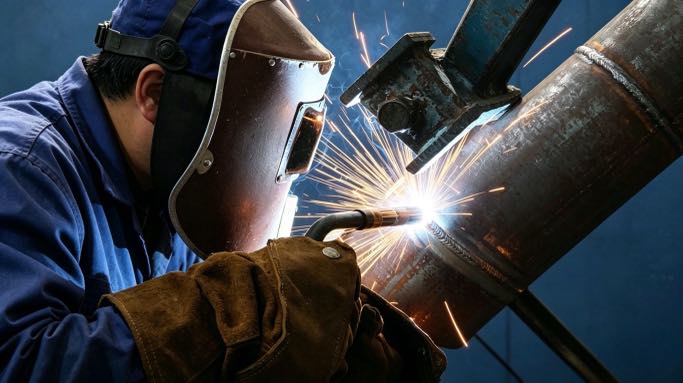
How to quickly select the welding process best suited for your needs?
Use the following decision-making framework for a quick assessment:
Thin sheets (≤5mm) + high throughput + low distortion requirements → Prioritize robotic laser welding
Thick sheets (>6mm) carbon steel + large gaps + structural strength priority → Prioritize robotic MIG welding
Small batches + extremely high aesthetic requirements + complex alloys → Prioritize TIG welding
Dissimilar metals (e.g., copper and aluminum) or highly reflective materials → Laser welding offers significant advantages
There is no single “best” welding process; only the process that best matches production requirements.

Next Article Preview: Applications of Robotic Laser Welding in Automotive Lightweighting Trends — How to Use Laser Technology to Achieve Lighter, Stronger, and More Energy-Efficient Vehicle Bodies and Battery Systems.
Author Identification
An expert in robotic welding system integration with over 12 years of industry experience. My company has over 26 years of professional experience, holds more than 40 patented technologies, and has successfully completed over 1,500 projects worldwide (approximately 70% of which involved robotic welding cells, totaling more than 1,000 units). The company holds EU CE certification (Certificate No.: M.2026.206.C134866) and complies with the EN 60204-1:2018 and EN ISO 12100:2010 standards. I have assisted numerous manufacturing companies throughout the entire process of robotic welding workstation implementation, from selection to production launch.
Updated: May 2026
RELATED POSTS
Robotic Laser Welding ROI Analysis: Is It Worth the Investment?
Welding Positioner Types Compared: Headstock, L-Type, U-Type, 3-Axis & More
Robot Positioner ROI: How Much Is Manual Welding Actually Costing You?
8 Costly Mistakes When Deploying a Robotic Welding Cell (And How to Avoid Them) – 2026 Edition
6 Common Challenges in Robotic Laser Welding and How to Solve Them