Custom Robot Workstations And Laser Systems Manufacturer


8 Costly Mistakes When Deploying a Robotic Welding Cell (And How to Avoid Them) – 2026 Edition
The 8 most common and costly mistakes when deploying a robotic welding cell, Based on our tracking and analysis of over 1,000 actual robot welding unit deployment projects Learn practical prevention strategies to avoid delays, budget overruns, and poor performance.
Robotic welding cells promise 3-5x productivity gains and payback periods of 12-18 months. However, industry tracking shows that approximately 70% of first-time deployments experience significant delays, budget overruns, or fail to meet performance expectations.
The problem is rarely the robot itself. Most failures stem from avoidable mistakes during the selection and deployment process.
This article outlines the 8 most common and expensive mistakes drawn from over 1000 real project post-mortems. Each mistake includes real-world consequences and actionable prevention strategies.
1. Skipping or Rushing TCP Calibration
Real-World Consequences
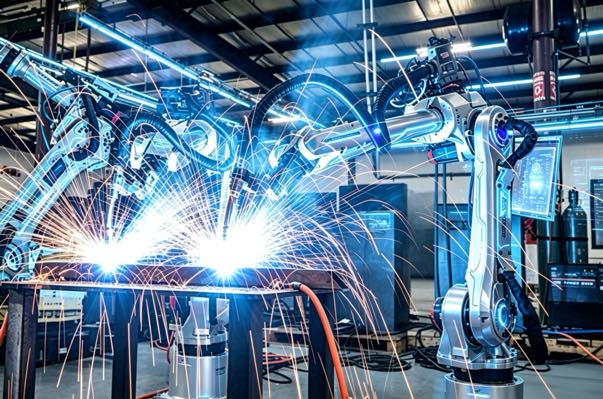
TCP (Tool Center Point) defines where the robot thinks the welding torch tip is located. An inaccurate TCP can cause 2-5mm deviation between the programmed path and actual torch position.
Results include:
– Misaligned weld seams, insufficient penetration, and lack of fusion
– Inconsistent weld quality across shifts
– Ineffective seam tracking
In one documented case, a company spent three weeks troubleshooting unstable welds only to discover inconsistent TCP caused by varying wire stick-out lengths.
Prevention Methods:
– Use a laser TCP calibration tool for ±0.1mm accuracy
– Recalibrate after every torch or contact tip change
– Establish a daily TCP verification routine
– Train operators on proper 4-point or 6-point calibration methods
2. Poor Tooling Fixture Design
Real-World Consequences
Many companies allocate 80% of their budget to the robot and welder but less than 5% to fixtures. Poorly designed fixtures are one of the leading causes of deployment failure.
Results include:
– Workpiece deformation during welding
– Poor repeatability, wasting the robot’s ±0.05mm precision
– Extremely long changeover times
Prevention Methods:
– Allocate 5-10% of total investment to tooling
– Follow the 3-2-1 locating principle
– Account for thermal expansion in the design phase
– Plan for 1-2 rounds of fixture iteration
3. Ignoring Safety Compliance (ISO 10218)
Real-World Consequences
Failing to meet ISO 10218-1 and ISO 10218-2 standards often results in failed customer audits, costly retrofits ($20,000–$50,000), and potential legal liability.
Prevention Methods:
– Design safety systems to ISO 10218 standards from the beginning
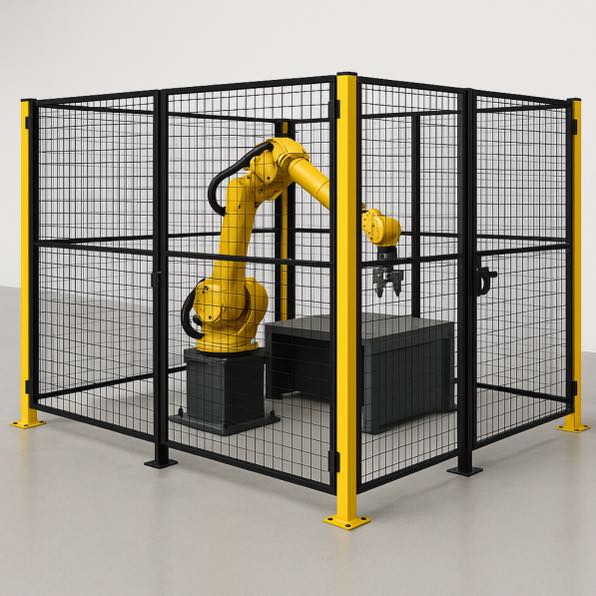
– Use safety fencing ≥2.0m high with light curtains and interlocks
– Require a formal risk assessment report from the integrator
– Consider third-party safety validation (e.g., TÜV)
4. Wrong Selection (Single-Station vs Dual-Station)
Real-World Consequences
Choosing the wrong station configuration is one of the most expensive mistakes because it cannot be easily corrected later.
Prevention Methods:
– Calculate robot utilization rate = Welding Time ÷ (Welding Time + Load/Unload Time)
– Utilization >75% → Single station is usually sufficient
– Utilization <65% → Dual station provides clear benefits
– Choose modular systems that allow future upgrades
5. No Offline Programming Plan
Real-World Consequences
Relying solely on teach pendant programming leads to long downtime during new part introduction and changeovers.
Prevention Methods:
– Confirm offline programming (OLP) support during selection
– Budget for professional OLP software ($3,000–$8,000)
– Train at least 1-2 technical staff on offline programming
6. Missing Maintenance Plan
Real-World Consequences
Without scheduled maintenance, equipment life shortens dramatically, weld quality declines, and unexpected downtime increases.
Prevention Methods:
– Create a detailed preventive maintenance schedule
– Maintain critical spare parts inventory
– Sign an annual maintenance service contract with the integrator
7. Inadequate Operator and Programmer Training
Real-World Consequence
Operators who only know how to press “Start” and “Stop” lead to low utilization, frequent calls to the integrator, and major problems after staff turnover.
Prevention Methods:
– Clearly specify training scope and duration in the contract
– Train at least 2-3 operators and 1 maintenance technician
– Conduct post-training assessments and schedule follow-up sessions
8. Ignoring Hidden Costs
Real-World Consequences
Final project costs often exceed the initial quote by 20-40% due to unforeseen expenses.
Prevention Methods:
– Request a full-cost, transparent quotation
– Reserve 15-25% contingency budget
– Conduct a thorough pre-installation site assessment (power, air, floor load, etc.)
Professional Deployment Checklist
The success of a robotic welding cell deployment depends 70% on avoiding these common mistakes. By planning carefully, following the checklist, and working with an experienced integrator, most projects can be completed on time, within budget, and deliver strong results.
Action Step:
Before signing any contract, ask for at least two reference customers from similar projects and conduct thorough due diligence.
Data Sources:
– ISO 10218-1:2025 & ISO 10218-2:2011
– International Federation of Robotics (IFR)
– Lessons learned from 1000+ robotic welding cell deployments (2024-2026)
Related Reading:
– What Is a Robotic Welding Cell? A Beginner’s Guide 2026
– How Much Does a Robotic Welding Cell Cost in 2026?
– Robotic Welding Cell ROI in 2026: Complete Guide
– How to Choose the Right Robotic Welding Cell: Single vs Dual Station
Author:
An expert in robotic welding system integration with over 12 years of industry experience. My company has over 26 years of professional experience, holds more than 40 patented technologies, and has successfully completed over 1,500 projects worldwide (approximately 70% of which involved robotic welding cells, totaling more than 1,000 units). The company holds EU CE certification (Certificate No.: M.2026.206.C134866) and complies with the EN 60204-1:2018 and EN ISO 12100:2010 standards. I have assisted numerous manufacturing companies throughout the entire process of robotic welding workstation implementation, from selection to production launch.
Update Date: May 2026
RELATED POSTS
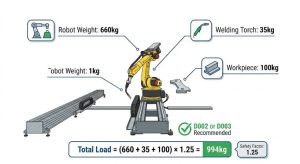
2026 7th Axis Robot Selection Guide: Payload, Stroke, Repeatability & Brand Compatibility
5 Questions to Ask Before Buying a Robotic Welding Cell for Structural Steel
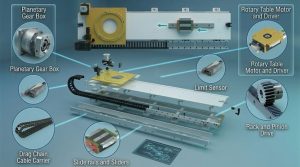
7th Axis Robot Track System Maintenance & Troubleshooting Guide
Fixture-Free Fabrication: When a Welding Positioner Replaces Complex Jigs, Tack Welds, and Crane Time
Manual vs Robotic Welding for Structural Steel:When Does Automation Pay Off?