कस्टम रोबोट वर्कस्टेशन और लेजर सिस्टम निर्माता



स्मार्ट फ़ैक्टरियों में रोबोट 7वें एक्सिस रोबोट के भविष्य के रुझान & कोबोट एकीकरण (2026-2030)
आपकी फ़ैक्टरी में एक झलक 2030
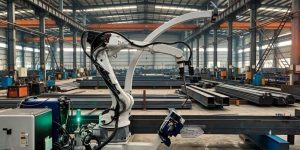
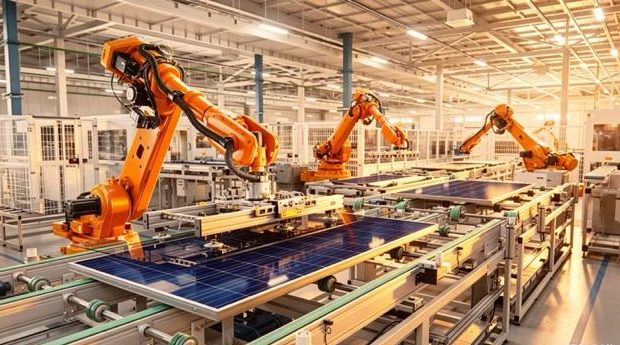
अपनी आँखें बंद करें. Imagine a 30-meter7वें अक्ष रोबोट रास्ता. एक भारी-भरकम रोबोट इसके साथ चुपचाप सरकता है, वेल्डिंग पवन टॉवर flanges. There are no cable drag chains dragging on the floor. No screeching of metal on metal. No grease-stained maintenance logbooks.
बजाय, tiny embedded sensors whisper data to the cloud. An AI system analyzes vibration patterns and temperature trends. It sends an alert: “Replace bearing block on Station 3 — 72 hours from now.”
You schedule maintenance for Tuesday morning. Production never stops. The7वें अक्ष रोबोट does not fail unexpectedly. It simply tells you when it needs care.
This is not science fiction. This is 2028-2030 तकनीकी. And it is coming faster than you think.
The7वें अक्ष रोबोट — once a simple linear track — is transforming into thenervous system of the smart factory. द्वारा 2030, it will be as essential to your production line as electricity.
This article is your roadmap. Let’s explore what changes between now and 2030 — and what you should do about it today.
भाग 1: The Smart Factory is Already Knocking
1.1 From Dumb Track to Data Powerhouse
आज, most7वें अक्ष रोबोट systems are actuators. The controller yells “Go!” and the track moves. That is it.
Tomorrow, आपका7वें अक्ष रोबोट will be adata node — constantly listening, learning, and optimizing.
Here is what changes over the next five years:
| क्षमता | आज (2026) | 2030 |
| Failure detection | After the crash | 72 hours before failure |
| Quality control | Random sampling | Every weld tied to motion data |
| Speed optimization | Manual tuning | AI adjusts in real time |
| Maintenance schedule | “प्रत्येक 3 महीने” | “When the data says so” |
Why this matters: A plant with 107वें अक्ष रोबोट systems will generate terabytes of operational data annually. Manufacturers who capture and analyze this data will see opportunities their competitors cannot. Those who ignore it will fall behind.
1.2 Digital Twins: Your 7th Axis Robot’s Mirror Image
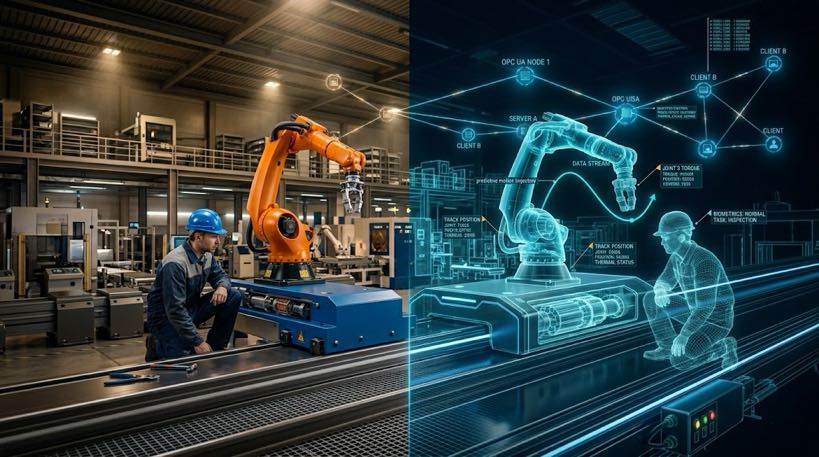
एdigital twin is exactly what it sounds like — a perfect virtual copy of your physical7वें अक्ष रोबोट. द्वारा 2028, this will be standard equipment, not a luxury add-on.
What can you do with a digital twin of your 7th axis robot?
- Test new programs without stopping production.Program offline. Validate in the twin. Then deploy. Zero downtime.
- Move positioners around on your screen.Try five different layouts before cutting a single piece of steel.
- Train new operators without risk.Let them crash the virtual7वें अक्ष रोबोट. It costs nothing.
- Fix problems from anywhere.A technician in Chicago can examine a twin in Shanghai.
Real story: A heavy equipment manufacturer simulated their D0037वें अक्ष रोबोट before installation. The digital twin revealed that the selected motor would be undersized when accelerating a 2,200kg excavator arm. They fixed the design before manufacturing — saving three weeks of rework and $45,000 in emergency costs.
That is the power of digital twins.
1.3 ओपीसी यूए: अंत में, a Common Language
Imagine walking into a room where everyone speaks a different language. That is today’s factory floor — Fanuc speaks Fanuc, ABB speaks ABB, and your7वें अक्ष रोबोट is caught in the middle.
ओपीसी यूए is changing that. Think of it as USB for industrial data — one standard connector that everything understands.
द्वारा 2027, every7वें अक्ष रोबोट worth buying will support OPC UA natively.
What this means for you:
- Plug any robot controller into any7वें अक्ष रोबोट. They will talk.
- Your MES system can read7वें अक्ष रोबोट status without custom code.
- One dashboard shows utilization for all your7वें अक्ष रोबोट systems — regardless of brand.
Action item: जोड़ना “native OPC UA support” to your7वें अक्ष रोबोट purchase specifications. आज. Retrofitting older systems costs $5,000-10,000 प्रत्येक. Doing it right the first time costs nothing.
भाग 2: Four Technologies That Will Change Everything
2.1 Linear Motors: Silence, रफ़्तार, and No Wear
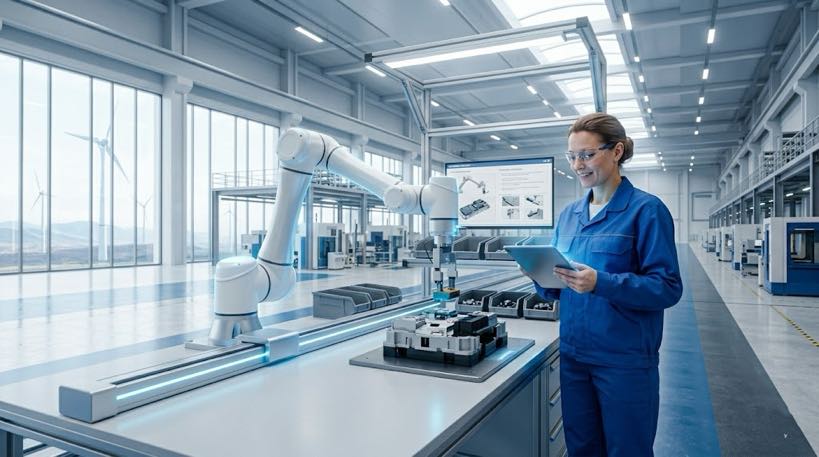
If you have ever stood next to a7वें अक्ष रोबोट at full speed, you know the sound. पिसाई. क्लिक करना. Whirring. That is the sound of mechanical wear.
Linear motors are different. There is no physical contact between the motor and the track — magnetic levitation, like a bullet train.
| विशेषता | आज (रैक & Pinion) | Tomorrow (Linear Motor) |
| प्रतिक्रिया | 0.05-0.1मिमी | Zero |
| शोर | 75-85 dB | अंतर्गत 65 dB(conversation level) |
| Wear | Constant grinding | कोई नहीं |
| Lifespan | 10-15 साल | 50+ साल |
| Top speed | 2.5 एमएस | 5+ एमएस |
The catch:Linear motor7वें अक्ष रोबोट systems cost 2-3x more today. But prices are falling 15-20% every year. द्वारा 2028-2029, they will be cost-competitive for premium applications.
Our prediction:द्वारा 2030, linear motors will be standard on high-end7वें अक्ष रोबोट प्रणाली. Rack and pinion will still exist — just like manual transmissions still exist. But the best systems will have moved on.
2.2 Wireless Power: Goodbye, Drag Chains
Ask any maintenance technician: “What fails most often on your7वें अक्ष रोबोट?”
The answer is always the same. Cable drag chains.
Cables bend millions of times. Copper work-hardens. Insulation cracks. The7वें अक्ष रोबोट stops. The line stops. Everyone is unhappy.
Inductive power transfer eliminates the problem entirely. Power jumps across an air gap — no wires, no contacts, no wear.
Combine this with 5G URLLC or industrial Wi-Fi 6E for data (latency under 5 milliseconds), and your7वें अक्ष रोबोट becomes completely wireless.
Benefits that matter to you:
- No more drag chain maintenance.Ever.
- Unlimited travel.आपका7वें अक्ष रोबोट could run 200 meters if you wanted.
- Safer floors.No trip hazards for operators.
- Faster installation.No cable trenches. No overhead bridges.
Timeline: Light to medium wireless7वें अक्ष रोबोट systems arrive 2027-2028. अत्यधिक टिकाऊ (3,000kg class) arrive 2029-2030.
2.3 AI That Predicts the Future
Here is a bold claim: द्वारा 2028, your 7th axis robot will know it is going to fail before you do.
Not because it is magic. Because it is covered in sensors.
Vibration sensors. Temperature sensors. Current monitors. All feeding data into machine learning models trained on thousands of7वें अक्ष रोबोट operating hours.
Results from our pilot program:
| मीट्रिक | Calendar Maintenance | AI Predictive Maintenance |
| अनियोजित डाउनटाइम | 2-3 प्रति वर्ष कई बार | 0.2 प्रति वर्ष कई बार |
| Maintenance cost | आधारभूत | 35-45% निचला |
| Bearing block life | 5-7 साल | 8-10 साल |
The best part?The sensors cost less than $50 प्रत्येक. The7वें अक्ष रोबोट you buy today should have them installed — even if you do not use the AI features yet. You will want them in 2028.
2.4 Tracks You Can Reconfigure in a Weekend
Factory layouts used to be 10-year prisons. Once you bolted down a7वें अक्ष रोबोट, it was there forever.
Not anymore.
Reconfigurable 7th axis robot tracks are designed for change:
- Quick-connect sections: Connect in minutes, not hours
- Plug-and-play motors: The controller auto-detects them
- Portable sections: Two people can carry light-duty tracks
- Software limits: Change travel length with a keystroke
What this means for your business:
| परिदृश्य | Old Way | New Way |
| Add a new station | 1-2 weeks downtime | 1 दिन |
| Change product mix | Permanent constraints | Weekend reconfiguration |
| Move to a new building | Abandon the track | Take it with you |
Our prediction:द्वारा 2029-2030, reconfigurable tracks will be standard for all but the most fixed, high-volume lines. Flexibility will win.
भाग 3: What About Cobots? A Straight Answer
Everyone is asking: “Do collaborative robots need a7वें अक्ष?”
Short answer:Yes — for some things. No — for others.
| आवेदन | Suitability | क्यों |
| Small-batch assembly | उच्च | Humans and robots share space safely |
| Laboratories | उच्च | Flexibility matters more than speed |
| Training classrooms | उच्च | Students can learn without risk |
| Production welding | कम | Welding destroys cobot sensors |
Let me be direct about welding: Cobots have force/torque sensors to detect human contact. Welding spatter coats those sensors. Welding arcs create electromagnetic interference. नतीजा? False triggers. Safety stops. Frustration.
For welding applications, stick with industrial robots and safety fencing. हमारी डी सीरीज़7वें अक्ष रोबोट प्रणाली (D001, D002, D003) have been proven across 1,500+ welding projects.
We are developing cobot 7th axis for non-welding applications — assembly, सामग्री हैंडलिंग, laboratory automation. But for welding? नहीं. Use the right tool for the job.
भाग 4: Our Roadmap – Where We Are Investing
We have been building7वें अक्ष रोबोट systems for 26 साल. Here is where our R&D dollars are going:
| तकनीकी | वर्तमान स्थिति | When You Can Buy It |
| Linear motor (heavy-duty) | Prototype testing | 2028-2029 |
| एआई पूर्वानुमानित रखरखाव | Training on 1,500+ परियोजनाओं | 2027 |
| Wireless power (light/medium) | Prototype validated | 2027-2028 |
| Wireless power (भारी) | Basic research | 2029-2030 |
| Digital twin platform | Beta testing | 2026 Q4 |
And here is our promise: Everything we build will work with your existing D001, D002, and D0037वें अक्ष रोबोट प्रणाली. You will not need to tear out what you already own. Software upgrades. Sensor retrofits. Later, motor conversions. We will not leave you behind.
भाग 5: Your Action Plan – What to Do Now
The future of the7वें अक्ष रोबोट is not a distant dream. It is arriving in phases. Here is your playbook:
| Timeframe | What Happens | What You Should Do |
| 2026-2027 | OPC UA becomes standard. Digital twins arrive. | Specify OPC UA on all new purchases. Start collecting data. |
| 2027-2028 | Wireless light tracks available. AI maintenance matures. | Pilot wireless. Install sensors on existing tracks. |
| 2028-2029 | Linear motor costs drop. | Evaluate retrofits for high-use lines. |
| 2029-2030 | Heavy wireless tracks. Modular tracks standard. | Design new lines for reconfigurability. |
Four things you can do today:
1. Reserve network ports.ए7वें अक्ष रोबोट without connectivity becomes an island. Adding it later costs 3-5x more.
2. Demand built-in sensors.Vibration and temperature sensors cost less than $50. The data they collect will be gold in 2028.
3. Be skeptical of “cobot welding.”It sounds good in brochures. It fails on welding floors.
4. Ask suppliers hard questions.आपका7th axis roboटी will last 10+ साल. पूछना: “What will your product support in 2028? How do I upgrade?”
The Best Time to Prepare Was Yesterday. The Second Best Time is Now.
The7वें अक्ष रोबोट is not standing still. Neither should you.
We have been building these systems for 26 साल. We have seen waves of change. This one is different. This one is bigger.
The manufacturers who prepare now will lead their industries in 2030. Those who wait will struggle to catch up.
Let us help you get ready.
- Free smart factory assessment – We will evaluate your7वें अक्ष रोबोट systems and identify upgrade paths
- Digital twin demo – See how virtual commissioning could save you weeks on your next project
- Cobot pilot program – Test a collaborative7वें अक्ष रोबोट in your facility (non-welding applications only)
लेखक की पहचान
मैं रोबोटिक वेल्डिंग सिस्टम एकीकरण विशेषज्ञ हूं12+ साल उद्योग में विशेषज्ञता का अनुभव7वें अक्ष रोबोट प्रणाली. मेरी कंपनी के पास है26+ साल विशेषज्ञता का, रखती है40+ पेटेंट, और पूरा हो गया है1,500+ वैश्विक परियोजनाएँ. I have spoken at theA3 Automation Conference 2025 and contributed toISO technical committees on linear motion standards.
अद्यतन: मई 2026
संबंधित पोस्ट
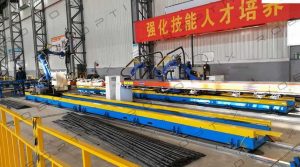
7वें एक्सिस रोबोट + रोबोटिक पोजिशनर्स: पूर्ण लचीली वेल्डिंग कोशिकाओं का निर्माण
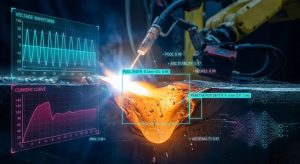
रोबोटिक वेल्डिंग सेल रुझान 2026-2030: ऐ, मशीन विजन & वेल्डिंग स्वचालन का भविष्य
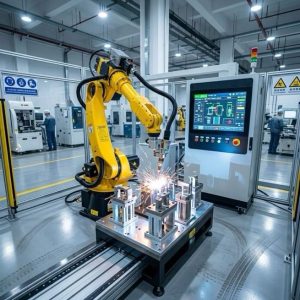
अपनी फ़ैक्टरी के लिए सही रोबोटिक लेज़र वेल्डिंग सिस्टम कैसे चुनें
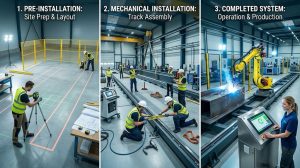
7वें एक्सिस रोबोट को कैसे स्थापित और एकीकृत करें: चरण-दर-चरण मार्गदर्शिका & सर्वोत्तम प्रथाएं
कैसे रोबोटिक लेजर वेल्डिंग ऑटोमोटिव लाइटवेटिंग को सक्षम बनाती है: हाई-स्ट्रेंथ स्टील से लेकर एल्युमीनियम बॉडी तक