Custom Robot Workstations And Laser Systems Manufacturer



Robotic Laser Welding Mastery: 10 Practical Tips for Maximum Performance and ROI
After exploring the fundamentals, selection, cost analysis, ROI, installation, maintenance, and supplier evaluation of robotic laser welding, the final step is mastering the system for peak performance and fastest payback.
Here are 10 battle-tested practical tips to help manufacturers maximize the benefits of their robotic laser welding systems and achieve superior results.
1. Always Conduct Comprehensive Sample Testing
Never rush into production without thorough sample welding tests on your real parts. Test multiple parameters and joint designs. This critical first step prevents most welding defects and costly rework.
2. Prioritize High-Quality Fixtures and Workpiece Positioning
Excellent fixture design is one of the biggest factors in robotic laser welding success. Ensure precise positioning and gap control under 0.1mm. Well-designed fixtures directly improve weld consistency and first-pass yield.
3. Optimize Core Welding Parameters Systematically
Master the key parameters for robotic laser welding:
- Laser power and pulse settings
- Welding speed
- Defocus distance
- Shielding gas type and flow rate
- Beam incidence angle
Create a detailed process parameter library for each part family.
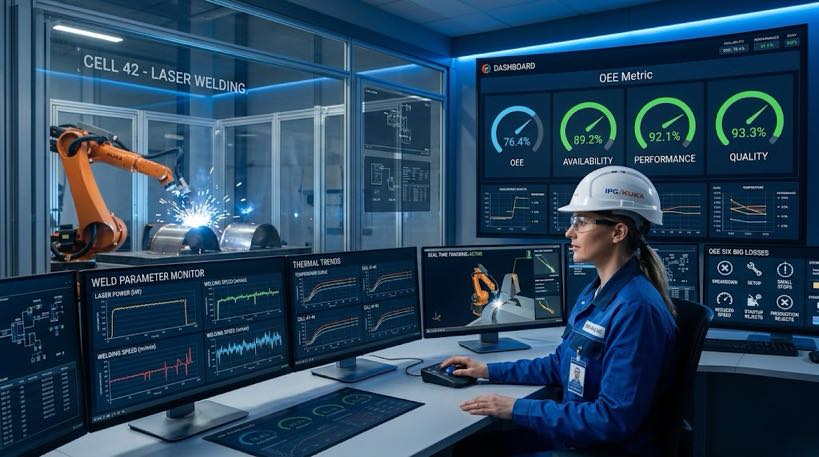
4. Implement Seam Tracking and Vision Systems
For real production environments with part variations, integrate laser seam tracking or vision systems. These technologies automatically correct deviations and significantly boost weld quality and productivity.
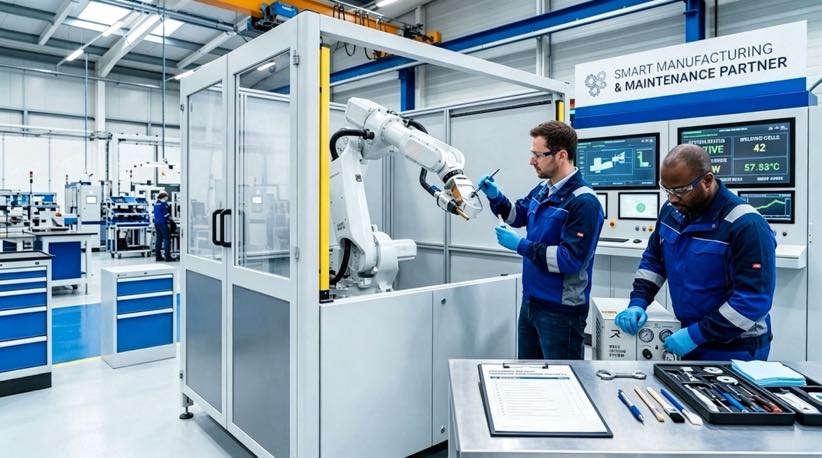
5. Establish Strict Preventive Maintenance Schedules
Develop and follow a daily/weekly maintenance checklist:
- Clean or replace protective lenses regularly
- Monitor cooling system water quality
- Inspect cables, hoses, and mechanical parts
- Perform periodic calibration
Consistent maintenance prevents unexpected downtime and extends equipment life.
6. Continuously Reduce Operating Costs
Focus on optimizing energy consumption, shielding gas usage, and consumable lifetime. Small efficiency gains in robotic laser welding can lead to substantial long-term savings.
7. Standardize Operator Training and SOPs
Create clear Standard Operating Procedures (SOPs) and provide thorough training. Skilled operators reduce errors, improve weld consistency, and increase Overall Equipment Effectiveness (OEE).
8. Build Fast Troubleshooting Capabilities
Train your team to quickly diagnose and resolve common issues such as porosity, cracks, lack of fusion, power instability, and lens contamination. Fast problem-solving minimizes production interruptions.
9. Leverage Data Monitoring for Continuous Improvement
Use real-time data from your robotic laser welding system (power, speed, temperature, etc.) to analyze performance, predict maintenance needs, and drive ongoing process optimization.
10. Design for Future Scalability and Upgrades
Choose a flexible platform that supports future advancements:
- AI path planning
- Multi-robot collaboration
- MES/ERP integration
- Hybrid laser-arc welding
Smart planning protects your investment for the next 8–10 years.

Final Thoughts
Success in robotic laser welding goes far beyond purchasing the equipment. It requires the right combination of people, processes, and technology. By applying these 10 practical tips, you can achieve higher weld quality, greater productivity, lower costs, and faster ROI.
The future belongs to factories that truly master robotic laser welding.
Author Identification
An expert in robotic welding system integration with over 12 years of industry experience. My company has over 26 years of professional experience, holds more than 40 patented technologies, and has successfully completed over 1,500 projects worldwide (approximately 70% of which involved robotic welding cells, totaling more than 1,000 units). The company holds EU CE certification (Certificate No.: M.2026.206.C134866) and complies with the EN 60204-1:2018 and EN ISO 12100:2010 standards. I have assisted numerous manufacturing companies throughout the entire process of robotic welding workstation implementation, from selection to production launch.
Updated: May 2026
RELATED POSTS
Can You Trust the Spec Sheet? How to Verify Welding Positioner Accuracy with Laser Trackers and ISO 9283

Laser Welding Positioner: Accuracy and Speed for Thin-Gauge Welds
Why a 2-Ton Positioner Can’t Always Hold a 2-Ton Part: Eccentric Loading, Overturning Moment, and Inertia
Robot Positioner Buying Guide 2026:Match Your Budget to the Right System
Robot Positioner ROI: How Much Is Manual Welding Actually Costing You?