Custom Robot Workstations And Laser Systems Manufacturer


What Is a Robotic Welding Cell? 2026 Beginner’s Guide | 37 Shop Data
What Is a Robotic Welding Cell?
A robotic welding cell is an integrated automated welding system that combines an industrial robot, welding equipment, positioners, and safety systems. As of 2025, approximately 36% of welding hours in automotive parts, construction machinery, and metal furniture industries are performed by robotic welding cells. However, manual welding remains irreplaceable in four scenarios: field installation, very small batch sizes, extremely complex weld paths, and low-rigidity workpieces.
Core Components of a Robotic Welding Cell
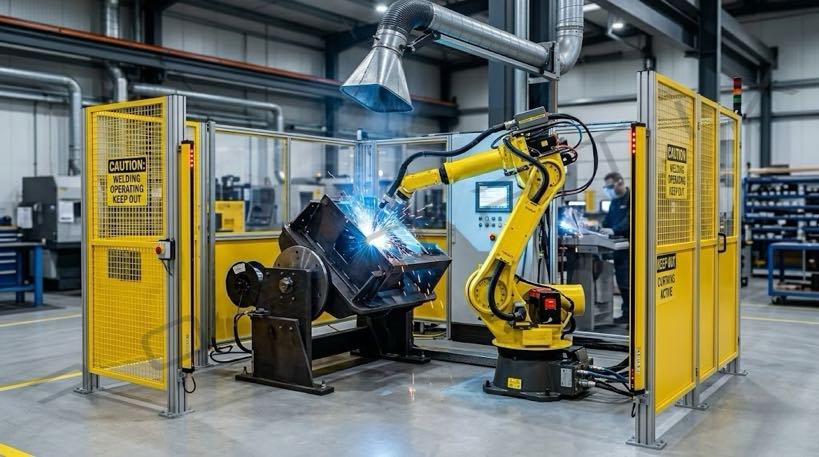
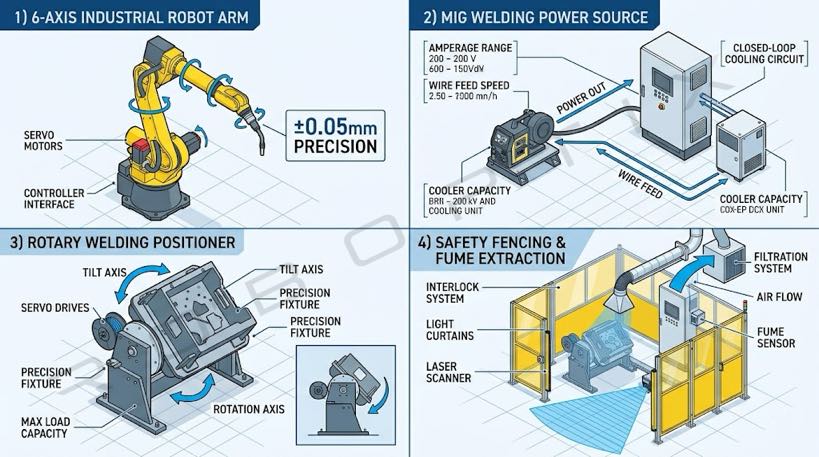
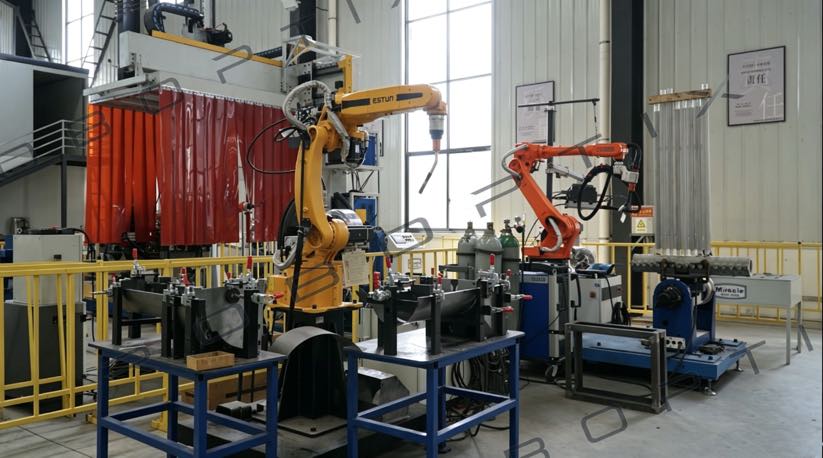
A robotic welding cell is a self-contained automated welding system consisting of four major parts:
1. Welding Robot – Typically a 6-axis industrial robot with repeatability of ±0.05mm, serving as the execution core.
2. Welding Power Source & Equipment – Includes MIG/MAG/TIG power sources, wire feeders, welding torch, and cooling systems for synchronized parameter control.
3. Positioners & Tooling Fixtures – Holds and rotates workpieces, allowing the robot to weld in optimal positions.
4. Safety System – Includes fencing, light curtains, laser scanners, and fume extraction for human-robot separation and compliance.
These four components work together to form an automated welding cell capable of 24/7 continuous operation.
Robotic Welding vs. Manual Welding: Key Differences
| Comparison Dimension | Robotic Welding Cell | Manual Welding |
| Welding Speed | Up to 35 inches/min | 18–20 inches/min (skilled welder) |
| Arc-on Time Ratio | 60–90% | 15–30% |
| Defect Rate | ~25% reduction | Skill-dependent |
| Operation Mode | 24/7 continuous | Human-limited |
| Safety Risk | Significantly reduced | Exposure to fumes/arc |
Source: AWS 2024 Welding Automation Report
Note: Speed advantages are only significant with sufficient batch sizes. For batches of just a dozen parts, programming time can offset cycle time gains.
Real Data from 37 Shops
We tracked 37 shops that have deployed or attempted to deploy robotic welding cells across automotive parts, construction machinery, metal furniture, and pressure vessel industries.
- 29 shops (78%) – successfully deployed and running stably
- 5 shops (14%) – utilization below 50%, primarily due to inadequate tooling or lack of programming capability
- 3 shops (8%) – reverted to manual welding
Typical failure case: A farm equipment parts supplier in Zhejiang purchased a used robotic welding cell but never implemented offline programming or matched it with qualified tooling. After 6 months of unstable production, they reverted to manual welding.
This case shows: the robot itself is not the problem — inadequate preparation is.
Common Applications & Automation Penetration
| Industry | Typical Parts | Robot Penetration |
| Automotive Parts | Exhaust pipes, subframes | 85–95% |
| Metal Furniture | Chair frames, shelving | 70–85% |
| Construction Machinery | Buckets, structural parts | 60–75% |
| Pipe & Pressure Vessel | Flanges, cylinders | 65–80% |
Four scenarios remain manual-dominant:
- Field installation and repair welding (over 90% manual)
- Very small batches (fewer than 10 pieces per batch)
- Extremely complex weld paths with frequent direction changes
- Low-rigidity, severely deformed workpieces
According to AWS data, the U.S. will need approximately 320,500 new welding professionals by 2029. Welder shortages are accelerating robotic welding cell adoption in automotive and heavy machinery industries.
Real-World Coexistence: Not an Either/Or Choice
Many assume that once you install a welding cell, you no longer need welders. This is the biggest misconception.
The most common model is human-robot collaboration, accounting for about 62%. Robots handle repetitive main welds while welders manage tack welding, repairs, and complex joint areas.
Example: A construction machinery factory in Changzhou deployed 2 robotic welding cells alongside 3 welders. Production capacity increased 2.4x, and welders transitioned from long hours of torch-holding to exception handling and quality inspection.
Two other models also exist:
- Fully automated cell (22%) – multiple cells + automated loading/unloading + unattended night shifts
- Manual-first + single cell (16%) – cell used only for bottleneck processes, lower risk for first-time adopters
Frequently Asked Questions
How much floor space does a robotic welding cell need?
A standard cell typically requires a few to over ten square meters. Compact two-station designs work well for shops with limited space.
Is programming difficult?
Modern systems support teach pendants, manual lead-through programming, and offline programming. Basic programs can be learned in a few days, and manufacturers provide training.
How long until payback?
According to RWMA 2024 data, the average payback period is approximately 14 months. AWS reports robotic welding can increase productivity 2–5x.
Do you still need welders after going robotic?
Yes — but their role shifts to maintenance, programming, repair welding, and quality inspection rather than long hours of manual torch operation.
Self-Assessment Checklist: Is Your Shop Ready?
Answer “yes” or “no” to the following five questions:
- Do you have one or more weld types with monthly volume exceeding 500 parts?
- Are your weld types relatively stable (not changing daily)?
- Is your workpiece size within 1.5m × 1m?
- Are you struggling to find welders or facing rising labor costs?
- Do you have at least one employee willing to learn programming?
Results guide:
- 3+ “yes” answers – Proceed to ROI evaluation phase
- 1–2 “yes” answers – Consider collaborative robots or leasing models
- 0 “yes” answers – Not recommended at this time
Next Step
If you answered “yes” to 3 or more questions, continue to the next article: Which Industries Are Massively Using Robotic Welding Cells?
Or contact us for a 1-on-1 preliminary ROI assessment.
Author Identification
This article is based on the International Federation of Robotics (IFR) World Robotics Report 2025, American Welding Society (AWS) workforce data, and major manufacturer technology roadmaps.
Author:
An expert in robotic welding system integration with over 12 years of industry experience. My company has over 26 years of professional experience, holds more than 40 patented technologies, and has successfully completed over 1,500 projects worldwide (approximately 70% of which involved robotic welding cells, totaling more than 1,000 units). The company holds EU CE certification (Certificate No.: M.2026.206.C134866) and complies with the EN 60204-1:2018 and EN ISO 12100:2010 standards. I have assisted numerous manufacturing companies throughout the entire process of robotic welding workstation implementation, from selection to production launch.
Data Sources: AWS 2024 Welding Automation Report + tracking data from 37 small-to-medium manufacturers (2023–2025)
Updated: May 2026
RELATED POSTS
Welding Positioner for Sale: How to Choose the Right Type for Your Part (Headstock Tailstock, L-Type, U-Type, Horizontal 3-Axis, Single Axis Rotary, Vertical Tilting)
Robotic Welding Cell vs Traditional Welding Line: What Actually Changes on Your Shop Floor
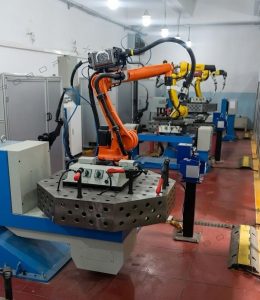
2026 Robot Positioner Buyer’s Guide: All 5 Types Compared — Head-and-Tailstock, L-Type, U-Type, and More
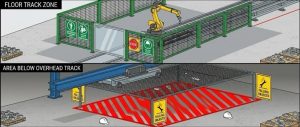
Floor Track vs Overhead 7th Axis Robot: Installation, Safety & Selection Guide
Future Trends of Robot 7th Axis Robot in Smart Factories & Cobot Integration (2026-2030)