Custom Robot Workstations And Laser Systems Manufacturer


How to Select a Robotic Laser Welding Supplier: From Technical Assessment to Sample Testing
After understanding the technology, applications, selection criteria, costs, and ROI of robotic laser welding, the final and most critical step is choosing the right supplier. A good robotic laser welding supplier can ensure your equipment runs smoothly for many years, while a poor choice often leads to service delays, spare parts shortages, and high downtime costs.
This guide provides a clear, practical framework to help you select the best robotic laser welding supplier for your factory.
1. Define Your Needs Before Contacting Suppliers
Before reaching out, document your key requirements:
- Main materials and thickness range
- Annual welding volume
- Weld quality and precision requirements
- Budget and expected payback period
- Importance of local service support
Clear requirements will help you evaluate suppliers more objectively.
2. Five Key Dimensions to Evaluate a Robotic Laser Welding Supplier
(1)Technical Capability & Integration Experience
- Proven experience in full robotic laser welding system integration
- Strong partnerships with reputable laser brands (IPG, Raycus, JPT, etc.) and robot brands (Fanuc, ABB, KUKA, Yaskawa, etc.)
- Ability to deliver customized solutions for complex applications
(2)Industry Experience & Case Studies
- Relevant experience in your specific industry (automotive, sheet metal, stainless steel, battery, kitchen equipment, etc.)
- Real customer cases, videos, and performance data for similar workpieces
(3)Service Response & Technical Support Capability
- Do they have a local office, service team, or authorized partners?
- What is their guaranteed on-site response time for breakdowns? (Prefer suppliers who can arrive within 24-48 hours)
- Do they provide technical support and training in your local language?
- Do they offer remote diagnostics and remote troubleshooting?
(4)Spare Parts Availability & Long-term Support
- Stock availability of critical spare parts (protective lenses, nozzles, fibers, etc.)
- Warranty terms for the laser source and robot arm
- Availability of long-term service contracts (3–5 years)
(5)Training & Knowledge Transfer
- Comprehensive training for operators, programmers, and maintenance staff
- Preference for on-site training
- Support in building your own internal technical team
3. The Most Important Step: Sample Welding Test
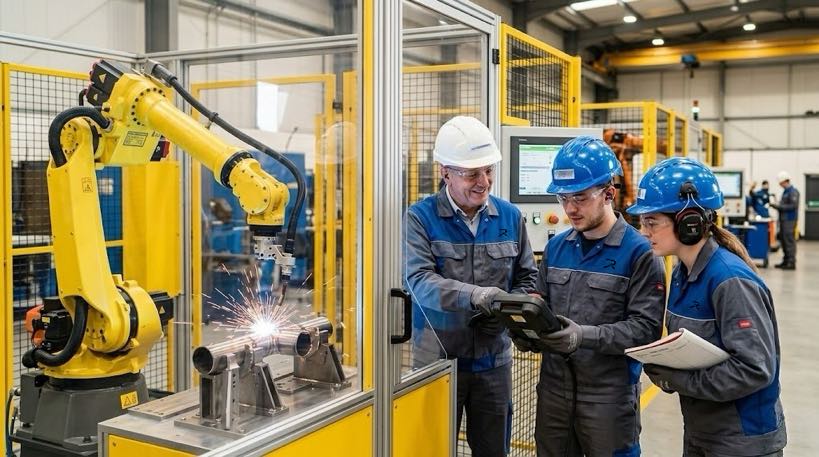
A trustworthy robotic laser welding supplier will always welcome sample testing.
Send your actual production parts to at least 3 shortlisted suppliers. Compare key metrics:
- Welding speed
- Weld seam appearance and consistency
- Heat distortion control
- Surface quality (post-processing required)
- First-pass yield rate
Request detailed welding parameter reports after each test. Real test results are far more reliable than brochures.
4. Essential Questions to Ask Potential Suppliers
- How many similar robotic laser welding systems have you delivered in the past three years?
- What are the warranty periods for the laser source and robot?
- How quickly can critical spare parts be delivered?
- Do you provide remote diagnostics and support?
- Can we visit your existing customer factories?
- What does the training program include and how long does it last?
- What is the expected annual maintenance cost after warranty?
5. Final Decision Tips
- Never choose based on price alone. The lowest price often leads to the highest long-term costs.
- Focus on Total Cost of Ownership (TCO), including service, spare parts, and downtime risk.
- Select a supplier who is willing to build a long-term partnership.
- Ensure the contract clearly defines acceptance criteria, payment terms, and after-sales responsibilities.
Key Takeaway: Choosing the right robotic laser welding supplier is not just about getting the best price. Technical strength, real sample test performance, and strong service support capability are equally — if not more — important. A reliable supplier will support your equipment for 8–10 years and help you maximize return on investment.
Take the time to evaluate carefully and insist on sample testing. The effort will pay off significantly in the long run.
Author Identification
An expert in robotic welding system integration with over 12 years of industry experience. My company has over 26 years of professional experience, holds more than 40 patented technologies, and has successfully completed over 1,500 projects worldwide (approximately 70% of which involved robotic welding cells, totaling more than 1,000 units). The company holds EU CE certification (Certificate No.: M.2026.206.C134866) and complies with the EN 60204-1:2018 and EN ISO 12100:2010 standards. I have assisted numerous manufacturing companies throughout the entire process of robotic welding workstation implementation, from selection to production launch.
Updated: May 2026
RELATED POSTS
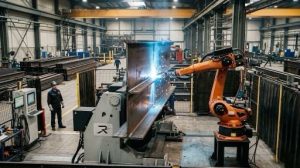
Real-World Robotic Welding Cell Applications in General Industry: Case Studies 2026
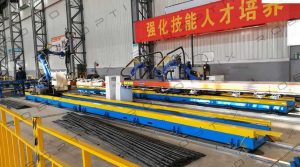
7th Axis Robot + Robotic Positioners: Building Complete Flexible Welding Cells
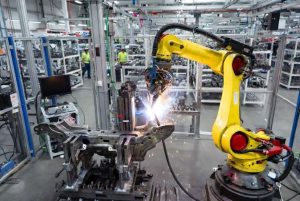
8 Costly Mistakes When Deploying a Robotic Welding Cell (And How to Avoid Them) – 2026 Edition
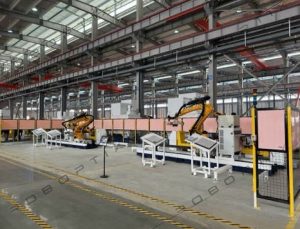
Robotic Welding Cell vs Traditional Welding Line: What Actually Changes on Your Shop Floor
How Do Robotic Welding Defects Form — and How Much Can a Robot Positioner Fix?