Custom Robot Workstations And Laser Systems Manufacturer


2026 Welding Automation Pain Points: Why Competitive Factories Are Choosing a Robot Positioner
The Skilled Welder Shortage Is No Longer a Future Problem
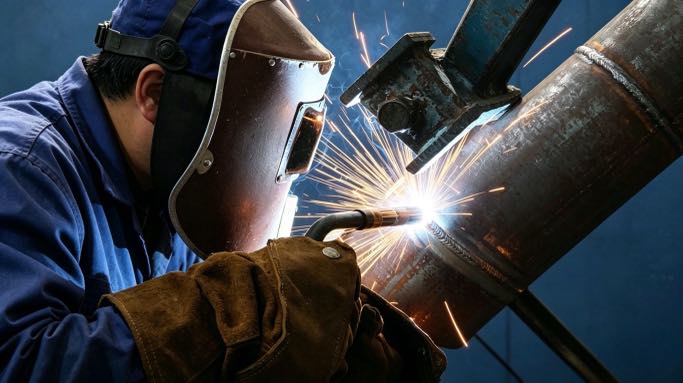
A welding shop manager in Ohio recently received a resignation letter from his most experienced welder — a 20-year veteran. The reason was painfully straightforward: chronic knee and back problems had made the work impossible to continue.
Three weeks later, a fabrication shop in Germany lost two senior welders to early retirement. Same cause. Across the Pacific, a factory owner in Vietnam was staring at empty workstations despite a 40% year-over-year increase in orders — not because demand had softened, but because he simply could not find enough qualified welders to fill the floor.
This is not an isolated trend. It is the defining operational challenge for welding shops worldwide in 2026.
| Key Statistic: The average age of welders in the U.S. is now 55. Over 40% are expected to retire within the next decade. Meanwhile, fewer than 15% of new manufacturing entrants are choosing welding as a career. (Source: American Welding Society) |
The Robot Positioner — once considered a niche investment for large-volume manufacturers — is now the practical solution a growing number of mid-size and smaller fabrication shops are turning to. Based on data from our 1,500+ completed projects, factories that integrate Robot Positioners into their welding lines report productivity gains of 50–100% and payback periods of under 14 months.
This article identifies the five most pressing pain points in welding operations today and explains precisely how a Robot Positioner addresses each one — with real numbers, not marketing language.
Part 1: The 5 Core Pain Points in Welding Automation (2026)
Pain Point #1: Chronic Labor Shortages and the Recruitment Gap
The welding workforce is contracting. Experienced practitioners are aging out of the trade faster than new talent can be developed, and the pipeline shows no sign of recovery.
The structural problem:
- Supply: Declining every year as experienced welders retire
- Demand: Growing as global manufacturing output expands
- Training timeline: 3–5 years to develop a qualified welder — far too slow for immediate production needs
How a Robot Positioner addresses this:
A single Robot Positioner paired with a welding robot can effectively replace the output of 2–3 manual welders. It operates across all three shifts without fatigue, absenteeism, or turnover. For shops facing recruitment difficulties, this represents a structural fix rather than a temporary workaround.
Pain Point #2: Lost Production Time from Manual Workpiece Handling
In manual welding operations, a significant portion of labor hours are not spent welding — they are spent repositioning. Flipping a large structural component manually can take 10–20 minutes per rotation. In a standard two-shift, five-day operation, that translates to 20–30 hours of lost production time per week.
| Annual cost of manual flipping (illustrative): At a welder wage of $35–$50/hr in developed markets, 1,000–1,500 hours of annual repositioning time represents $35,000–$75,000 in direct labor waste — before factoring in delayed shipments or overtime premiums. |
How a Robot Positioner addresses this:
A Robot Positioner completes the same workpiece rotation in 5–10 seconds and operates in synchronized coordination with the welding robot. Arc-on time — the percentage of time the robot is actually welding — increases from an industry average of 35% to 85% or higher. That effectively more than doubles welding throughput per station without adding headcount.
Pain Point #3: Physical Strain, Occupational Injury, and Early Attrition
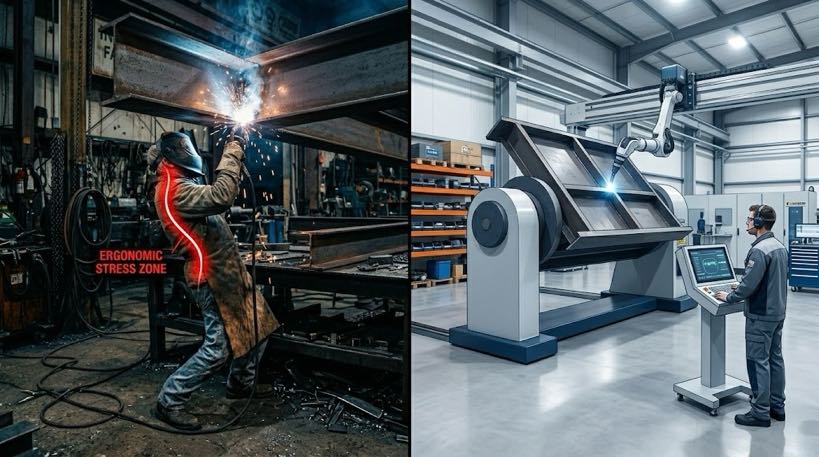
Welding is physically demanding work. Sustained bending, overhead torch work, and static awkward postures are the daily reality for manual welders. The cumulative toll on the body is significant:
- Chronic lower back pain from prolonged forward bending
- Neck and shoulder injuries from overhead and angled torch positions
- Knee deterioration from kneeling and squatting on hard surfaces
- Eye strain from extended arc exposure
Many experienced welders leave the trade not by choice but by necessity. The result is accelerated workforce attrition and a compounding recruitment challenge — fewer people want to enter a career that visibly wears down its practitioners.
How a Robot Positioner addresses this:
A Robot Positioner automatically rotates workpieces to the flat or near-horizontal position — the ergonomically optimal welding posture. Neither the operator nor the robot is ever required to weld in an awkward position.
Results from our installed customer base:
- 70% reduction in reported labor intensity
- 80%+ decrease in ergonomic injury claims
- Experienced welders able to extend productive careers into their 60s
- Improved recruitment outcomes when job listings no longer describe physically punishing conditions
Pain Point #4: Quality Inconsistency and the Hidden Cost of Rework
Manual welding quality is inherently variable. It depends on individual skill, fatigue level, shift timing, and other human factors that no amount of training fully eliminates. A weld produced by a skilled welder on a Tuesday morning may be structurally sound. The same welder, late on a Friday afternoon, may produce a weld that requires rework.
Industry benchmarks for manual welding operations:
- Rework rates typically range from 5% to 15%
- Each rework event costs 3–5x the labor of the original weld
- Weld defects are among the leading causes of structural failures in fabricated products
The downstream costs extend beyond direct rework labor:
- Material scrapped during defect removal
- Inspection and re-testing time
- Delayed shipments and missed deadlines
- Customer dissatisfaction and potential contract loss
How a Robot Positioner addresses this:
When a Robot Positioner is integrated with a welding robot, every weld is executed at the same angle, the same travel speed, and the same workpiece orientation — on every shift, every day. The system does not fatigue. It does not have off days.
Across our customer installations, defect rates consistently drop below 1%. Many facilities report zero defect events after the first month of operation.
Pain Point #5: Workpiece Handling Safety Risks
Manual repositioning of large workpieces — using overhead cranes, chains, and slings — introduces significant safety hazards at each flip:
- Load sway and uncontrolled swing
- Sling and rigging failures
- Worker positioning errors during rotation
- Dropped or shifted workpieces
| Safety data: Approximately 25–30% of fabrication shop accidents are directly related to workpiece handling and repositioning. These incidents range from hand and finger injuries to life-threatening crush events. |
The financial consequences of a serious incident extend well beyond medical costs: lost productivity, regulatory investigation, workers’ compensation claims, and lasting damage to safety records and workplace culture.
How a Robot Positioner addresses this:
A Robot Positioner is servo-driven, with smooth and fully controlled rotation. No workers are required to stand beneath suspended loads. No chains or slings are involved in the repositioning cycle.
Documented safety improvements post-installation:
- 80–90% reduction in repositioning-related incidents
- Reduced workers’ compensation premiums in many cases
- Simplified safety audit compliance
- Measurable improvement in worker confidence and morale
Part 2: Why Manual Welding Is Becoming Structurally Unsustainable
Workforce Trend Data Across Major Manufacturing Economies
The following data reflects current labor conditions in the welding industry:
| Metric | United States | Europe | Global Trend |
| Average welder age | 55 years | 52 years | Rising 2–3 years annually |
| Projected welder shortage by 2030 | 400,000+ | 300,000+ | 1M+ globally |
| Young workers entering the trade | < 15% | < 12% | Declining every year |
Sources: American Welding Society; European Welding Federation
Real-World Case: A Midwest Structural Steel Fabricator
The following figures represent documented losses at a mid-sized structural steel fabrication shop in the U.S. over an 18-month period prior to automation:
| Loss Category | Documented Cost |
| Order delay penalties (3 major projects) | $85,000 |
| Welder recruitment agency fees | $8,000 per hire |
| Training productivity loss per new hire | ~3 months reduced output |
| Annual rework costs (14% defect rate) | $120,000+ |
| Lost business (2 long-term customers switched to automated competitors) | Unquantified |
Total documented loss over 18 months: over $350,000 — sufficient to fund five complete Robot Positioner welding workstations.

Post-Installation Results (6 Months After Robot Positioner Deployment):
- Overtime reduced by 60%
- Defect rate: 14% → 1.2%
- On-time delivery rate: 74% → 95%
- Second Robot Positioner system already on order
This is not a projection. This is the result of an automation decision that was already overdue.
Part 3: How a Robot Positioner Works — and Why It Fits Most Welding Operations
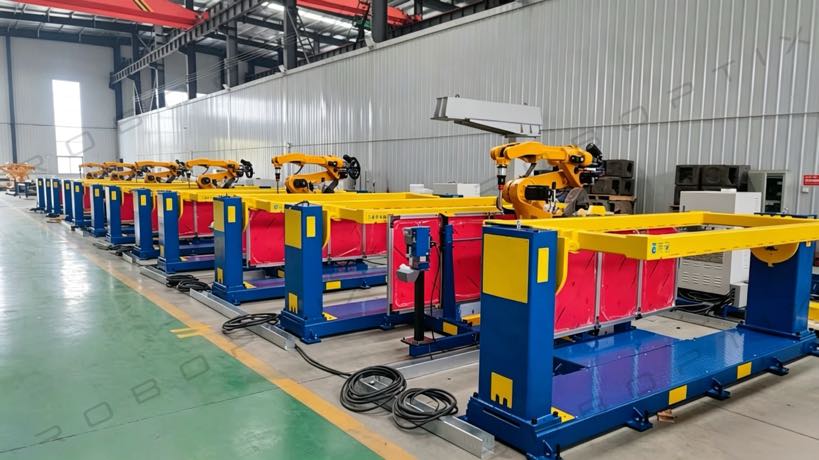
What Is a Robot Positioner?
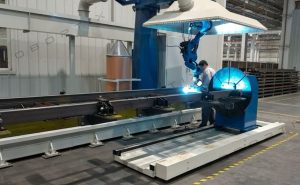
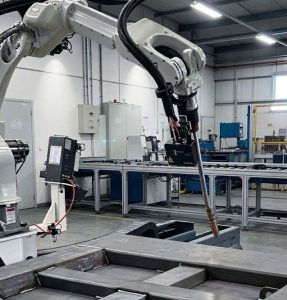
A Robot Positioner is a servo-driven precision rotation device that automatically orients workpieces to the optimal welding attitude. It operates in coordinated synchronization with the welding robot so that the robot is always ready at the correct position — repositioning happens in seconds, not minutes.
The most useful way to think about it: the welding robot handles the torch; the Robot Positioner handles the part. Together, they execute every weld at the ideal angle, in the ideal position, with no manual intervention.
Three Measurable Benefits
1. Throughput: 50–100% Productivity Improvement
- Workpiece repositioning: 10–20 minutes manually → 5–10 seconds with Robot Positioner
- Arc-on time: 35% (manual average) → 85%+ with Robot Positioner
- One robot + one Robot Positioner = output of 2–3 manual stations
- Overtime requirements can be substantially reduced or eliminated
2. Quality: Consistent, Traceable Welds
- Identical weld angle, travel speed, and orientation on every single weld
- Defect rates: 8–15% (manual) → below 1% (Robot Positioner system)
- Full weld position traceability when integrated with MES
- Improved customer confidence and contract renewal rates
3. Workforce: Safer Work, Longer Careers
- Eliminates manual repositioning of large and heavy workpieces
- Workers transition from physically demanding tasks to equipment monitoring roles
- Ergonomic injury rates drop significantly
- Experienced welders remain productive longer
- Job listings become more appealing to new candidates
Part 4: Selecting the Right Robot Positioner Configuration for Your Operation
Small Shop (Annual Revenue $1M–$5M)
Recommended solution: Entry-level Robot Positioner + 1 welding robot
| Parameter | Details |
| Investment range | $45,000 – $75,000 |
| Suitable workpieces | Parts up to 500 kg |
| Expected capacity increase | 50–80% |
| Operators redeployed | 1–2 welders reassigned to other tasks |
| Typical payback period | 8–14 months |
Recommended approach: Identify the single most labor-intensive and physically demanding welding station on your floor. Start there. Demonstrating ROI on one station makes it straightforward to justify the next.
Medium Shop (Annual Revenue $5M–$20M)
Recommended solution: Multi-station Robot Positioner system + multiple welding robots
| Parameter | Details |
| Investment range | $100,000 – $250,000 |
| Suitable workpieces | Medium structural components, batch production |
| Expected capacity increase | 80–120% |
| Operators required for full line | 2–3 supervisory/monitoring roles |
| Typical payback period | 10–16 months |
Recommended approach: Plan the full welding line layout before installation. Coordinate Robot Positioners with 7th Axis Robot floor track systems for continuous multi-station production.
Large Manufacturer (Annual Revenue $20M+)
Recommended solution: Heavy-duty Robot Positioner + multi-robot coordination + MES integration
| Parameter | Details |
| Investment range | $200,000 – $500,000+ |
| Suitable workpieces | Large components up to 3,000 kg |
| Expected capacity increase | 100–150% |
| Automation level | Fully automated welding cell |
| Typical payback period | 12–18 months |
Recommended approach: Integrate Robot Positioners into your broader smart factory roadmap. MES connectivity enables real-time production monitoring and complete weld traceability.
Part 5: The Cost of Delaying in 2026
Welding shops worldwide are navigating a structural shift that will not reverse itself. An aging workforce, declining trade enrollment, rising quality expectations, and tighter delivery windows are not short-term disruptions. They are long-term trends that will intensify over the next decade.
Shops that delay Robot Positioner adoption will find themselves in a widening competitive gap:
| Competitors weld 2–3x faster — because repositioning takes seconds, not minutesCompetitors have 1/10th your defect rate — because robots maintain consistency across every shiftCompetitors’ workers monitor equipment — yours are on occupational health leaveCompetitors win your customers — because they deliver on time with consistent quality |
The Robot Positioner is no longer a capital investment reserved for high-volume, enterprise-scale manufacturers. It is standard production equipment for any welding operation that intends to remain competitive through 2026 and beyond.
The question is not whether to automate. The question is whether you automate before or after your competitors claim your market share.
Request a Free Welding Automation Assessment
Our team will:
- Analyze your current welding line for efficiency bottlenecks
- Calculate a customized ROI projection based on your actual production data
- Recommend the right Robot Positioner configuration for your part types and throughput goals
- Deliver a written assessment within 24 business hours
► Contact us to schedule your assessment
Coming Up Next
5 Reasons Large Workpiece Welding Is Inefficient — and How a Robot Positioner Solves Each One
Technical Specifications: D Series Robot Positioner (Reference)
| Parameter | Specification |
| Payload capacity | 500 kg – 3,000 kg |
| Rotation range | ±360° (continuous) |
| Positional repeatability | ±0.05 mm |
| Maximum rotation speed | 90–180°/sec |
| Drive system | Servo motor + precision gearbox |
| Control method | Coordinated axis control with welding robot |
| Protection rating | IP54 standard (IP67 optional) |
| Robot brand compatibility | Fanuc, KUKA, ABB, Yaskawa, and all major brands |
About the Author
| Experience & CredentialsThe author is a robotic welding system integration specialist with 12+ years of hands-on project experience, focused exclusively on Robot Positioner and 7th Axis Robot systems. The authoring company brings 26+ years of engineering expertise in welding automation, holds 40+ active patents, and has successfully delivered 1,500+ projects across North America, Europe, and Asia. Approximately 70% of these projects incorporate Robot Positioner systems integrated with welding robots. Certifications: EU CE Certification for Robot Positioner systems (Certificate No.: M.2026.206.C134866) Research basis: This article draws on on-site operational data gathered from 300+ welding shops across 15 countries. All figures cited reflect documented outcomes from actual installations. Last reviewed and updated: May 2026 |
RELATED POSTS
1G to 6G Without a Crane: How a Positioner Converts Overhead Welds into Flat-Position Welds
Robot Positioner ROI: How Much Is Manual Welding Actually Costing You?
Anatomy of a Robotic Welding Cell: Core Components & Selection Guide (2026)
5 Reasons Large Workpiece Welding Is Inefficient — and How a Robot Positioner Solves Each One
Transformer Tank Welding Automation:Solving the Challenge of Large, Non-Repetitive Parts