Custom Robot Workstations And Laser Systems Manufacturer



Robot Positioner Buying Guide 2026:Match Your Budget to the Right System
Buying a robot positioner is not like buying a welding torch. The price range is wide — from around $8,000 for a basic single-axis unit to well over $120,000 for a fully synchronized multi-axis system — and choosing the wrong tier does not just waste money. It creates production bottlenecks that are expensive to reverse.
After helping more than 200 factories across Asia, North America, and Europe select and deploy robot positioners, our engineering team has written this guide to do one thing: match your real budget to the system that actually fits your workpieces, your welding robot, and your production targets.
This is not a generic product catalog. Every section below is based on projects we have shipped, problems we have solved, and mistakes we have seen factories make when they bought on price alone.
| What you will learn: How to evaluate a robot positioner at three budget levels ($8K–$25K / $25K–$65K / $65K+), which type of positioner fits which workpiece, the 7 questions to ask any supplier before requesting a quote, and a free downloadable quote checklist at the end. |
Section 1: Why Budget Alone Is the Wrong Starting Point
Most factories approach the robot positioner selection process backwards. They ask “How much should I spend?” before they ask “What does my workpiece actually need?”
The result: a $15,000 headstock/tailstock unit that cannot handle a 500 kg fabricated frame, or a $90,000 H-frame positioner sitting idle because the factory only runs small components.
Before you think about budget, you need three numbers:
- Maximum workpiece weight (kg) — this determines payload rating
- Maximum workpiece envelope (L x W x H in mm) — this determines positioner geometry
- Required positioning axes — single-axis tilt is very different from synchronized 2-axis tilt-rotate
Once you have those three numbers, budget becomes a filter — not a starting point. The sections below are organized by budget tier, but each one starts by defining which workpiece profiles belong in that tier.
Section 2: Budget Tier 1 — $8,000 to $25,000
Who this tier is for
Small to mid-size job shops and fabricators running components under 500 kg, with relatively simple geometries. This tier is also common for manufacturers adding their first positioner to an existing robot cell.
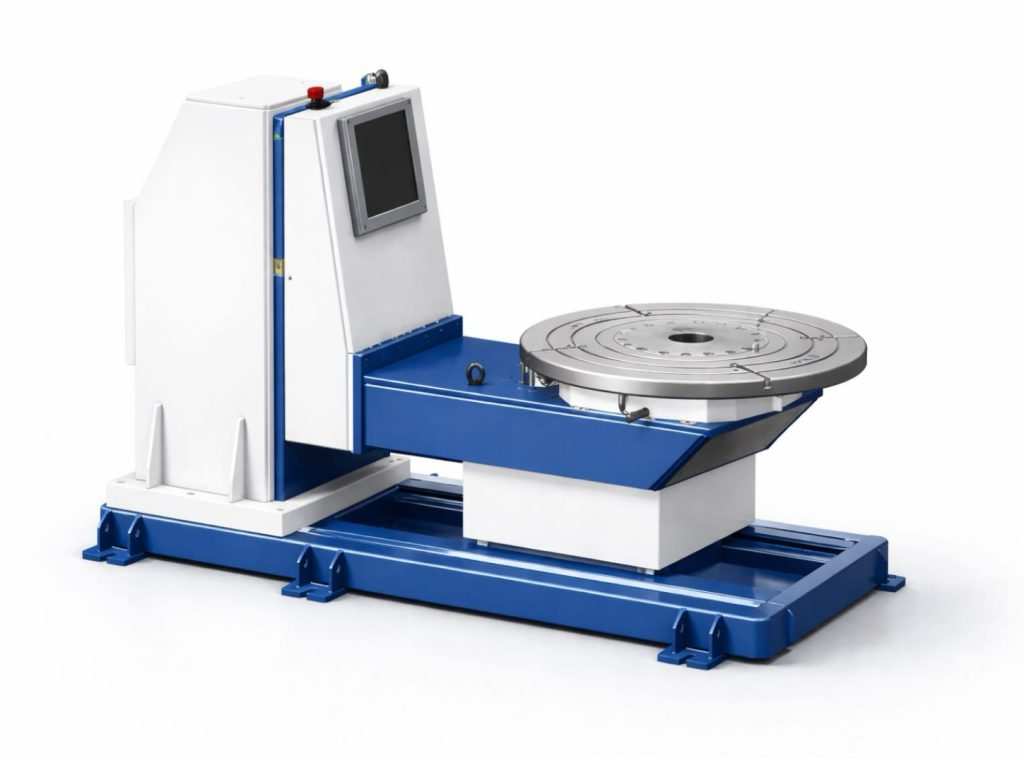
Positioner types available at this tier
| Type | Typical Payload | Best For | Limitation |
| Headstock / Tailstock | Up to 500 kg | Long shafts, frames, pipes | Single-axis only; large footprint |
| L-Type (Single) | Up to 300 kg | Small weldments, brackets | Limited torch access on inside faces |
| Single-Axis Tilt Table | Up to 500 kg | Flat plate assemblies | No rotation; manual repositioning needed |
What $8K–$25K actually buys you
- Single-axis servo motor with basic encoder feedback
- Manual or semi-automatic clamping fixtures (not included in base price — budget $1,000–$4,000 extra)
- Standard repeatability: ±0.1 mm to ±0.3 mm
- Basic robot brand interface (Fanuc, KUKA, ABB, Yaskawa — confirm compatibility before ordering)
- Lead time: typically 4–8 weeks from confirmed order
What this tier does NOT include
- Synchronized motion with the robot controller (requires mid-range tier or above)
- CE/OSHA-compliant safety guarding (budget separately — $2,000–$8,000 depending on cell size)
- Integrated weld seam tracking or vision systems
| Real Project Example: A metal fabrication shop in the Midwest needed to weld structural steel brackets (max 220 kg, 1,200 mm long). They deployed a headstock/tailstock positioner at $14,500 + $2,200 for fixtures. Robot weld cycle time dropped from 18 minutes (manual repositioning) to 7 minutes. ROI achieved in 9 months. |
Key questions to ask suppliers at this tier
- Is the servo motor brand-name or generic? (Brand-name motors add $800–$2,000 but reduce maintenance costs significantly over 5 years)
- What is the actual tilt angle range — 90°, 135°, or full 360°?
- Does the quoted price include a control cabinet, or is that extra?
- What warranty terms apply to the servo drive and gearbox?
Section 3: Budget Tier 2 — $25,000 to $65,000
Who this tier is for
Mid-size manufacturers running heavier or more geometrically complex workpieces (500 kg–2,000 kg), or factories that need synchronized positioner motion — where the positioner moves as a coordinated external axis of the robot controller.
Synchronized motion is one of the most underrated features in robot welding automation. It allows the robot to weld continuously on a rotating workpiece rather than stop-position-weld-stop-position. The productivity gain over non-synchronized systems is typically 25–40% on complex weldments.
Positioner types available at this tier
| Type | Typical Payload | Best For | Key Advantage |
| L-Type (Heavy Duty) | 500–1,500 kg | Structural frames, trailers | Good torch access on 3 faces |
| U-Type / Ferris Wheel | 500–2,000 kg | Symmetric weldments | 180° flip for two-sided welding |
| H-Frame (2-Station) | 300–800 kg per station | High-volume production | Load/unload while welding |
| 2-Axis Tilt-Rotate | Up to 1,000 kg | Complex 3D weldments | Continuous weld on curved seams |
What $25K–$65K actually buys you
- Synchronized external axis integration (Fanuc R-30iB, KUKA KRC4, ABB IRC5, Yaskawa DX200 — specify your robot brand)
- Improved repeatability: ±0.05 mm to ±0.1 mm
- Heavier-duty gearboxes with longer service intervals
- Optional integrated safety light curtains or area scanners
- Two-station configurations allow robot utilization rates above 85% (vs. 55–65% for single-station layouts)
| ROI Benchmark: A European agricultural equipment manufacturer running 800 kg frame weldments upgraded from a single-axis unit to a synchronized U-type positioner ($38,000). Robot arc-on time increased from 58% to 81%. Annual labor saving: $67,000. Full ROI in 6.8 months. |
The synchronized motion question — explained simply
Non-synchronized: The robot stops. The positioner rotates the part. The robot waits. The robot starts welding again. There are gaps in arc time at every repositioning step.
Synchronized: The positioner rotates continuously while the robot welds. The robot path and positioner angle are calculated together by the controller. Arc time is continuous. Weld quality on curved seams is higher because travel speed stays constant.
If your workpieces have any curved seams longer than 300 mm, synchronized motion will pay for itself within the first year in most production scenarios.
Section 4: Budget Tier 3 — $65,000 and Above
Who this tier is for
Heavy fabricators, shipbuilding suppliers, pressure vessel manufacturers, and large-scale automotive or construction equipment producers running workpieces above 2,000 kg — or factories that need multi-robot integration, custom tooling, or turnkey cell delivery.
What differentiates this tier
- Payload capacity: 2,000 kg to 30,000+ kg
- Custom fixture and tooling engineering included
- Full cell integration: positioner + robot + welding power source + safety enclosure + PLC + HMI
- Factory acceptance testing (FAT) at supplier facility before shipment
- On-site commissioning and operator training included
- Typical lead time: 12–24 weeks
Common configurations at this tier
| Configuration | Payload Range | Typical Application |
| Heavy U-Type / Ferris Wheel | 2,000–10,000 kg | Excavator booms, truck frames |
| Custom H-Frame Multi-Station | Per station: 1,000–3,000 kg | High-volume automotive subframes |
| Floor-Mounted Trunnion | 5,000–30,000 kg | Pressure vessels, wind towers |
| Positioner + 7th Axis Robot Track | Varies | Long weldments, shipbuilding |
| Important Note: At this tier, the positioner is almost never purchased as a standalone item. It is specified as part of a complete welding cell. Expect to provide workpiece drawings, production rate targets, and weld procedure specifications (WPS) to your supplier before receiving a meaningful quote. |
Section 5: The Total Cost of Ownership — What the Price Tag Does Not Show
The quoted price for a robot positioner is the beginning of the cost conversation, not the end. After working with hundreds of factories, here are the additional costs that are most commonly underestimated:
| Cost Item | Typical Range | Notes |
| Fixtures & tooling | $1,500–$15,000 | Highly workpiece-specific; often 15–30% of positioner cost |
| Integration & programming | $3,000–$12,000 | If not included in supplier quote |
| Safety guarding | $2,000–$10,000 | Required for CE/OSHA compliance |
| Spare parts (Year 1) | $500–$2,500 | Servo drives, gearbox oil, encoders |
| Annual maintenance | $800–$3,000/yr | Depends on shift pattern and environment |
| Operator training | $500–$2,000 | Often waived for standard units if factory has robot experience |
A positioner quoted at $18,000 with $6,500 in fixtures, $4,000 integration, and $3,000 guarding has a real first-year cost of $31,500. Build this into your ROI calculation from the start.
Section 6: 7 Questions to Ask Any Robot Positioner Supplier
After reviewing hundreds of supplier proposals, these are the seven questions that separate informed buyers from those who get a painful surprise after delivery:
- “What is the rated payload, and how was it calculated?” — Rated payload should include the fixture weight, not just the workpiece. A positioner rated to 500 kg may only handle a 380 kg workpiece if your fixture weighs 120 kg.
- “Is synchronization with my robot controller included, and which robot brands have you certified it on?”
- “What is the gearbox brand and service interval?” — Name-brand gearboxes (Nabtesco, Harmonic Drive, Sumitomo) have published service data. Generic gearboxes may fail unpredictably.
- “Can I see a reference customer in my industry or with similar workpieces?” — Any credible supplier will provide this.
- “What does your warranty cover, and what is the typical response time for a service call?”
- “What is included in the quoted price? List every item that is NOT included.” — This one question prevents most post-order disputes.
- “Can you provide a sample weld test on my workpiece material before I commit?” — A supplier confident in their equipment will say yes.
Section 7: Quick Selection Matrix — Match Your Situation to the Right Tier
| Your Situation | Recommended Tier | Positioner Type |
| First positioner, <500 kg, simple geometry | $8K–$25K | Headstock/Tailstock or L-Type |
| Growing shop, 500–2,000 kg, want to improve arc-on time | $25K–$65K | Synchronized U-Type or 2-Axis |
| High-volume production, need 2 stations | $30K–$65K | H-Frame 2-Station |
| Heavy fabrication, >2,000 kg, full cell needed | $65K+ | Custom / Turnkey |
| Long weldments, need robot to travel along part | $50K+ | Positioner + 7th Axis Track |
| Small batches, frequent changeovers | $25K–$50K | Quick-change fixture L-Type |
Frequently Asked Questions
How much does a robot positioner cost in 2026?
Robot positioner prices in 2026 range from approximately $8,000 for a basic single-axis headstock/tailstock unit to over $120,000 for a heavy-duty synchronized multi-axis system with custom tooling. Mid-range synchronized positioners for 500–2,000 kg workpieces typically fall between $25,000 and $65,000. Total first-year cost including fixtures, integration, and guarding is typically 40–70% higher than the base unit price.
What is the difference between a synchronized and non-synchronized robot positioner?
A synchronized positioner moves as a coordinated external axis of the robot controller — the positioner rotation and robot path are calculated together, allowing continuous welding on rotating workpieces. A non-synchronized positioner requires the robot to stop, wait for the positioner to move to a new position, then resume welding. Synchronized systems typically increase arc-on time by 25–40% on complex weldments.
How do I calculate ROI for a robot positioner?
Start with your current cycle time per part and your labor cost per hour. Estimate the new cycle time with the positioner (typically 30–60% reduction for manual repositioning operations). Multiply the time saving by your hourly labor cost and annual production volume. Divide the total first-year cost (positioner + fixtures + integration) by the annual saving. Most positioner installations in high-volume production achieve full ROI in 6–18 months.
Which robot brands are compatible with robot positioners?
Robot positioners can be synchronized with all major robot controller platforms including Fanuc R-30iB/R-30iB Plus, KUKA KRC4/KRC5, ABB IRC5, Yaskawa DX200/YRC1000, and OTC Daihen FD11. Always confirm the specific firmware version and external axis license requirements with your positioner supplier before ordering.
Get a Free Quote Checklist + Positioner Recommendation
Every factory situation is different. If you want a specific recommendation based on your workpiece weight, geometry, and production volume — along with a free downloadable quote checklist — our engineering team responds within 24 business hours.
| Request Your Free Positioner Recommendation → Tell us your workpiece weight, material, and production volume. We will recommend the right type, tier, and configuration — with no obligation. |
Experience & Credentials
Robotic welding system integration specialist with 12+ years of direct project experience focused on Robot Positioner selection and integration. Has provided consulting to 300+ factories across North America, Europe, and Asia. All specification data in this article is drawn from actual H / B / L / U series product datasheets.
Company background: 26+ years of welding automation engineering, 40+ active patents, 1,500+ completed projects globally, approximately 70% involving Robot Positioner integration.
Certifications
- ISO 9001: 2015 (GB/T 19001-2016) — Quality Management System
- GJB 9001C-2017 — Military/Weapon Equipment Quality Management System
- EU CE — Machinery Directive 2006/42/EC (Cert. No. M.2026.206.C134866)
- High-Tech Enterprise — Cert. No. GR202341000595 (Issued Nov. 2023)
Last updated: May 2026
RELATED POSTS
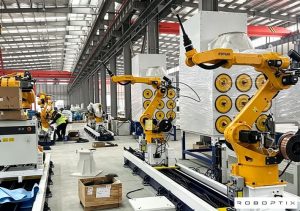
Welding Positioner Buying Checklist: 6 Inputs for an Accurate RFQ
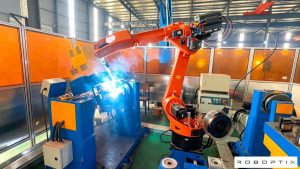
The Pre-Purchase Audit: A Factory Visit Checklist and Bench Test Protocol for Welding Positioner Buyers
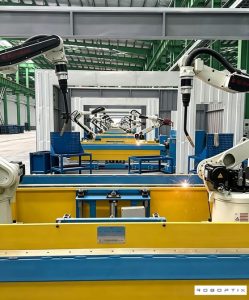
Five-Year TCO of a Welding Positioner: Counting the Hidden Costs the Quote Forgot
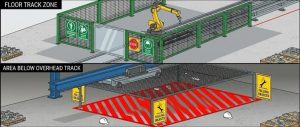
Floor Track vs Overhead 7th Axis Robot: Installation, Safety & Selection Guide
Round vs Rectangular vs Irregular: Matching Welding Positioner Configuration to Workpiece Geometry