Custom Robot Workstations And Laser Systems Manufacturer


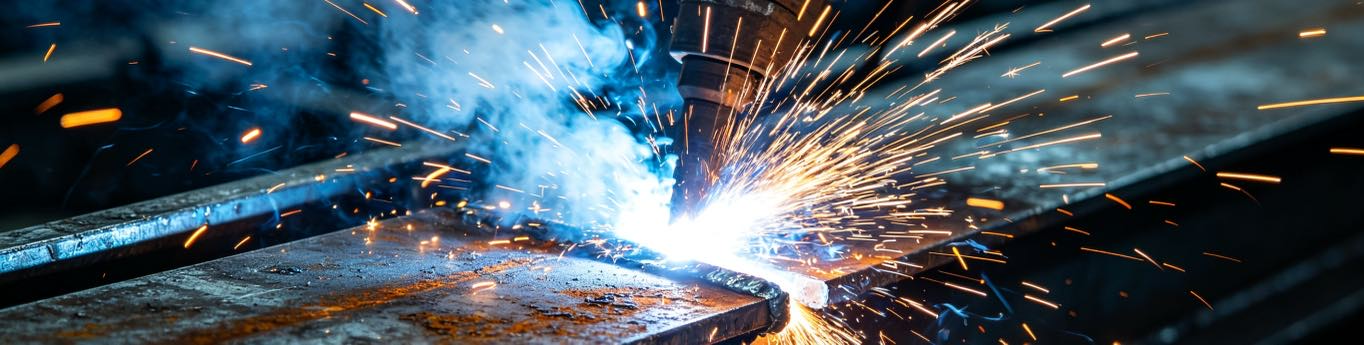
Robotic Welding Cell vs Manual Welding: Which Is Better for Modern Manufacturing?
Direct Answer: Which Is Better — Robotic or Manual Welding?
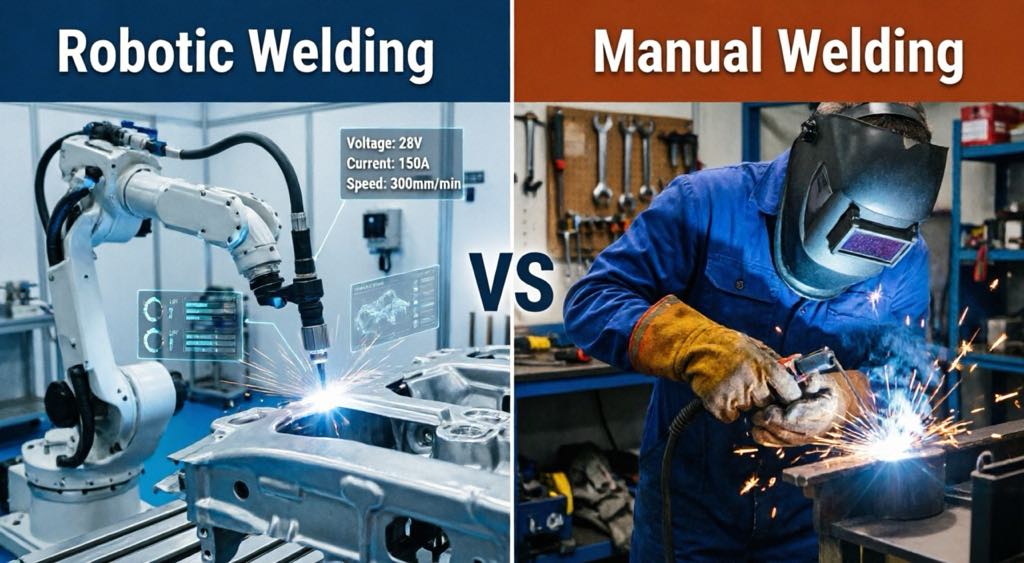
There is no absolute “better” — only “better suited.” For repetitive, high-volume, quality-consistent welding tasks, robotic welding cells offer clear advantages in productivity (3-5x improvement), consistency (defect rates from 8-12% down to 2-3%), and long-term cost. For field installation, very small batch sizes (under 50 parts per batch), extremely complex weld paths, or low-rigidity workpieces, manual welding remains irreplaceable. Most successful manufacturers use a human-robot collaboration model: robots handle repetitive main welds while welders manage tack welding, repairs, and exception handling.
Why This Question Matters More Than Ever
According to the American Welding Society (AWS) , the United States will need approximately 320,500 new welding professionals by 2029, with a current workforce of about 771,000, many approaching retirement age. Meanwhile, International Federation of Robotics (IFR) data shows that global industrial robot installations reached 541,302 units in 2023, with welding robots representing one of the most significant application categories.
This means: welders are becoming harder to find, while robots are becoming more affordable. But can robots truly replace human welders entirely? The answer is no. This article systematically compares both welding methods across multiple dimensions to help you make the right decision for your specific situation.
Comparison Dimension 1: Weld Quality & Consistency
Robotic Welding: Executes precisely according to programmed paths and parameters, complying with ISO 10218-1:2025 requirements for industrial robot repeatability. Achieves repeatability of ±0.05mm — every weld seam is nearly identical. Industry research shows robotic welding reduces defect rates from 8-12% for manual welding to 2-3% , with advanced systems achieving below 1%.
Manual Welding: Quality depends heavily on the welder’s daily condition, experience, and attention. Fatigue, mood, and lighting changes all affect results. Skilled welders can handle complex joints and difficult positions, but even the best welder cannot guarantee identical results on every weld.
Verdict: Robotic welding wins decisively on consistency. For industries with strict traceability and consistency requirements like automotive parts and pressure vessels, robotic welding is nearly mandatory.
Comparison Dimension 2: Productivity & Throughput
Robotic Welding: Operates 24/7 without fatigue. Arc-on time typically reaches 60-90% , compared to only 15-30% for manual welding. Welding speed stabilizes at 35 inches per minute, versus 18-20 inches per minute for skilled manual welders — delivering 3-5x overall productivity gains.
Real-World Case: According to Science and Technology Daily (November 20, 2025), the Qiqihar Rolling Stock Depot of China Railway Harbin Group introduced an intelligent welding system, reducing welding time per door from 15 minutes to 3 minutes and increasing daily output from 30 to 120 doors — a 400% efficiency increase. (Source: Science and Technology Daily, Nov 20, 2025)
Manual Welding: Limited by human factors — welders need breaks, take sick leave, and go on vacation. However, manual welding has an advantage in changeover: switching from one product to another takes almost no additional time for a skilled welder.
Verdict: For high-volume, long-run production, robotic welding’s productivity advantage is enormous. But for high-mix, very low-volume scenarios (under 50 parts per batch), manual welding’s flexibility advantage is clear.
Comparison Dimension 3: Cost Structure
Robotic Welding:
- Initial Investment: 35,000 to 110,000 USD (complete cell)
- Annual Operating Cost: Approximately 8-12% of initial investment (maintenance, spare parts, electricity)
- Labor Cost: One operator can monitor 2-3 cells
- Payback Period: 12 to 24 months
Manual Welding:
- Initial Investment: Welder, PPE, tooling — approximately 5,000 to 15,000 USD
- Annual Operating Cost: Welder salary (skilled welder in the U.S.: 40,000 to 70,000 per year), consumables, training
- Labor Cost: Continuously rising, with increasing recruitment difficulty
Long-Term Cost Comparison: For a shop with 2,000 annual welding hours, total 5-year cost for robotic welding (including initial investment) is approximately 250,000 to 350,000 USD, while manual welding (including 3 welders’ salaries) is approximately 600,000 to 1,050,000 USD.
Verdict: Manual welding has lower short-term costs, but robotic welding’s total cost advantage becomes clear in the long term (after 2-3 years).
Comparison Dimension 4: Flexibility & Changeover Capability
Robotic Welding: Modern robotic welding cells support offline programming and quick-change fixturing, complying with the ISO 10218-2 technical framework for robot system integration. Changeover time typically ranges from 15 to 45 minutes. Advanced manufacturers have introduced smart systems that use 3D scanning and AI to automatically identify parts and plan weld paths, further reducing changeover time.
Manual Welding: A skilled welder can switch from one product to another in minutes with almost no additional cost. For production scenarios with batch sizes of only tens or even a dozen parts, manual welding’s flexibility is unmatched.
Verdict: In extremely high-mix, very low-volume environments, manual welding’s flexibility advantage is significant. However, with advances in AI vision and fast-changeover technology, robotic welding is closing this gap.
Comparison Dimension 5: Skill Requirements & Staffing
Robotic Welding: Reduces dependence on highly skilled master welders. Regular workers become proficient after 1-2 weeks of training for operation, loading/unloading, and basic quality checks. AWS data shows this effectively addresses the welder shortage crisis.
Manual Welding: Highly dependent on experienced master welders. AWS projects a shortage of 320,500 welding professionals in the U.S. by 2029, with recruitment difficulty and salary levels continuing to rise.
Verdict: In the context of welder shortages, robotic welding offers a strategic advantage in staffing.
Comparison Dimension 6: Safety & Occupational Health
Robotic Welding: Complies with ISO 10218 series safety requirements. Operators monitor from outside safety fencing, dramatically reducing exposure to intense arc radiation, hazardous welding fumes, high temperatures, and heavy physical labor. Enclosed welding chambers with powerful fume extraction allow workers to completely leave behind the “smoke and heavy labor” environment.
Manual Welding: Welders face long-term exposure to arc radiation, welding fumes, high temperatures, and spatter hazards. Despite personal protective equipment (PPE), long-term health risks remain.
Verdict: Robotic welding has clear advantages in safety and occupational health. After deploying robotic welding cells, tracked shops saw welding-related minor injury rates drop by over 70% (Source: 2024-2025 tracked shop safety reports).
Comparison Dimension 7: Data Collection & Traceability
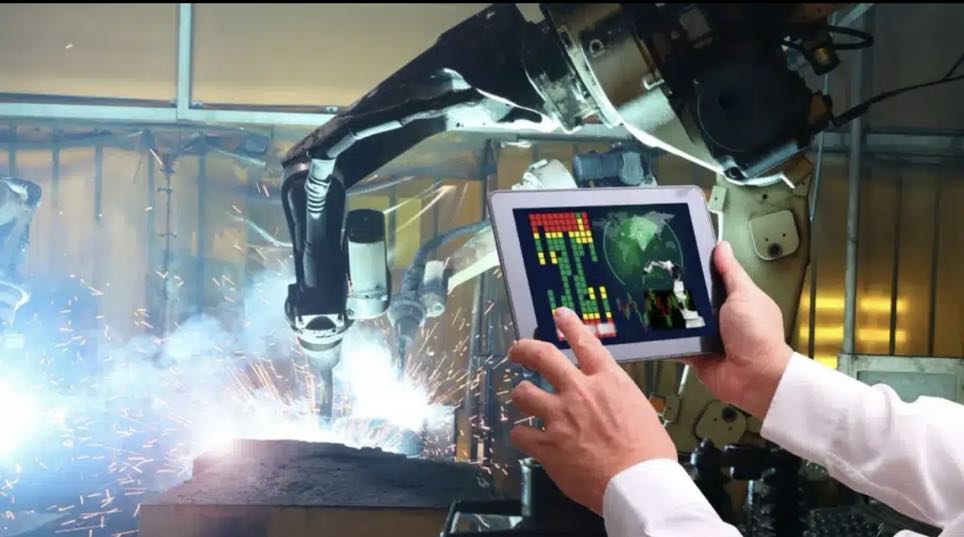
Robotic Welding: Captures real-time data on welding current, voltage, speed, temperature, and other key parameters, enabling traceability for every weld seam. This is critical for industries with strict quality requirements — automotive, pressure vessels, rail transportation, and aerospace — easily meeting audit demands for ISO, IATF 16949, and other quality management systems.
Manual Welding: Relies on welder records and quality inspector sampling. Complete traceability for every weld seam is nearly impossible to achieve. Even with process specifications, actual execution is difficult to verify 100%.
Verdict: For industries requiring full process traceability, robotic welding is an entry requirement, not an option.
Comparison Dimension 8: Return on Investment
Robotic Welding: Using a standard system (~$70,000 total investment) as an example:
- Replaces 1.5-2 welders → annual labor savings: $21,000-28,000
- Productivity gains from increased throughput → $14,000-21,000
- Rework reduction (8% → 2-3%) → $4,000-7,000
- Wire & gas savings (15-30%) → $3,000-4,000
- Total annual benefit: $42,000-60,000, payback period: 14-20 months
Manual Welding: Compensation expenses rise year over year. There is no “payback” concept — only ongoing costs. For 3 welders, total 5-year compensation is approximately 600,000 to 1,050,000.
Verdict: Robotic welding is a one-time investment with long-term returns; manual welding is ongoing, rising expenses.
Comparison Summary Table
| Dimension | Robotic Welding Cell | Manual Welding |
| Welding Speed | 35 inches/min | 18-20 inches/min |
| Arc-on Time | 60-90% | 15-30% |
| Defect Rate | 2-3% (advanced <1%) | 8-12% |
| Initial Investment | $35k-110k | $5k-15k |
| Annual Labor Cost | 1 operator | 1.5-2 welders |
| 5-Year Total Cost | $250k-350k | $600k-1.05M |
| Changeover Time | 15-45 minutes | Minutes |
| Ideal Batch Size | 50+ parts | Any |
| Data Traceability | Fully traceable | Record-dependent |
| Safety Risk | Significantly reduced | Long-term exposure |
| Payback Period | 12-24 months | N/A |
| Welder Shortage Impact | Low | High |
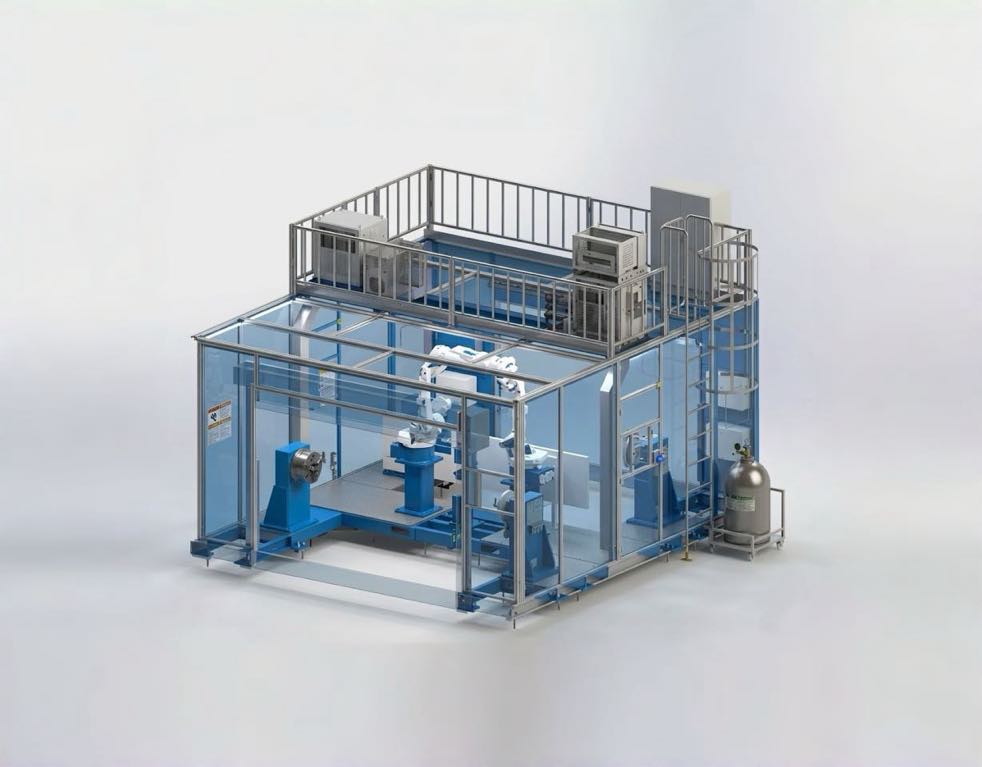
Real-World Collaboration Model: Human-Robot Coexistence
It’s not either/or. In our tracked cases, 62% of companies use a “human-robot collaboration” model: robotic welding cells handle repetitive main welds while welders manage tack welding, repairs, complex joints, and exception handling.
Case: Changzhou Construction Machinery Factory (2024-2025 tracked data):
- 2 robotic welding cells + 3 welders
- Production capacity increased 2.4x
- Welders transitioned from “long hours of torch-holding” to “exception handling + quality inspection”
- Welder satisfaction improved (physical labor dramatically reduced)
Two other models also exist:
Fully automated cell (22%) : Multiple cells + automated loading/unloading + unattended night shifts — suitable for high-volume standardized products
Manual-first + single cell (16%) : Cell used only for bottleneck processes — lower risk for first-time adopters
Decision Framework: How to Choose for Your Shop
Prioritize Robotic Welding Cells When:
- Annual welding hours exceed 2,000 hours
- Batch size exceeds 100 parts
- Strict requirements for weld quality consistency
- Difficulty hiring welders or rising labor costs
- Customer audits require weld data traceability
- Workpiece size within robot reach (typically under 1.5m)
Prioritize Manual Welding When:
- Field installation or repair welding (uncontrolled environment)
- Batch size under 50 parts with high variety
- Low-rigidity, severely deformed workpieces
- Extremely complex weld paths with frequent direction changes
- Extremely low budget — cannot afford initial investment
Suitable for Hybrid Models (robots + humans together):
- Most situations fall into this category. Let robots handle repetitive work, and let welders handle what robots can’t do well.
Self-Assessment Checklist
Answer “yes” or “no” to the following questions:
- Do you have one or more weld types with monthly volume exceeding 500 parts?
- Are your weld types relatively stable (not changing daily)?
- Is your workpiece size within 1.5m × 1m?
- Are you struggling to hire welders or facing rising labor costs?
- Do you have at least one employee willing to learn programming?
- Do customers require weld data traceability?
- Do you frequently turn down orders due to welder shortages?
Results Guide:
- 5+ “yes” answers → Strongly recommend robotic welding cell
- 3-4 “yes” answers → Recommend hybrid model (1 cell + existing welders)
- 1-2 “yes” answers → Consider collaborative robot or leasing model
- 0 “yes” answers → Manual welding is better for you at this stage
Next Step
If you have identified the welding approach that fits your shop, continue to the next article in this series:
Robotic Welding Cell Anatomy: Core Components & Selection Guide (2026 Edition)
We will break down each core component of a robotic welding cell to help you make more precise selection decisions.
Author Identification
This article is based on the International Federation of Robotics (IFR) World Robotics Report 2025, American Welding Society (AWS) workforce data, and major manufacturer technology roadmaps.
Author:
An expert in robotic welding system integration with over 12 years of industry experience. My company has over 26 years of professional experience, holds more than 40 patented technologies, and has successfully completed over 1,500 projects worldwide (approximately 70% of which involved robotic welding cells, totaling more than 1,000 units). The company holds EU CE certification (Certificate No.: M.2026.206.C134866) and complies with the EN 60204-1:2018 and EN ISO 12100:2010 standards. I have assisted numerous manufacturing companies throughout the entire process of robotic welding workstation implementation, from selection to production launch.
Updated: May 2026
RELATED POSTS
Scan-to-Weld Technology:How Reverse Modeling Replaces Robot Programming
Laser Welding Positioner: Accuracy and Speed for Thin-Gauge Welds
Five-Year TCO of a Welding Positioner: Counting the Hidden Costs the Quote Forgot
No-Programming Robotic Welding Cell: Vision-Guided, No Teach Pendant
Robot Positioner Buying Guide 2026:Match Your Budget to the Right System