


Custom Robot Workstations And Laser Systems Manufacturer


Robot Accessories
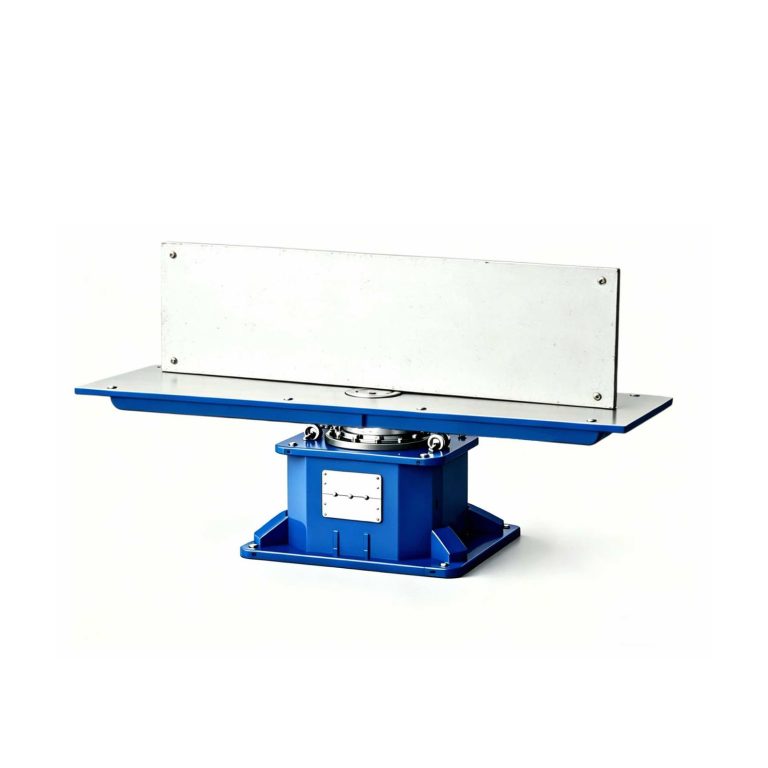
Servo Rotary Positioner | H001 High-Precision Welding Robot Turntable
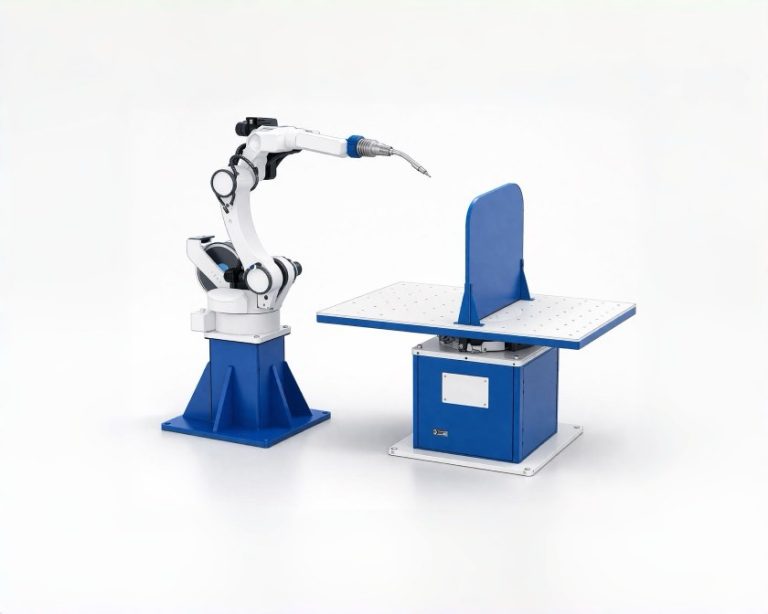
Servo Rotary Positioner | H002 High-Precision Welding Robot Turntable
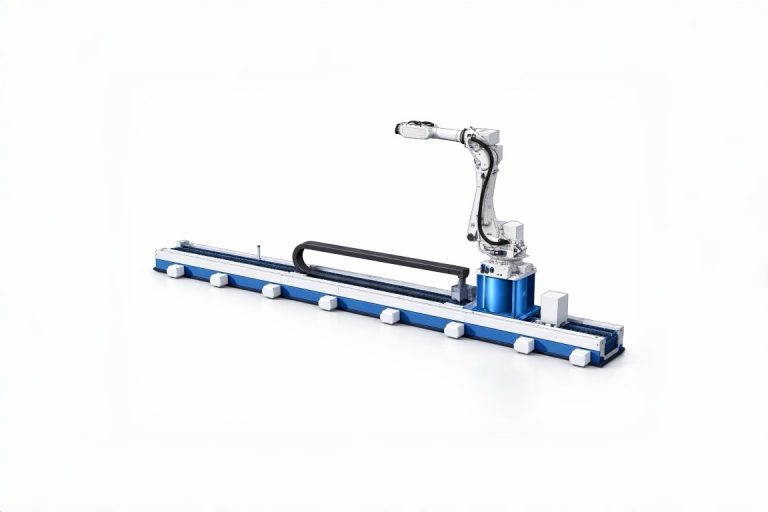
Heavy Duty Robot Transfer Rail | D003 7th Axis Ground Track System
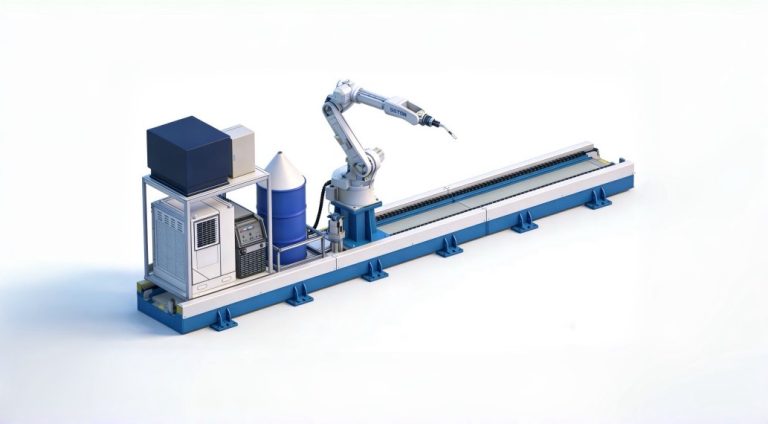
Robotic 7th Axis Ground Rail | D002 Light Duty Short-Stroke Robot Travel Rail System
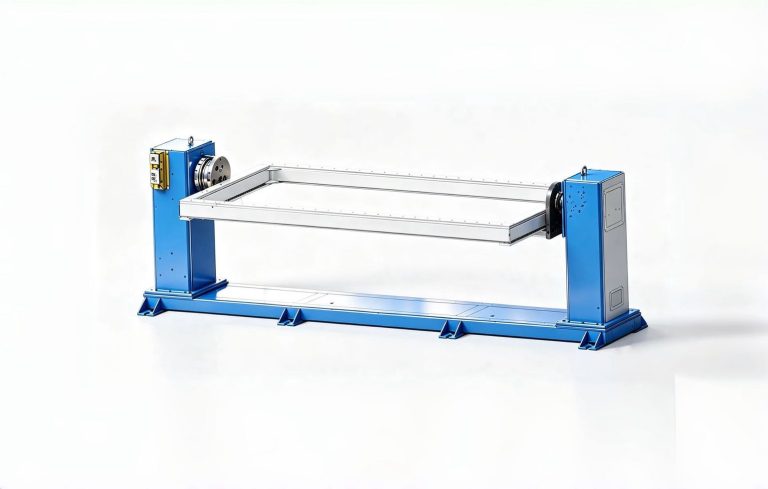
Heavy Duty Headstock & Tailstock Positioner | B002 Heavy Duty Servo Head-Tail Rotary Positioner
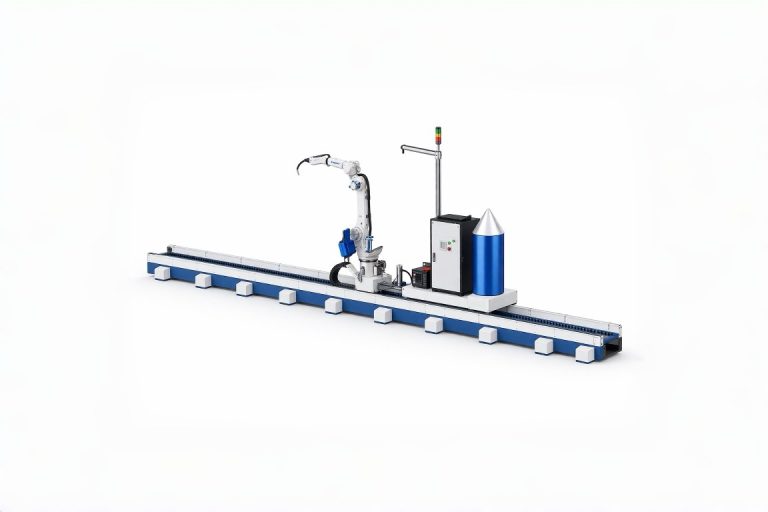
Robot Robotic Ground Linear Rail System | D001 7th Axis Ground Track Robot
Robot Accessories
What Are Robot Accessories
Robot accessories are a comprehensive range of auxiliary equipment and components designed to support and enhance the functionality of industrial robot systems. They work in conjunction with welding robots, handling robots, and other types of industrial robots to expand working ranges, improve positioning accuracy, ensure stable operation, and increase overall automation efficiency. Robot accessories are essential elements in building complete robotic workstations and automated production lines.
Robot accessories operate under demanding industrial conditions such as continuous start-stop motion, heavy loads, vibration, welding spatter, dust, and temperature fluctuations. Therefore, they are designed with high-strength materials, precision drive systems, durable bearings, and reliable protective structures to ensure positioning accuracy, repeatability, and long service life.
These accessories are widely used in various industrial automation applications including welding, material handling, cutting, laser processing, palletizing, machine tending, and general manufacturing.
High-strength cast iron, fabricated steel, and precision-machined components are used as the primary materials for robot accessories.
Types of Robot Accessories
Robot accessories can be classified into several main categories based on their function and application. Each category serves a specific purpose in robotic automation systems.
1. 7th Axis Robot Rail System
A 7th axis robot rail system is a linear motion device that extends the workspace of a standard 6-axis industrial robot. By adding an external linear axis (the 7th axis), it enables the robot to move along a ground-mounted rail, significantly increasing its operational range.
Key Components: Rail base, precision linear guide rails, rack and pinion drive system, servo motor with gearbox, robot mounting plate, cable carrier, limit switches.
Models: D001 (Light Duty), D002 (Short-Stroke), D003 (Heavy Duty up to 3000kg)
Applications: Long-seam welding, multi-station material handling, heavy-duty workpiece transfer, machine tending, palletizing.
2. Headstock & Tailstock Positioner
A headstock & tailstock positioner is a rotary positioning device used in robotic welding systems to manipulate large or long workpieces. It consists of a driven headstock and a free-turning or driven tailstock that work together to clamp and rotate the workpiece along its longitudinal axis.
Key Components: Headstock assembly, tailstock assembly, base frame, clamping fixture, rotation mechanism, servo motor with precision reducer.
Models: B001 (Light Duty), B002 (Heavy Duty), B004 (Heavy Duty for large EV components)
Applications: Automotive parts, construction machinery, steel structures, long-seam welding, large EV component fabrication.
3. Horizontal 3-Axis Rotary Positioner
A horizontal 3-axis rotary positioner is an advanced positioning device that features a three-axis linkage structure enabling precise multi-angle positioning through coordinated motion of the rotation axis and tooling axis.
Key Components: Rotation axis drive system, tooling axis tilting system, three-axis servo drive system, rotation mechanism, fixture frame, protective panels.
Models: B008 (Heavy Duty, 1500–2000kg), B009 (Modular, 500–1000kg), B010 (Light Duty, 300–500kg), B011 (Standard, 1000–1500kg)
Applications: Large steel structures, construction machinery, medium steel structures, frame weldments, light frames, sheet metal.
4. L-Type Welding Positioner
An L-type welding positioner is a dual-axis positioning device featuring an L-shaped structure that enables precise positioning through coordinated motion of the first-axis rotation and second-axis tilting, particularly suitable for applications requiring complex posture adjustment in limited spaces.
Key Components: First-axis rotary system, second-axis tilting system, worktable, high-strength machine body, servo drive motors.
Models: L001 (Light Duty, 300–500kg), L002 (Heavy Duty, 1500kg with 6720N·m torque)
Applications: Light weldments requiring complex posture adjustment, medium to heavy weldments, space-limited workshops, multi-angle welding.
5. Robot Base
A robot base is a high-strength mounting foundation platform that serves as the structural interface between the robot and the floor or steel platform, providing a rigid and stable foundation that effectively reduces robot vibration and improves motion accuracy.
Key Components: Carbon steel welded body, upper mounting flange, lower mounting base plate, internal reinforcement ribs and partitions.
Models: DZ001 (Standard), DZ002 (Heavy Duty), DZ003 (Heavy Duty with higher height options)
Applications: Welding robot workstations, material handling cells, grinding stations, palletizing systems, general industrial robot integration.
6. Single Axis Rotary Positioner
A single axis rotary positioner is a precision rotary platform driven by high-performance servo motors, providing accurate angular control and stable rotation for optimal workpiece positioning in robotic welding cells.
Key Components: Servo rotary drive system, precision bearing system, worktable (rectangular or circular), high-rigidity base.
Models: H001/H002 (500–2000kg, rectangular table), H003 (300kg, long rectangular frame), H004 (500–1500kg, standard circular), H005 (1500–2000kg, heavy duty circular)
Applications: Long or medium-to-large weldments, light-duty welding lines, EV welding and assembly positioning, large steel structures.
7. U-Type Welding Positioner
A U-type welding positioner is a dual-axis or multi-axis positioning device featuring a U-shaped structure that enables precise positioning through coordinated motion of multiple axes, providing optimal welding postures for robots.
Key Components: Servo drive system, U-type machine body, worktable, high-rigidity base, precision bearing system.
Models: U001 (Light Duty, 300kg, dual-axis), U002 (Standard, 500–1000kg, dual-axis), U004 (Five-axis)
Applications: Light weldments requiring flexible posture adjustment, medium-sized weldments, high-end complex weldments requiring high degrees of freedom.
8. Vertical Tilting Positioner
A vertical tilting positioner is a high-performance three-axis rotary positioning device featuring a unique vertical flip structure that enables large-angle vertical flipping and multi-posture precise positioning through coordinated motion of the tilting axis and tooling axis.
Key Components: Vertical flip mechanism, tilting axis drive system, tooling axis drive system, three-axis servo drive system.
Models: B012 (Three-axis vertical flip)
Applications: Frame weldments, box structures, long-strip weldments, medium to large workpiece manufacturing.
Manufacturing Process
Robot accessories are produced through several key manufacturing processes:
Casting or Fabrication
High-strength cast iron or fabricated steel is used to form main structures such as positioner bodies, rail bases, and robot bases.
Heat Treatment or Stress Relief
Stress relief processes eliminate residual stresses to maintain long-term dimensional stability.
Precision Machining
CNC machining ensures accurate bearing seat diameters, mounting surface flatness, flange concentricity, and rail straightness.
Assembly and Testing
Full assembly including servo motors, reducers, bearings, and control systems, followed by functional testing to verify positioning accuracy and load capacity.
Quality Inspection
Strict inspections including dimensional measurement, material testing, run-out verification, and protective structure integrity checks are carried out to guarantee product quality.
Applications of Robot Accessories
Robot accessories are widely used in various industrial automation scenarios:
Welding automation: Long-seam welding, multi-station welding, complex workpiece welding
Material handling: Pick-and-place, heavy-duty transfer, machine tending
Laser processing: Cutting, welding, surface treatment
Palletizing and depalletizing: Automated stacking and unstacking
General manufacturing: Assembly, grinding, painting, inspection
These accessories are designed to work with different robot types such as welding robots, handling robots, palletizing robots, painting robots, and laser processing robots, ensuring efficient factory automation across multiple industries.
Product Series Summary
| Category | Models | Payload Range | Key Feature |
| 7th Axis Rail System | D001, D002, D003 | Up to 3000kg | Linear travel for robot |
| Headstock & Tailstock Positioner | B001, B002, B004 | Up to 1500kg+ | Long workpiece rotation |
| Horizontal 3-Axis Positioner | B008, B009, B010, B011 | 300–2000kg | Three-axis linkage |
| L-Type Positioner | L001, L002 | 300–1500kg | L-shaped dual-axis |
| Robot Base | DZ001, DZ002, DZ003 | N/A | Robot mounting platform |
| Single Axis Positioner | H001, H002, H003, H004, H005 | 300–2000kg | Servo turntable |
| U-Type Positioner | U001, U002, U004 | 300–1000kg | U-shaped dual/five-axis |
| Vertical Tilting Positioner | B012 | Medium-large | Vertical flip three-axis |
Custom Robot Workstations & Laser Systems Manufacturer
Industrial Robotic Automation Solutions
We deliver high-performance robotic automation solutions for modern manufacturing.
Specializing in robot workstations and laser systems, we provide customized solutions for welding, cutting, laser processing, and material handling applications. With 26+ years of expertise, 40+ patented technologies, and 2,000+ successful projects worldwide, we empower manufacturers to increase productivity, ensure consistent quality, and maximize ROI.
Supported by an experienced engineering team and an ISO-certified production base, we are dedicated to helping our customers stay competitive in a rapidly evolving global market.
What Is a 7th Axis Robot Rail System
A 7th axis robot rail system is a linear motion device that extends the workspace of a standard 6-axis industrial robot. By adding an external linear axis (the 7th axis), it enables the robot to move along a ground-mounted rail, significantly increasing its operational range beyond the limits of its base-mounted arm.
7th axis systems operate under demanding industrial conditions such as continuous start-stop motion, variable loads, welding spatter, dust, and temperature fluctuations. Therefore, they are designed with high-rigidity guide rails, precision ground rack and pinion drives, robust servo motors, and durable sealing systems to ensure positioning accuracy, repeatability, and long service life.
These systems are widely used in various automation applications including long-seam welding, multi-station material handling, heavy-load transfer, machine tending, palletizing, and flexible production lines.
Heavy-duty steel or cast iron rail sections are used as the[ main structural base for industrial robot travel systems.
Structure of a 7th Axis Robot Rail System
A typical 7th axis robot rail system consists of several key components:
- Rail base / beam structure
- Precision linear guide rails
- Rack and pinion drive system
- Servo motor with gearbox
- Robot mounting plate / adapter
- Cable carrier (energy chain)
- Limit switches and home position sensor
- Lubrication system
- Protective covers (bellows or metal)
Among these components, the rail base plays a crucial role in supporting the robot's weight and dynamic loads while maintaining precise alignment of the guide rails and rack.
7th Axis Robot Rail Base
The rail base is the main structural foundation of the 7th axis system. It supports the robot, guide rails, rack, and cable carrier, and protects the drive system from dust, welding spatter, and external impacts.
Rail bases are typically manufactured using high-strength fabricated steel or cast iron, followed by precision machining to ensure straightness, flatness, and dimensional accuracy.
A high-quality rail base must provide:
- Excellent structural rigidity
- High dimensional accuracy (straightness within 0.1mm per meter)
- Strong vibration damping
- Reliable alignment for guide rails and rack
These characteristics ensure smooth, precise, and repeatable robot movement in automated production environments.
Manufacturing Process
Rail bases for 7th axis systems are produced through several key manufacturing processes:
Fabrication or Casting
High-strength steel sections or cast iron is used to form the main beam structure.
Stress Relief
Heat treatment or vibration aging relieves residual stresses to maintain long-term stability.
Precision Machining
Large-bed CNC machining centers ensure accurate flatness, straightness, and proper alignment of guide rail mounting surfaces and rack mounting pads.
Quality Inspection
Strict inspections including straightness measurement, flatness checking, material testing, and dimensional verification are carried out to guarantee product quality.
Applications of 7th Axis Robot Rail Systems
7th axis robot rail systems are widely used in various industrial automation scenarios:
- Long-seam welding (e.g., beams, tanks, shipbuilding)
- Multi-station material handling
- Heavy-duty workpiece transfer (up to 3000kg)
- Machine tending (CNC loading/unloading)
- Palletizing and depalletizing
- Large-part painting and spraying
- Flexible manufacturing cells
These systems are designed to work with different robot types such as welding robots, handling robots, palletizing robots, and painting robots, ensuring efficient factory automation across multiple industries.
Custom Robot Workstations & Laser Systems Manufacturer
Industrial Robotic Automation Solutions
We deliver high-performance robotic automation solutions for modern manufacturing.
Specializing in robot workstations and laser systems, we provide customized solutions for welding, cutting, laser processing, and material handling applications. With 26+ years of expertise, 40+ patented technologies, and 2,000+ successful projects worldwide, we empower manufacturers to increase productivity, ensure consistent quality, and maximize ROI.
Supported by an experienced engineering team and an ISO-certified production base, we are dedicated to helping our customers stay competitive in a rapidly evolving global market.
2.Headstock Tailstock Positioner
What Is a Headstock & Tailstock Positioner
A headstock & tailstock positioner is a rotary positioning device used in robotic welding systems to manipulate large or long workpieces. It consists of a driven headstock and a free-turning or driven tailstock that work together to clamp and rotate the workpiece along its longitudinal axis, providing the optimal welding position for the robot.
Headstock & tailstock positioners operate under demanding conditions such as continuous rotation, heavy torque loads, welding spatter, heat radiation, and dust. Therefore, they are designed with high-rigidity frames, precision servo drive systems, durable bearings, and reliable sealing to ensure positioning accuracy, repeatability, and long service life.
These positioners are widely used in various welding automation applications including automotive parts manufacturing, construction machinery, steel structures, long-seam welding, and large EV component fabrication.
Heavy-duty cast iron or fabricated steel structures are used as the main frame for headstock and tailstock positioners.
Structure of a Headstock & Tailstock Positioner
A typical headstock & tailstock positioner consists of several key components:
- Headstock assembly (with drive motor and reducer)
- Tailstock assembly (with or without drive)
- Base frame / foundation plate
- Clamping fixture or tooling interface
- Rotation mechanism (gear or direct drive)
- Servo motor with precision reducer
- Bearing system
- Control system (including position feedback)
- Cable management system
Among these components, the headstock assembly plays a crucial role as it provides the driving force and rotational precision, while the tailstock supports the free end of long workpieces.
Headstock Assembly
The headstock is the core driving unit of the positioner. It houses the servo motor, precision reducer, bearings, and output flange. The headstock provides the rotational torque and positional accuracy needed to orient the workpiece at any angle for robotic welding.
Headstock assemblies are typically manufactured using high-strength cast iron or fabricated steel, followed by precision machining to ensure bearing seat concentricity and flange mounting accuracy.
A high-quality headstock assembly must provide:
- High torsional rigidity
- Precise angular positioning (repeatability within ±0.1°)
- Strong overload protection
- Reliable sealing against welding spatter and dust
These characteristics ensure stable, accurate, and safe workpiece positioning during robotic welding operations.
Manufacturing Process
Headstock and tailstock positioners are produced through several key manufacturing processes:
Casting or Fabrication
High-strength cast iron or fabricated steel is used to form the main frame and headstock housing.
Heat Treatment or Stress Relief
Stress relief processes eliminate residual stresses to maintain long-term dimensional stability.
Precision Machining
CNC machining centers ensure accurate bearing seat diameters, mounting surface flatness, and flange concentricity.
Assembly and Testing
Full assembly including servo motor, reducer, and bearings, followed by functional testing including no-load rotation, positioning accuracy verification, and load testing.
Quality Inspection
Strict inspections including dimensional measurement, material testing, and run-out verification are carried out to guarantee product quality.
Applications of Headstock & Tailstock Positioners
Headstock & tailstock positioners are widely used in various robotic welding applications:
- Automotive parts welding (axles, frames, subframes)
- Construction machinery welding (booms, buckets, chassis)
- Steel structure welding (beams, columns, trusses)
- Long-seam welding of pipes and tanks
- Large EV component welding (battery trays, motor housings)
- Railway vehicle component welding
- Shipbuilding and heavy fabrication
These positioners are designed to work with different welding robot types such as arc welding robots, MIG/MAG welding robots, and laser welding systems, ensuring efficient, high-quality welding across multiple industries.
Custom Robot Workstations & Laser Systems Manufacturer
Industrial Robotic Automation Solutions
We deliver high-performance robotic automation solutions for modern manufacturing.
Specializing in robot workstations and laser systems, we provide customized solutions for welding, cutting, laser processing, and material handling applications. With 26+ years of expertise, 40+ patented technologies, and 2,000+ successful projects worldwide, we empower manufacturers to increase productivity, ensure consistent quality, and maximize ROI.
Supported by an experienced engineering team and an ISO-certified production base, we are dedicated to helping our customers stay competitive in a rapidly evolving global market.
3.Horizontal 3-Axis Rotary Positioner
What Is a Horizontal 3-Axis Rotary Positioner
A horizontal 3-axis rotary positioner is an advanced positioning device used in robotic welding systems to manipulate large, heavy, or complex workpieces. It features a three-axis linkage structure that enables precise multi-angle positioning through coordinated motion of the rotation axis and tooling axis, providing the optimal welding posture for the robot.
Horizontal 3-axis rotary positioners operate under demanding conditions such as continuous multi-axis motion, heavy torque loads, welding spatter, heat radiation, and dust. Therefore, they are designed with high-rigidity bodies, precision servo drive systems, durable bearings, and reliable protective structures to ensure positioning accuracy, repeatability, and long service life.
These positioners are widely used in various welding automation applications including large steel structures, construction machinery, medium steel structures, frame weldments, light frames, sheet metal, and small to medium structural components.
Heavy-duty cast iron or fabricated steel structures are used as the main frame for horizontal 3-axis rotary positioners.
Structure of a Horizontal 3-Axis Rotary Positioner
A typical horizontal 3-axis rotary positioner consists of several key components:
- Rotation axis drive system
- Tooling axis tilting system
- High-precision three-axis servo drive system
- Heavy-duty or modular rotation mechanism
- Standard fixture frame
- High-rigidity main body
- Protective panels and covers
- Robot external axis interface
- Control system with position feedback
- Cable management system
Among these components, the three-axis servo drive system plays a crucial role as it provides coordinated motion control and positioning precision, while the rotation and tooling axes work together to achieve multi-angle workpiece orientation.
Three-Axis Servo Drive System
The three-axis servo drive system is the core control unit of the horizontal 3-axis positioner. It consists of servo motors, precision reducers, and a control system that synchronizes the rotation axis and tooling axis. This system provides the rotational torque, tilting capability, and positional accuracy needed to orient complex workpieces at any angle for robotic welding.
Three-axis servo drive systems are manufactured using high-precision servo motors and precision ground reducers, followed by rigorous calibration to ensure coordinated motion accuracy.
A high-quality three-axis servo drive system must provide:
- High torsional rigidity
- Precise angular positioning (repeatability within ±0.03–0.075mm)
- Smooth coordinated motion between axes
- Strong overload protection
- Reliable sealing against welding spatter and dust
These characteristics ensure stable, accurate, and safe multi-angle workpiece positioning during robotic welding operations.
Manufacturing Process
Horizontal 3-axis rotary positioners are produced through several key manufacturing processes:
Casting or Fabrication
High-strength cast iron or fabricated steel is used to form the main body, rotation mechanism, and tooling axis structure.
Heat Treatment or Stress Relief
Stress relief processes eliminate residual stresses to maintain long-term dimensional stability.
Precision Machining
CNC machining centers ensure accurate bearing seat diameters, mounting surface flatness, and flange concentricity.
Modular Assembly
For modular models (B009), components are designed for easy assembly, transportation, and installation.
Assembly and Testing
Full assembly including servo motors, reducers, and control systems, followed by functional testing including no-load rotation, coordinated axis motion verification, positioning accuracy testing, and load testing.
Quality Inspection
Strict inspections including dimensional measurement, material testing, run-out verification, and protective structure integrity checks are carried out to guarantee product quality.
Applications of Horizontal 3-Axis Rotary Positioners
Horizontal 3-axis rotary positioners are widely used in various robotic welding applications:
- Large steel structure welding (beams, columns, heavy fabrications)
- Construction machinery welding (booms, buckets, chassis, heavy components)
- Medium steel structure welding (frames, supports, structural members)
- Frame weldment welding (automotive frames, equipment frames)
- Light frame and sheet metal welding
- Small to medium structural component welding
- Heavy-duty automated welding cells
- General fabrication and manufacturing
These positioners are designed to work with different welding robot types such as arc welding robots, MIG/MAG welding robots, and laser welding systems, ensuring efficient, high-quality welding across multiple industries.
The series includes four models to suit different payload requirements:
| Model | Payload Capacity | Max Rotation Diameter | Key Feature |
| B008 | 1500–2000kg | 5000mm | Heavy duty, high accuracy |
| B009 | 500–1000kg | 4000mm | Modular, cost-effective |
| B010 | 300–500kg | 4000mm | Light duty, excellent dynamics |
| B011 | 1000–1500kg | 4000mm | Standard, balanced performance |
Custom Robot Workstations & Laser Systems Manufacturer
Industrial Robotic Automation Solutions
We deliver high-performance robotic automation solutions for modern manufacturing.
Specializing in robot workstations and laser systems, we provide customized solutions for welding, cutting, laser processing, and material handling applications. With 26+ years of expertise, 40+ patented technologies, and 2,000+ successful projects worldwide, we empower manufacturers to increase productivity, ensure consistent quality, and maximize ROI.
Supported by an experienced engineering team and an ISO-certified production base, we are dedicated to helping our customers stay competitive in a rapidly evolving global market.
4.L-Type Welding Positioner
What Is an L-Type Welding Positioner
An L-type welding positioner is a dual-axis positioning device used in robotic welding systems to manipulate workpieces that require complex posture adjustment in limited spaces. It features an L-shaped structure that enables precise positioning through coordinated motion of the first-axis rotation and second-axis tilting, providing the optimal welding posture for the robot.
L-type welding positioners operate under demanding conditions such as continuous dual-axis motion, variable torque loads, welding spatter, heat radiation, and dust. Therefore, they are designed with high-rigidity machine bodies, precision servo drive systems, durable bearings, and reliable protective structures to ensure positioning accuracy, repeatability, and long service life.
These positioners are widely used in various welding automation applications including light weldments requiring complex posture adjustment, medium to heavy weldments, space-limited workshops, and multi-angle welding operations.
High-strength cast iron or fabricated steel structures are used as the main frame for L-type welding positioners.
Structure of an L-Type Welding Positioner
A typical L-type welding positioner consists of several key components:
- First-axis rotary system
- Second-axis tilting system
- Worktable (with mounting holes or T-slots)
- High-strength machine body
- Servo drive motors and precision reducers
- Bearing system
- Robot external axis interface
- Control system with position feedback
- Cable management system
- Protective covers
Among these components, the first-axis rotary system provides the primary rotational motion, while the second-axis tilting system enables angular adjustment of the workpiece, working together to achieve complex multi-angle positioning.
First-Axis Rotary System
The first-axis rotary system is the core rotational unit of the L-type positioner. It consists of a high-precision servo motor, reducer, and bearings that enable smooth and accurate rotation of the entire tilting assembly. This system provides the primary rotational motion needed to orient the workpiece around the vertical axis.
For light-duty models (L001), the first-axis features a center height of 1300mm for high-rigidity rotation. For heavy-duty models (L002), a 1.8kW high-power servo motor provides strong rotation and high rigidity.
A high-quality first-axis rotary system must provide:
- High rotational rigidity
- Precise angular positioning
- Smooth start-stop motion
- Strong overload protection
- Reliable sealing against welding spatter and dust
Second-Axis Tilting System
The second-axis tilting system is the core tilting unit of the L-type positioner. It consists of a precision servo motor, high-torque reducer, and bearings that enable accurate tilting of the worktable. This system provides the angular positioning needed to present the workpiece at the optimal welding angle to the robot.
For light-duty models (L001), the second-axis features a maximum rotation radius of 737.5mm for flexible tilting adjustment. For heavy-duty models (L002), a 2.9kW high-torque servo motor with rated torque up to 6720N·m ensures stable heavy-load tilting.
A high-quality second-axis tilting system must provide:
- High tilting torque capacity
- Precise angular positioning
- Stable holding torque at any angle
- Smooth motion during tilting
- Strong structural rigidity
These characteristics ensure stable, accurate, and safe multi-angle workpiece positioning during robotic welding operations.
Manufacturing Process
L-type welding positioners are produced through several key manufacturing processes:
Casting or Fabrication
High-strength cast iron or fabricated steel is used to form the machine body, rotary system housing, and tilting system structure.
Heat Treatment or Stress Relief
Stress relief processes eliminate residual stresses to maintain long-term dimensional stability.
Precision Machining
CNC machining centers ensure accurate bearing seat diameters, mounting surface flatness, and worktable concentricity.
Assembly and Testing
Full assembly including servo motors, reducers, and control systems, followed by functional testing including no-load rotation, coordinated dual-axis motion verification, positioning accuracy testing, and load testing.
Quality Inspection
Strict inspections including dimensional measurement, material testing, run-out verification, and worktable flatness checks are carried out to guarantee product quality.
Applications of L-Type Welding Positioners
L-type welding positioners are widely used in various robotic welding applications:
- Light weldments requiring complex posture adjustment
- Medium to heavy weldments
- Space-limited workshops and production cells
- Multi-angle welding operations
- Automotive component welding
- Machinery part fabrication
- General manufacturing and fabrication
- Applications requiring large payload and complex posture adjustment (L002)
The series includes two models to suit different payload requirements:
| Model | Payload Capacity | First-Axis Drive | Second-Axis Drive | Key Feature |
| L001 | 300–500kg | High-precision servo | Precision servo | Compact, flexible, space-saving |
| L002 | 1500kg | 1.8kW servo | 2.9kW servo, 6720N·m torque | Heavy-duty, high torque capacity |
These positioners are designed to work with different welding robot types such as arc welding robots, MIG/MAG welding robots, and laser welding systems, ensuring efficient, high-quality welding across multiple industries.
Custom Robot Workstations & Laser Systems Manufacturer
Industrial Robotic Automation Solutions
We deliver high-performance robotic automation solutions for modern manufacturing.
Specializing in robot workstations and laser systems, we provide customized solutions for welding, cutting, laser processing, and material handling applications. With 26+ years of expertise, 40+ patented technologies, and 2,000+ successful projects worldwide, we empower manufacturers to increase productivity, ensure consistent quality, and maximize ROI.
Supported by an experienced engineering team and an ISO-certified production base, we are dedicated to helping our customers stay competitive in a rapidly evolving global market.
5
What Is a Robot Base
A robot base is a high-strength mounting foundation platform designed for industrial robot system integration, such as welding robots and handling robots. It serves as the structural interface between the robot and the floor or steel platform, providing a rigid and stable foundation that effectively reduces robot vibration, improves motion accuracy, and enhances operational safety.
Robot bases operate under demanding conditions such as continuous dynamic loads, vibration, torque forces from robot motion, and environmental factors like dust and temperature fluctuations. Therefore, they are designed with high-strength welded steel structures, precision-machined mounting surfaces, internal reinforcement ribs, and robust base plates to ensure long-term stability and reliability.
These bases are widely used in various robotic automation applications including welding workstations, material handling cells, grinding stations, palletizing systems, and general industrial robot integration.
High-strength welded carbon steel is used as the primary material for robot bases.
Structure of a Robot Base
A typical robot base consists of several key components:
- High-strength carbon steel welded body
- Upper mounting flange (precision-machined flat surface with standard mounting holes)
- Lower mounting base plate (thickened plate with anchor bolt holes)
- Internal reinforcement ribs and partitions
- Customizable height sections
Among these components, the upper mounting flange plays a crucial role as it provides the precision-machined interface for direct robot installation, while the internal reinforcement ribs ensure overall rigidity and stability.
Upper Mounting Flange
The upper mounting flange is the critical interface between the robot base and the robot itself. It is a precision-machined flat surface with standard mounting hole patterns that match various robot brands and models. This flange ensures accurate alignment and secure attachment of the robot to the base.
Upper mounting flanges are manufactured using precision CNC machining to achieve the required flatness, surface finish, and hole pattern accuracy.
A high-quality upper mounting flange must provide:
- High flatness for proper robot alignment
- Accurate hole positioning to match robot mounting patterns
- Strong thread engagement for secure robot attachment
- Wear resistance for repeated installations
- Corrosion protection
These characteristics ensure stable and accurate robot operation on the mounting base.
Internal Reinforcement Structure
The internal reinforcement structure is the core mechanical feature that gives the robot base its rigidity and stability. It consists of multiple reinforcement ribs and, in heavy-duty models, partitions that are welded inside the box-type body. These internal features resist torsional and bending forces generated by robot motion.
For standard models (DZ001), internal reinforcement ribs provide adequate rigidity for general applications. For heavy-duty models (DZ002 and DZ003), additional ribs and partitions further enhance overall rigidity and stability for demanding applications.
A high-quality internal reinforcement structure must provide:
High torsional resistance
Strong bending resistance
Even load distribution
Vibration damping characteristics
Long-term dimensional stability
These characteristics ensure the robot base maintains its structural integrity under continuous dynamic loading.
Manufacturing Process
Robot bases are produced through several key manufacturing processes:
Cutting and Preparation
Carbon steel plates are cut to size using plasma or laser cutting machines.
Welding
Precision welding techniques are used to assemble the box-type body, upper flange, lower base plate, and internal reinforcement ribs.
Stress Relief
Heat treatment or vibration aging relieves residual welding stresses to maintain long-term dimensional stability.
Precision Machining
CNC machining ensures the upper mounting flange achieves required flatness, surface finish, and hole pattern accuracy.
Surface Treatment
Painting or other surface treatments provide corrosion protection and a professional appearance.
Quality Inspection
Strict inspections including dimensional measurement, flatness verification, weld quality inspection, and material testing are carried out to guarantee product quality.
Applications of Robot Bases
Robot bases are widely used in various robotic automation scenarios:
- Welding robot workstations
- Material handling and pick-and-place cells
- Grinding and deburring stations
- Palletizing and depalletizing systems
- Machine tending applications
- Assembly robot stations
- General industrial robot integration
The series includes three models to suit different robot sizes and application requirements:
| Model | Type | Standard Heights | Key Feature |
| DZ001 | Standard | 300, 500, 750, 900mm | Classic box structure, cost-effective, most commonly used |
| DZ002 | Heavy Duty | 300, 500, 750mm | Reinforced structure with ribs and partitions for medium-large robots |
| DZ003 | Heavy Duty | 500, 700, 900, 1200mm | Reinforced structure with higher height options |
These bases are designed to work with different robot types such as welding robots, handling robots, grinding robots, and palletizing robots, ensuring stable and accurate operation across multiple industrial automation applications.
Custom Robot Workstations & Laser Systems Manufacturer
Industrial Robotic Automation Solutions
We deliver high-performance robotic automation solutions for modern manufacturing.
Specializing in robot workstations and laser systems, we provide customized solutions for welding, cutting, laser processing, and material handling applications. With 26+ years of expertise, 40+ patented technologies, and 2,000+ successful projects worldwide, we empower manufacturers to increase productivity, ensure consistent quality, and maximize ROI.
Supported by an experienced engineering team and an ISO-certified production base, we are dedicated to helping our customers stay competitive in a rapidly evolving global market.
6.Single Axis Rotary Positioner
What Is a Single Axis Rotary Positioner
A single axis rotary positioner is a precision rotary platform used in robotic welding systems to position workpieces for optimal welding. Driven by high-performance servo motors, it provides accurate angular control and stable rotation, enabling robots to weld workpieces from the optimal position. It is a fundamental positioning device for robotic welding cells.
Single axis rotary positioners operate under demanding conditions such as continuous rotation, variable torque loads, welding spatter, heat radiation, and dust. Therefore, they are designed with high-rigidity bases, precision bearing systems, robust servo drives, and reliable protective structures to ensure positioning accuracy, repeatability, and long service life.
These positioners are widely used in various welding automation applications including long or medium-to-large weldments, light-duty welding lines, electric vehicle welding and assembly positioning, large steel structures, and construction machinery.
Heavy-duty welded steel structures are used as the main frame for single axis rotary positioners.
Structure of a Single Axis Rotary Positioner
A typical single axis rotary positioner consists of several key components:
- High-precision servo rotary drive system
- Heavy-duty precision bearing system
- Worktable (rectangular or circular)
- High-rigidity base structure
- Robot external axis interface
- Control system with position feedback
- Cable management system
- Protective covers
Among these components, the servo rotary drive system plays the most critical role as it provides the rotational torque and positioning accuracy, while the bearing system ensures smooth, zero-backlash rotation under load.
Servo Rotary Drive System
The servo rotary drive system is the core motion control unit of the single axis positioner. It consists of a high-performance servo motor paired with a precision reducer that provides accurate angular control and stable rotation. This system delivers the torque and positional accuracy needed to orient workpieces at the optimal angle for robotic welding.
For light-duty models (H003), a 1.8kW servo motor delivers 2000 N·m rated torque and stable rotation at 5 rpm. For standard and heavy-duty models (H001, H002, H004, H005), positioning accuracy reaches ±0.05mm@R350 with maximum rotation speeds of 45–60°/s.
A high-quality servo rotary drive system must provide:
- High torsional rigidity
- Precise angular positioning (repeatability within ±0.05mm@R350)
- Smooth start-stop motion
- Strong overload protection
- Reliable sealing against welding spatter and dust
These characteristics ensure stable, accurate, and safe workpiece positioning during robotic welding operations.
Precision Bearing System
The precision bearing system is a critical component that supports the rotating worktable and maintains smooth, backlash-free rotation under load. For standard and heavy-duty models (H004, H005), large-diameter crossed roller bearings provide high rigidity and zero-backlash rotation. For light-duty models (H003), heavy-duty precision bearings ensure smooth rotation under 300kg load.
A high-quality precision bearing system must provide:
- High radial and axial load capacity
- Zero-backlash or minimal backlash operation
- Smooth rotation with low friction
- Long service life under continuous operation
- Resistance to contamination from welding spatter and dust
These characteristics ensure the positioner maintains its accuracy and smooth operation over years of service.
Worktable Design
The worktable is the interface between the positioner and the workpiece fixture. Different models feature different worktable designs to suit various applications:
Rectangular Frame / Long Rectangular Working Frame (H001, H002, H003):
Ideal for long fixtures and long or medium-to-large weldments. H003 features a high-strength rectangular frame that can accommodate fixtures up to 1300mm in length.
Large Circular Worktable (H004, H005):
High-strength steel welded tables provide stable support for medium to large workpieces. H004 standard diameter is 1500mm (max 2000mm), while H005 standard diameter is 2500mm (max 3000mm).
A high-quality worktable must provide:
High flatness for proper fixture mounting
Strong structural rigidity
Wear resistance
Customizable mounting holes or T-slots
Good thermal stability
Manufacturing Process
Single axis rotary positioners are produced through several key manufacturing processes:
Cutting and Preparation
Steel plates are cut to size using plasma or laser cutting machines.
Welding and Fabrication
High-strength welded steel structures form the base, worktable, and support frames.
Stress Relief
Heat treatment or vibration aging relieves residual welding stresses to maintain long-term dimensional stability.
Precision Machining
CNC machining ensures bearing seat accuracy, mounting surface flatness, and worktable concentricity.
Assembly and Testing
Full assembly including servo motor, reducer, bearings, and control system, followed by functional testing including no-load rotation, positioning accuracy verification, and load testing.
Quality Inspection
Strict inspections including dimensional measurement, run-out verification, and positioning accuracy testing are carried out to guarantee product quality.
Applications of Single Axis Rotary Positioners
Single axis rotary positioners are widely used in various robotic welding and assembly applications:
Long or medium-to-large weldment welding
Light-duty welding automation lines (H003)
Electric vehicle welding and assembly positioning (H004, H005)
Large steel structure welding (H005)
Construction machinery welding (H005)
General fabrication and manufacturing
The series includes five models to suit different payload and application requirements:
| Model | Payload Capacity | Max Rotation Diameter | Worktable Type | Key Feature |
| H001 | 500–2000kg | Optional up to 2000mm | Rectangular | High precision, servo drive |
| H002 | 500–2000kg | Optional up to 2000mm | Rectangular | High precision, servo drive |
| H003 | 300kg | 1500mm | Rectangular frame | Light duty, cost-effective, max fixture length 1300mm |
| H004 | 500–1500kg | 2000mm | Circular (1500mm std) | Standard duty, EV welding |
| H005 | 1500–2000kg | 3000mm | Circular (2500mm std) | Heavy duty, large steel structures |
These positioners are designed to work with different welding robot types such as arc welding robots, MIG/MAG welding robots, and laser welding systems, ensuring efficient, high-quality welding across multiple industries.
Custom Robot Workstations & Laser Systems Manufacturer
Industrial Robotic Automation Solutions
We deliver high-performance robotic automation solutions for modern manufacturing.
Specializing in robot workstations and laser systems, we provide customized solutions for welding, cutting, laser processing, and material handling applications. With 26+ years of expertise, 40+ patented technologies, and 2,000+ successful projects worldwide, we empower manufacturers to increase productivity, ensure consistent quality, and maximize ROI.
Supported by an experienced engineering team and an ISO-certified production base, we are dedicated to helping our customers stay competitive in a rapidly evolving global market.
7. U-Type Welding Positioner
What Is a U-Type Welding Positioner
A U-type welding positioner is a dual-axis or multi-axis positioning device used in robotic welding systems to manipulate workpieces that require flexible posture adjustment. It features a U-shaped structure that enables precise positioning through coordinated motion of multiple axes, providing optimal welding postures for robots.
U-type welding positioners operate under demanding conditions such as continuous multi-axis motion, variable torque loads, welding spatter, heat radiation, and dust. Therefore, they are designed with high-strength U-shaped frames, precision servo drive systems, durable bearings, and reliable protective structures to ensure positioning accuracy, repeatability, and long service life.
These positioners are widely used in various welding automation applications including light weldments requiring flexible posture adjustment, medium-sized weldments, high-end complex weldments, and applications requiring high degrees of freedom.
High-strength steel U-shaped frames are used as the main structure for U-type welding positioners.
Structure of a U-Type Welding Positioner
A typical U-type welding positioner consists of several key components:
- High-precision dual-axis or multi-axis servo drive system
- U-type machine body (high-strength steel U-shaped frame)
- Worktable surface (circular or customizable)
- High-rigidity base with mounting feet
- Heavy-duty precision bearing system (for select models)
- Robot external axis interface
- Control system with position feedback
- Cable management system
Among these components, the servo drive system plays the most critical role as it provides coordinated multi-axis motion control and positioning accuracy, while the U-type machine body provides the structural rigidity needed to maintain alignment under load.
Servo Drive System
The servo drive system is the core motion control unit of the U-type positioner. It consists of high-performance servo motors paired with precision reducers that provide accurate angular control and coordinated multi-axis motion. This system delivers the torque and positional accuracy needed to orient workpieces at the optimal angle for robotic welding.
For light-duty models (U001), the dual-axis system (J1 tilting and J2 rotation) achieves ±0.05mm repeatability at R250. For standard models (U002), both tilting and tooling axes use precision servo motors for high accuracy and fast response. For five-axis models (U004), the rotation axis is equipped with a 1.8kW servo motor delivering 2000 N·m rated torque, supporting compound motion of rotation and tilting.
A high-quality servo drive system must provide:
High torsional rigidity
Precise angular positioning and repeatability
Smooth coordinated motion between axes
Strong overload protection
Reliable sealing against welding spatter and dust
These characteristics ensure stable, accurate, and safe workpiece positioning during robotic welding operations.
U-Type Machine BodyThe U-type machine body is the structural foundation of the U-type positioner. It consists of a high-strength steel U-shaped frame that supports the drive system, bearings, and worktable. The U-shaped design allows the workpiece to be positioned within the open space between the arms, providing excellent access for the welding robot.
For light-duty models (U001), the compact U-type structure provides stability within a small footprint. For standard models (U002), the high-rigidity steel U-shaped frame offers strong torsional resistance. For five-axis models (U004), the solid steel structure design ensures overall stability and accuracy during high-speed five-axis motion.
A high-quality U-type machine body must provide:
- High structural rigidity
- Strong torsional resistance
- Compact footprint
- Excellent vibration damping
- Long-term dimensional stability
These characteristics ensure the positioner maintains its accuracy and stability over years of service.
Worktable Design
The worktable is the interface between the positioner and the workpiece fixture. Different models feature different worktable designs to suit various applications:
Standard Worktable (U001, U002):
Customizable mounting holes or fixture interfaces. For U002, a 500mm diameter circular table (maximum rotation diameter 750mm) with T-slots or mounting holes available.
Large Worktable Surface (U004):
Maximum rotation radius of 1500mm with fixture maximum length up to 1300mm, suitable for various complex weldments.
A high-quality worktable must provide:
- High flatness for proper fixture mounting
- Strong structural rigidity
- Wear resistance
- Customizable mounting interfaces
- Good thermal stability
Precision Bearing System
For standard models (U002), a heavy-duty precision bearing system ensures high-precision, vibration-free operation under load. This system supports the rotating worktable and maintains smooth, backlash-free rotation even under continuous operation.
A high-quality precision bearing system must provide:
- High radial and axial load capacity
- Zero-backlash or minimal backlash operation
- Smooth rotation with low friction
- Long service life under continuous operation
- Resistance to contamination from welding spatter and dust
Manufacturing Process
U-type welding positioners are produced through several key manufacturing processes:
Cutting and Preparation
High-strength steel plates are cut to size using precision cutting equipment.
Welding and Fabrication
Precision welding techniques are used to assemble the U-shaped frame, base, and worktable structures.
Stress Relief
Heat treatment or vibration aging relieves residual welding stresses to maintain long-term dimensional stability.
Precision Machining
CNC machining ensures bearing seat accuracy, mounting surface flatness, and worktable concentricity.
Assembly and Testing
Full assembly including servo motors, reducers, bearings, and control system, followed by functional testing including no-load rotation, coordinated multi-axis motion verification, positioning accuracy testing, and load testing.
Quality Inspection
Strict inspections including dimensional measurement, run-out verification, and positioning accuracy testing are carried out to guarantee product quality.
Applications of U-Type Welding Positioners
U-type welding positioners are widely used in various robotic welding applications:
- Light weldments requiring flexible posture adjustment (U001)
- Medium-sized weldments with 500–1000kg load requirements (U002)
- High-end complex weldments requiring high degrees of freedom (U004)
- Applications requiring compound motion of rotation and tilting
- General fabrication and manufacturing
The series includes three models to suit different payload and application requirements:
| Model | Payload Capacity | Number of Axes | Worktable | Key Feature |
| U001 | 300kg | Dual-axis (J1+J2) | Standard, customizable | Compact, ±0.05mm@R250 repeatability |
| U002 | 500–1000kg | Dual-axis (tilting+tooling) | Circular 500mm (max 750mm) | Heavy-duty bearings, high rigidity |
| U004 | Not specified | Five-axis | Max radius 1500mm, max fixture 1300mm | Five-axis linkage, complex workpiece capability |
These positioners are designed to work with different welding robot types such as arc welding robots, MIG/MAG welding robots, and laser welding systems, ensuring efficient, high-quality welding across multiple industries.
Custom Robot Workstations & Laser Systems Manufacturer
Industrial Robotic Automation Solutions
We deliver high-performance robotic automation solutions for modern manufacturing.
Specializing in robot workstations and laser systems, we provide customized solutions for welding, cutting, laser processing, and material handling applications. With 26+ years of expertise, 40+ patented technologies, and 2,000+ successful projects worldwide, we empower manufacturers to increase productivity, ensure consistent quality, and maximize ROI.
Supported by an experienced engineering team and an ISO-certified production base, we are dedicated to helping our customers stay competitive in a rapidly evolving global market.
- Vertical Tilting Positioner
What Is a Vertical Tilting Positioner
A vertical tilting positioner is a high-performance three-axis rotary positioning device used in robotic welding systems to manipulate medium to large weldments such as frames, boxes, and long-strip workpieces. It features a unique vertical flip structure that enables large-angle vertical flipping and multi-posture precise positioning through coordinated motion of the tilting axis and tooling axis, providing optimal welding postures for robots.
Vertical tilting positioners operate under demanding conditions such as continuous multi-axis motion, heavy torque loads, welding spatter, heat radiation, and dust. Therefore, they are designed with high-rigidity structures, precision servo drive systems, durable bearings, and reliable protective features to ensure positioning accuracy, repeatability, and long service life.
These positioners are widely used in various welding automation applications including frame welding, box structure welding, long-strip weldment fabrication, and medium to large workpiece manufacturing.
High-strength steel structures are used as the main frame for vertical tilting positioners.
Structure of a Vertical Tilting Positioner
A typical vertical tilting positioner consists of several key components:
- Vertical flip mechanism
- Tilting axis drive system
- Tooling axis drive system
- Three-axis high-precision servo drive system
- Worktable / fixture interface
- High-rigidity main body
- Precision bearing system
- Robot external axis interface
- Control system with position feedback
- Cable management system
- Protective covers
Among these components, the vertical flip mechanism plays the most critical role as it enables large-angle vertical flipping, while the tilting and tooling axes work together to achieve multi-posture precise positioning.
Vertical Flip Mechanism
The vertical flip mechanism is the core structural feature of the vertical tilting positioner. It consists of a unique vertical flip structure that allows the workpiece to be flipped through large angles in the vertical plane. This mechanism, combined with coordinated motion of the tilting axis and tooling axis, enables multi-posture precise positioning of medium to large weldments.
This vertical flip design is particularly advantageous for frame, box, and long-strip weldments where access to multiple sides of the workpiece is required for complete welding.
A high-quality vertical flip mechanism must provide:
- Large-angle vertical flipping capability
- Smooth and stable flipping motion
- High positional accuracy at any angle
- Strong structural rigidity during flipping
- Reliable locking and holding at desired positions
These characteristics ensure stable, accurate, and safe workpiece positioning during robotic welding operations.
Three-Axis Servo Drive System
The three-axis servo drive system is the core motion control unit of the vertical tilting positioner. It consists of high-performance servo motors paired with precision reducers that control the tilting axis and tooling axis in coordinated motion. This system delivers the torque and positional accuracy needed to orient workpieces at the optimal angle for robotic welding.
All three axes work together seamlessly to achieve complex multi-posture positioning, allowing the welding robot to access all necessary weld seams without repositioning the workpiece manually.
A high-quality three-axis servo drive system must provide:
- High torsional rigidity
- Precise angular positioning and repeatability
- Smooth coordinated motion between axes
- Strong overload protection
- Reliable sealing against welding spatter and dust
These characteristics ensure stable, accurate, and safe workpiece positioning during robotic welding operations.
Tilting and Tooling Axes
The tilting axis provides the primary angular adjustment for the workpiece, enabling it to be tilted to various angles in the vertical plane. The tooling axis provides rotational positioning of the workpiece around its axis. Together, these two axes enable comprehensive posture adjustment for complex weldments.
For applications requiring welding on multiple sides of a frame, box, or long-strip workpiece, the coordinated motion of these axes allows the robot to maintain an optimal welding position throughout the entire process.
A high-quality tilting and tooling axis system must provide:
- High torque capacity for heavy workpieces
- Smooth motion at all angles
- Precise positioning repeatability
- Stable holding torque at any angle
- Long service life under continuous operation
Worktable / Fixture Interface
The worktable or fixture interface is the connection point between the positioner and the workpiece. It is designed to accommodate various types of fixtures for frames, boxes, and long-strip weldments. The interface can be customized with mounting holes, T-slots, or other fixture mounting features to suit specific workpiece requirements.
A high-quality worktable / fixture interface must provide:
- High flatness for proper fixture mounting
- Strong structural rigidity
- Wear resistance
- Customizable mounting patterns
- Good thermal stability
Manufacturing Process
Vertical tilting positioners are produced through several key manufacturing processes:
Cutting and Preparation
High-strength steel plates are cut to size using precision cutting equipment.
Welding and Fabrication
Precision welding techniques are used to assemble the vertical flip mechanism, main body, and support structures.
Stress Relief
Heat treatment or vibration aging relieves residual welding stresses to maintain long-term dimensional stability.
Precision Machining
CNC machining ensures bearing seat accuracy, mounting surface flatness, and axis alignment.
Assembly and Testing
Full assembly including servo motors, reducers, bearings, and control system, followed by functional testing including no-load rotation, vertical flipping verification, coordinated three-axis motion testing, positioning accuracy validation, and load testing.
Quality Inspection
Strict inspections including dimensional measurement, run-out verification, and positioning accuracy testing are carried out to guarantee product quality.
Applications of Vertical Tilting Positioners
Vertical tilting positioners are widely used in various robotic welding applications:
- Frame weldment welding
- Box structure welding
- Long-strip weldment fabrication
- Medium to large workpiece manufacturing
- Multi-side welding operations
- General fabrication and manufacturing
The B012 model features:
| Model | Structure Type | Number of Axes | Key Feature |
| B012 | Vertical flip three-axis | Three-axis | Large-angle vertical flipping, multi-posture positioning |
These positioners are designed to work with different welding robot types such as arc welding robots, MIG/MAG welding robots, and laser welding systems, ensuring efficient, high-quality welding across multiple industries.
Custom Robot Workstations & Laser Systems Manufacturer
Industrial Robotic Automation Solutions
We deliver high-performance robotic automation solutions for modern manufacturing.
Specializing in robot workstations and laser systems, we provide customized solutions for welding, cutting, laser processing, and material handling applications. With 26+ years of expertise, 40+ patented technologies, and 2,000+ successful projects worldwide, we empower manufacturers to increase productivity, ensure consistent quality, and maximize ROI.
Supported by an experienced engineering team and an ISO-certified production base, we are dedicated to helping our customers stay competitive in a rapidly evolving global market.